
Navigating crowded urban streets, tight apartment elevators, and limited indoor storage often leads city riders to look at small-wheeled bicycles, yet many struggle to choose between a mini velo and a folding bike. While both options utilize compact wheels to save space and accelerate quickly, the fundamental difference is that a mini velo features a rigid, non-folding frame built for structural stiffness and a traditional road-bike ride feel, whereas a folding bike prioritizes ultimate portability with hinges and latches designed for multi-modal commuting and ultra-compact storage. Deciding between them requires balancing your need for on-the-go portability against your preference for frame stiffness, maintenance simplicity, and long-distance riding comfort.
Small-wheeled bikes have surged in popularity in densely populated urban environments like Singapore, where space is at a premium. However, assuming all small wheels fold is a common misstep that can lead to buying a bike that does not fit your daily routine. By understanding how these two distinct design philosophies affect your daily commute, storage options, and maintenance habits, you can select the frame style that matches your lifestyle.
What is the fundamental difference between a mini velo and a folding bike?
The fundamental difference lies in their core design intent: a mini velo is a rigid-frame bicycle with small wheels engineered for performance and structural simplicity, while a folding bike is built around hinges and locking mechanisms to maximize portability and storage convenience.
Products mentioned in this guide
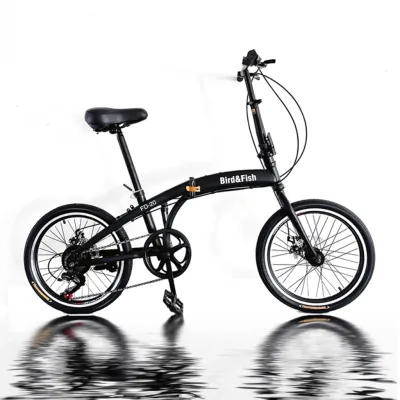
52 Lazada user ratings
Great value for money, highly recommended!, Sturdy build, feels durable., Love the stylish design, looks great!,
Great value for money, highly recommended!, Easy to assemble, hassle-free setup.,
Convenient and space-saving foldable design., Great bike for city commuting!,
Sturdy build, feels durable., High-quality Shimano gear system.,
Love the stylish design, looks great!,

Prices are valid at publication and may change. Please refer to the product page for the latest price.
A mini velo combines the full-sized geometry and solid frame of a standard road or hybrid bike with compact 20-inch wheels. It does not fold. The goal is to deliver a highly responsive, stiff, and agile ride that fits easily into small apartments, elevators, and narrow hallways without compromising the structural integrity of a solid triangle frame.
Conversely, a folding bike is engineered specifically to collapse into a compact package. This is achieved through one or more heavy-duty hinges on the main frame tube, handlepost, and sometimes the rear triangle. The primary user expectation is seamless integration with public transport, office desks, and car boots, accepting the trade-offs of added mechanical complexity and a slightly more flexible frame.
While both categories typically roll on 16-inch or 20-inch wheels, they serve entirely different lifestyles. The mini velo appeals to riders who want a sporty, low-maintenance urban commuter that behaves like a standard bike but takes up less floor space. The folding bike is designed for multi-modal travelers who need to transition from riding to riding public transit or storing their vehicle under a desk.
How do frame structures and folding mechanisms impact durability and maintenance?
Rigid mini velo frames offer superior long-term durability and require significantly less maintenance because they lack the moving parts, hinges, and latches that are subject to wear and structural play on folding bikes.

Because a mini velo uses a traditional diamond or step-through frame welded or lugged together as a single piece, it distributes riding stresses evenly. There are no joints to develop play, creak, or fail over time. This structural stiffness means almost all your pedaling energy is transferred directly to the rear wheel, and maintenance is identical to a standard full-sized bicycle—focusing primarily on the drivetrain, brakes, and tires.
Folding bikes rely on mechanical hinges and quick-release clamps to remain rigid while riding. Over time, the constant vibration from uneven pavements, curb hops, and the repetitive action of folding and unfolding can cause these locking mechanisms to wear down, loosen, or develop micro-movements. This can manifest as frame flex under heavy pedaling or annoying creaking sounds.
To maintain safety and performance on a folding bike, riders must regularly inspect hinge pins, adjust latch tension according to manufacturer specifications, and check for hairline cracks around weld joints near the folding points. If you prefer a “set-and-forget” bicycle that requires minimal mechanical oversight beyond basic chain lubrication and tire inflation, the rigid frame of a mini velo is inherently more robust.
Additionally, the choice of frame material plays a significant role in durability, especially in humid, tropical climates. Aluminum frames are highly resistant to rust and keep the bike lightweight, which is beneficial for both folding and non-folding models. Chromoly steel frames, while slightly heavier, offer excellent natural vibration dampening and can be repaired more easily, though they require protective coatings to prevent internal corrosion over time.
How do wheel size and frame geometry affect the ride quality of small-wheeled bikes?
Small wheels provide rapid acceleration and nimble handling but transmit more road vibration, which mini velos mitigate through traditional frame geometry and longer wheelbases, whereas folding bikes often feature upright, highly responsive steering that can feel twitchy at high speeds.
Both bike types commonly use 16-inch or 20-inch wheels. Smaller wheels have lower rotational inertia, meaning they accelerate from a dead stop with very little effort—a major advantage in stop-and-go city traffic. However, they also have a higher attack angle against obstacles, meaning potholes, tree roots, and tactile paving feel much harsher than they would on a standard 700c road wheel.
Mini velos compensate for small-wheel harshness by utilizing traditional frame geometry. They feature standard-length chainstays, a lower bottom bracket relative to the hubs, and a conventional wheelbase. This design positions the rider in a balanced, sporty stance, distributing weight evenly between the front and rear wheels. The result is a stable, predictable ride that handles high-speed descents and sharp corners similarly to a full-sized road bike.
Folding bikes often employ compromised geometry to allow the frame to fold flat. This frequently results in a shorter wheelbase, a very long, upright handlepost, and an elongated seatpost. This upright posture places the majority of the rider’s weight over the rear wheel, making the front end feel light and highly responsive—sometimes described as “twitchy” by beginners. While excellent for low-speed maneuvering through tight pedestrian spaces, it requires more active concentration when riding at higher speeds or descending hills.
The wheel size sub-categories also influence ride quality. For instance, 20-inch wheels come in two distinct sizes: 406mm (standard 20-inch) and 451mm (slightly larger, sporty 20-inch). Mini velos frequently use the 451mm size to accommodate narrower, high-pressure tires that roll faster and mimic road bike performance. Folding bikes more commonly use 406mm wheels, which allow for wider, higher-volume tires that provide extra cushion against road vibrations at the expense of top-end speed.
How do portability and storage constraints influence your choice between the two?
Folding bikes are the clear choice if you must regularly carry your bicycle onto public transport or store it in ultra-tight spaces, whereas mini velos are better suited for homes with dedicated bicycle parking or spacious entryways where a fixed footprint is acceptable.
A folded bicycle can easily slip under a desk, fit inside a standard closet, or sit neatly in the trunk of a small car. A mini velo, despite its small wheels, retains the length of a slightly shortened standard bicycle. It cannot be compressed, meaning it must be parked in a hallway, mounted on a wall rack, or stored in a dedicated bicycle bay.
When evaluating portability, weight and carrying ergonomics are critical. Folding bikes are designed to be lifted by their frame tubes or dedicated handles when folded, but their asymmetrical folded shape can sometimes make carrying them over long distances awkward. Mini velos, being rigid, are easy to shoulder or lift up stairs, but they remain fully extended, making them difficult to maneuver through crowded elevators or narrow stairwells.
If you plan to integrate your bicycle with public transit, you must verify local regulations. For example, in Singapore, the Land Transport Authority (LTA) permits foldable bicycles on MRT trains and public buses, provided they do not exceed the maximum allowable dimensions (typically 120 cm by 70 cm by 40 cm) and are folded during the journey. Non-folding mini velos are generally prohibited on public transport networks during operational hours, meaning your commute with a mini velo must be entirely pedal-powered from start to finish.
Furthermore, consider the physical effort required to lift the bike. A typical folding bike weighs between 10 kg and 14 kg depending on the frame material and components. Lifting this weight repeatedly to board trains or climb stairs requires a reasonable level of physical fitness. Always check the manufacturer’s specifications for the exact weight and folded dimensions to ensure you can comfortably manage the bike during your daily commute.
How do you decide which bike type fits your specific riding needs and lifestyle?
Choose a mini velo if you prioritize a stiff, sporty ride for longer distances and have secure ground-level or apartment storage; choose a folding bike if your daily routine requires multi-modal transit, office storage, or maximum space-saving versatility.
To help you finalize your decision, consider how your riding habits align with the strengths of each design. A mini velo is highly suitable if you ride longer, continuous distances for fitness or direct point-to-point commutes, prefer a highly responsive frame that handles like a standard road bike, and want to avoid checking hinge tolerances. It is also ideal if you have access to secure indoor storage, a spacious balcony, or wall-mounting options.
Conversely, a folding bike is necessary if your commute involves a mix of riding, taking the MRT or bus, and storing the bike under an office desk. It is the go-to option if you live in a compact apartment, such as an HDB flat, where floor space is highly restricted, or if you need the flexibility to pack your bike into a car boot or take it inside cafes and shops to prevent theft.
Before making your purchase, always perform a few critical checks on the product label or official store. Verify the maximum weight limit of the frame, as folding hinges can have lower weight tolerances than rigid frames. Check the component standards; mini velos often use standard road bike parts, making upgrades and replacements straightforward, while folding bikes may use proprietary parts (like custom seatposts or folding stems) that are harder to source. Finally, physically test the folding latch mechanism in the store if possible to ensure you can operate it comfortably and securely.

Community discussion
Share your experience or ask a question. Comments are reviewed before publication.