
Choosing between a recumbent trike and an upright trike depends on your physical comfort, riding environment, and fitness goals. An upright trike offers a familiar, high-riding position that prioritizes visibility in traffic and active core engagement, making it ideal for short neighborhood trips and traditional cycling. In contrast, a recumbent trike features a reclined seating position that distributes body weight across a wide, supportive seat, significantly reducing pressure on the lower back, neck, wrists, and saddle area. This ergonomic design makes recumbent models an exceptional choice for long-distance cruising, riders managing chronic joint pain, or anyone seeking a highly stable, low-impact outdoor activity.
Riding Posture and Ergonomics Explained
The fundamental difference between these two three-wheeled cycles lies in how they position your body relative to the frame, pedals, and steering controls. An upright trike mirrors the classic bicycle configuration, placing the rider in an erect posture directly above the pedals. Your feet point downward to engage the crankset, while your hands rest on handlebars positioned in front of your chest. This design relies on a traditional saddle, which means a significant portion of your body weight is concentrated on a relatively small surface area, requiring active support from your arms, shoulders, and core muscles to maintain stability.
Conversely, a recumbent trike positions the rider in a reclined, bucket-style seat situated much closer to the ground. Your legs extend forward rather than downward to reach the pedals, which are mounted at the front of the frame. This layout distributes your weight evenly across your buttocks, back, and shoulders, eliminating the localized pressure points common to standard bicycle saddles. The angle of the seat back can often be adjusted to vary the degree of recline, allowing you to find a balance between aerodynamic efficiency and forward visibility.
Products mentioned in this guide
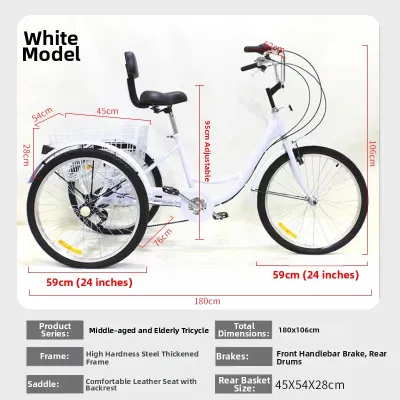
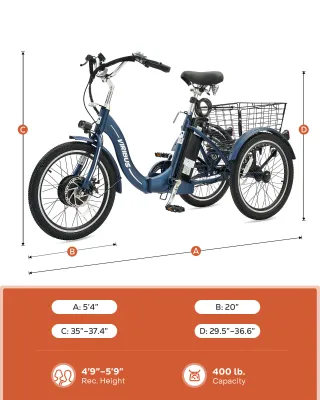
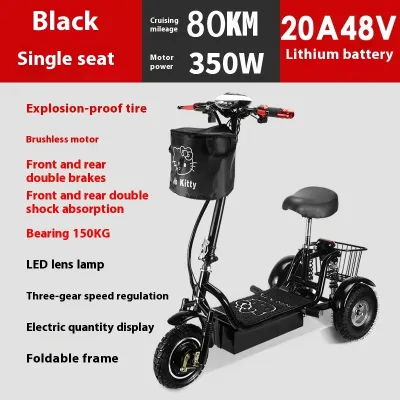
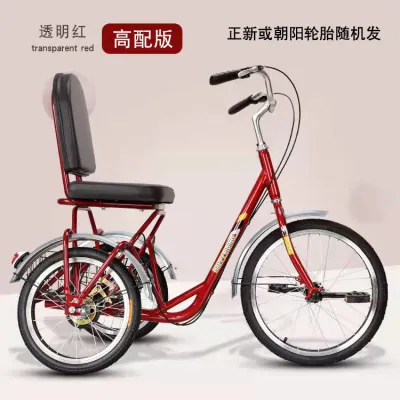


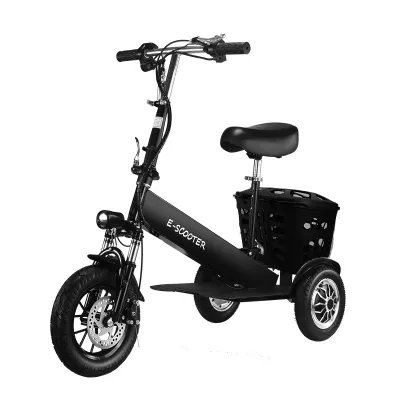
Prices are valid at publication and may change. Please refer to the product page for the latest price.
These contrasting seating arrangements dramatically alter the center of gravity for each vehicle. An upright trike has a relatively high center of gravity, which requires the rider to slow down significantly when cornering to prevent the inner wheel from lifting off the ground. A recumbent trike, with its low-slung frame and wide wheelbase, places the rider’s weight close to the road surface. This low center of gravity provides exceptional lateral stability, allowing for confident cornering and reducing the likelihood of tipping, even when navigating sharp turns or uneven terrain.
Comfort and Back Support Comparison
For many riders, the choice between these two designs comes down to how their bodies feel after an hour or more in the saddle. Recumbent trikes excel in providing comprehensive back support because they feature contoured, full-length backrests. These seats are designed to support the natural curve of your spine, which minimizes lumbar strain and prevents the slouching that often occurs during long rides. Because your back is fully supported, the muscles along your spine do not have to work continuously to keep you upright, allowing you to focus your energy entirely on pedaling.

Upright trikes, by comparison, place a greater physical demand on your upper body and skeletal structure. Because there is no backrest, your spine must absorb the vertical shocks and vibrations transmitted from the road surface through the rear wheels. This upward force can compress the spinal discs and fatigue the lower back muscles over time. Additionally, supporting your upper body weight on a narrow saddle can lead to saddle soreness and restricted blood flow, which may require frequent breaks during longer excursions.
Neck and wrist comfort also differ substantially between the two configurations. On an upright trike, riders must often lean forward slightly, which forces them to tilt their heads upward to look ahead, potentially straining the neck and upper shoulders. This forward lean also transfers a portion of your body weight to your hands, wrists, and elbows, which can exacerbate conditions like carpal tunnel syndrome. Recumbent trikes eliminate this forward lean entirely; your hands rest naturally on under-seat or over-seat handlebars without bearing any weight, and your head remains in a relaxed position with a direct view of the road ahead.
To help determine which design aligns with your physical needs, consider this checklist of common physical conditions and their compatible trike styles:
- Lower Back Pain or Spinal Stenosis: Strongly favors the recumbent trike due to its full back support and reclined posture that reduces spinal compression.
- Wrist Pain, Arthritis, or Carpal Tunnel: Strongly favors the recumbent trike, as the handlebars do not bear any upper body weight.
- Balance Difficulties or Vertigo: Favors the recumbent trike, which offers a lower center of gravity and a highly stable, tip-resistant platform.
- Hip or Knee Stiffness: Can accommodate either, but a recumbent trike allows for adjustable leg extension lengths that can reduce joint flexion, while an upright trike offers easier mounting and dismounting for those with limited hip mobility.
- Neck Stiffness: Favors the recumbent trike, provided the seat angle is adjusted to allow a comfortable forward gaze without hyperextending the neck.
Visibility and Road Awareness
Visibility is a multi-dimensional factor that encompasses both how well you can see your surroundings and how easily other road users can see you. An upright trike provides a high, commanding vantage point that is very similar to that of a standard utility bicycle. From this elevated position, your eye level remains well above the roofs of most parked cars, giving you an excellent view of oncoming traffic, pedestrian crossings, and potential road hazards further down the street. This height also makes it easier to look over hedges, fences, and other roadside obstacles when approaching intersections.
In contrast, a recumbent trike places your eye level much lower, often inline with or below the hoods of passenger vehicles. While this low position offers an immersive, panoramic view of the immediate environment, it can limit your ability to see past obstacles or anticipate traffic patterns several vehicles ahead. Your peripheral vision remains excellent because there are no handlebars or frame elements obstructing your view, but you must exercise extra caution when pulling out from behind parked cars or navigating busy urban intersections where your line of sight may be blocked.
Being seen by others is another critical safety consideration, particularly in mixed-use traffic environments. An upright trike has a vertical profile that is easily recognized by motorists, cyclists, and pedestrians from a distance. A recumbent trike has a much lower, elongated profile that can sometimes blend into the background or be obscured by roadside barriers and parked cars. Motorists looking for standard pedestrian or cyclist silhouettes may not immediately register a low-slung recumbent trike in their mirrors or when turning at intersections.
To mitigate these visibility challenges on a recumbent trike, riders can employ several practical strategies and equipment upgrades:
- Safety Flags: Mounting a tall, brightly colored safety flag to the rear of the frame is highly recommended to project your presence above car hoods and trunk lines.
- High-Output Lighting: Utilizing flashing LED front and rear lights, even during daylight hours, significantly increases your visibility to oncoming and overtaking traffic.
- Reflective Apparel: Wearing high-visibility vests or jackets and attaching reflective tape to the outermost points of the trike frame helps ensure you remain visible in low-light conditions.
- Defensive Riding Habits: Assuming that motorists cannot see you and taking extra time to verify clearance before entering intersections or changing lanes is essential for low-profile riding.
Core Engagement and Physical Demands
The physical effort required to ride a trike varies significantly depending on the muscle groups engaged by each seating position. Riding an upright trike is an active, whole-body experience that requires continuous, subtle adjustments from your core, back, and shoulder muscles to maintain balance and steer. Even though a trike does not require you to balance to stay upright at a stop, navigating turns, handling off-camber roads, and managing bumps still call for active core stabilization to keep your body centered over the frame.
Recumbent trikes shift the physical workload almost entirely to your lower body. Because your torso is fully supported by the seat, your abdominal and lower back muscles remain relatively relaxed during operation. Instead, the reclined position places a greater emphasis on your gluteal muscles and hamstrings, as your legs push forward against the pedals. This configuration allows for highly efficient power transfer because you can press your back firmly into the seat back to generate extra leverage, rather than relying on your body weight to push down on the pedals as you would on an upright model.
This difference in muscle recruitment affects how you experience fatigue and manage hills. On an upright trike, you can stand up on the pedals to use your body weight to climb steep inclines, though this requires significant leg strength and cardiovascular effort. On a recumbent trike, you cannot stand up to pedal; instead, you must rely on low gear ratios and a steady pedaling cadence (often referred to as “spinning”) to climb hills. This approach is highly efficient and gentle on the joints, but it requires a trike equipped with a wide range of gears to ensure you can maintain a comfortable cadence on steep climbs.
To optimize your physical exertion, it is important to choose a gearing system that matches your local terrain and physical capabilities. Many modern trikes offer internal gear hubs or wide-range derailleur systems that allow you to adjust resistance easily. For riders with limited leg strength or cardiovascular endurance, selecting a trike with lower gear options—or considering an electric-assist model—can help maintain a manageable level of effort, ensuring that hills and headwinds do not become barriers to enjoying your rides.
Decision Framework: Which Trike Fits Your Needs?
To determine which trike design is the right investment for your lifestyle, it is helpful to evaluate your primary riding goals, physical comfort requirements, and the environments where you plan to ride.
Choose a recumbent trike if:
- You experience chronic lower back, neck, shoulder, or wrist pain that makes riding a traditional bicycle uncomfortable or impossible.
- Your primary goal is long-distance touring, relaxed cruising, or enjoying scenic paths without physical fatigue.
- You prefer a highly stable, low-slung ride that minimizes the risk of tipping during cornering.
- You want a comfortable, ergonomic seat that eliminates saddle soreness and pressure points.
Choose an upright trike if:
- You prefer a traditional cycling posture and want to maintain high visibility in urban traffic or busy neighborhood streets.
- You value an easy mounting and dismounting process, as the higher seat of an upright trike requires less bending and leg strength to sit down and stand up.
- You want to engage your core muscles and enjoy a moderate whole-body workout during your rides.
- You plan to use the trike primarily for short utility trips, running errands, or carrying groceries in a large rear basket.
Verify first if:
Before making a final decision, it is highly recommended to take several practical steps to ensure your chosen trike meets your expectations:
- Arrange a Test Ride: Locate a local specialty dealer where you can test ride both styles on different surfaces to experience the handling, steering, and comfort differences firsthand.
- Assess Your Local Terrain: Consider the steepness of the hills, the quality of the road surfaces, and the density of traffic in your area, as these factors heavily influence which design will feel safer and more manageable.
- Consult a Professional: If you are purchasing a trike to accommodate a medical condition or assist with rehabilitation, consult your physician or a physical therapist to verify which riding posture is safest for your joints and spine.
- Check Manufacturer Specifications: Always review the manufacturer's documentation for specific weight capacities, frame adjustability ranges, and overall dimensions to ensure the trike can be safely adjusted to fit your body size and can be stored or transported easily.
Frequently Asked Questions (FAQ)
Is a recumbent trike safer than an upright trike? (FAQ)
Neither design is universally safer than the other, as each offers distinct safety advantages and trade-offs depending on the riding environment. A recumbent trike offers superior stability due to its low center of gravity, which virtually eliminates the risk of tipping over during sharp turns or sudden maneuvers. Additionally, because the rider is positioned close to the ground, the potential fall distance in an accident is significantly reduced. However, its low profile makes it harder for motorists to see in heavy traffic, requiring the use of safety flags and high-visibility gear. An upright trike provides excellent visibility and a high vantage point, allowing you to see and be seen easily in urban environments, but it has a higher center of gravity and requires slower speeds when cornering to maintain stability. Always wear a certified helmet and use active lighting regardless of the style you choose.
Can I convert an upright trike to a recumbent? (FAQ)
No, it is not practically feasible or safe to convert a standard upright trike into a recumbent trike. The two designs utilize completely different frame geometries, steering mechanisms, and drivetrain layouts. Attempting to modify an upright frame to accommodate a reclined seat and forward-facing pedals would require extensive structural welding, which can compromise the integrity of the metal and lead to catastrophic frame failure. Furthermore, such modifications will void any manufacturer warranties and may result in unpredictable steering geometry and handling characteristics. If you decide that a recumbent riding position is best for your needs, it is highly recommended to purchase a purpose-built recumbent trike designed and tested by a reputable manufacturer to ensure your safety and optimal performance.
Community discussion
Share your experience or ask a question. Comments are reviewed before publication.