
Selecting the right tennis ball is one of the most important decisions a parent can make to support a young player’s development. Kids tennis balls are categorized into three distinct, color-coded stages—Red, Orange, and Green—each engineered to match specific developmental phases. By choosing the correct stage, you ensure your child learns proper swing mechanics, enjoys longer rallies, and avoids the frustration of a ball that bounces too high or travels too fast.
Understanding the Stage-Based Tennis Ball System
Standard adult tennis balls are highly pressurized, causing them to bounce rapidly and fly high. For a young child, this means the ball often bounces above their shoulders or even over their head. To hit a high, fast ball, children are forced to take short, defensive swings, which can lead to poor technique and physical strain.
The stage-based progression system solves this issue by reducing the internal pressure of the balls and modifying their construction. Lower pressure means the ball compresses more upon impact, slowing its flight and keeping the bounce at a manageable waist-to-chest height. Some stages also feature larger sizes or lightweight felt to increase air resistance and give players more time to react.
Products mentioned in this guide
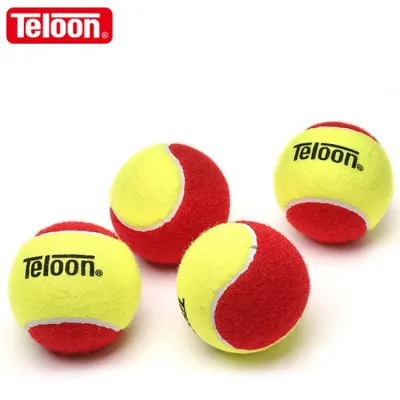
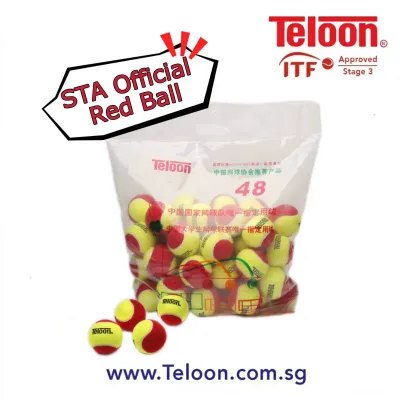
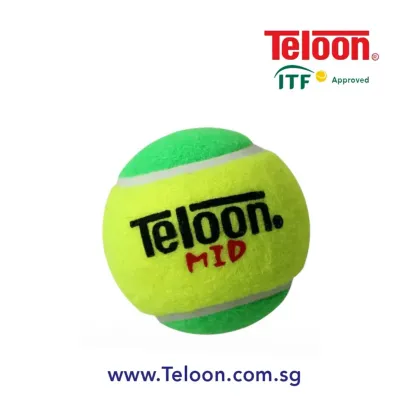
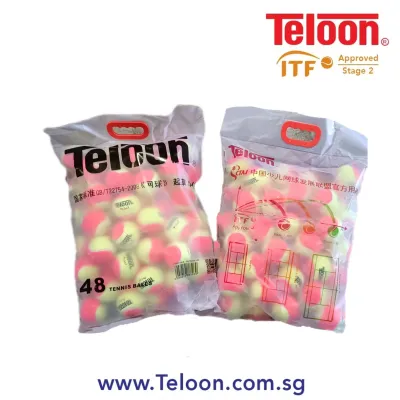
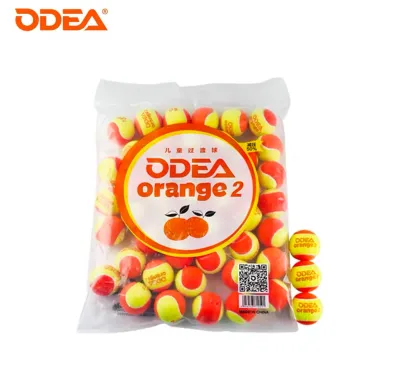
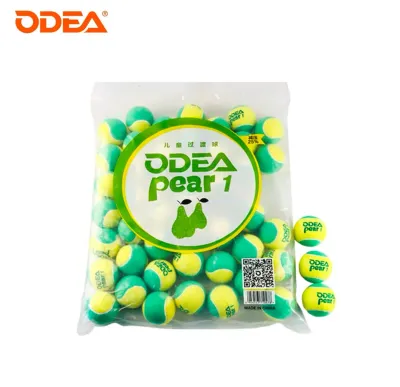
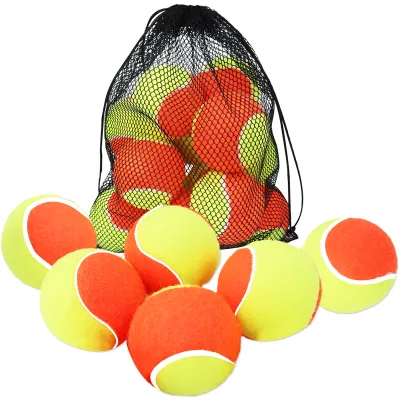
Prices are valid at publication and may change. Please refer to the product page for the latest price.
Before purchasing, always check the ball packaging or manufacturer specifications for specific stage indicators, recommended age ranges, and height guidelines. Different brands may have slight variations in their recommended age brackets or court dimensions, making the product label your primary source of verification.
Red Stage Tennis Balls: The Starting Point
Red stage tennis balls are designed for the youngest beginners who are just starting their tennis journey. While general guidelines often suggest these are suitable for children aged five to eight, parents should verify the exact age and height recommendations on the product label.

These balls are physically larger than standard tennis balls and have the lowest internal pressure. Some versions are made of high-density foam, while others are felt-covered with very low compression. This design produces the lowest bounce and slowest speed, giving young players ample time to track the ball, prepare their stance, and complete a full, natural swing.
Red stage balls are meant to be played on smaller court dimensions, often set up across a standard court or in a dedicated mini-court space. They pair best with shorter, junior-sized rackets, typically ranging from 19 to 21 inches, which match a child’s arm length and physical strength.
If your child frequently hits the ball out of bounds, struggles to make contact, or cannot prepare their swing before the ball passes them, they should start or remain in the red stage. This stage builds the foundational hand-eye coordination needed for longer rallies.
Orange Stage Tennis Balls: Building Consistency
Orange stage tennis balls are aimed at players who have mastered basic swing paths, can sustain short rallies with red balls, and are ready to cover a larger playing area.
These balls are standard-sized but feature moderate compression. They bounce and travel faster than red balls but remain significantly slower than green or standard yellow balls. This moderate speed allows developing players to practice directional control, spin, and tactical placement.
This stage transitions players to a modified, larger court, which is typically about three-quarters of a standard court size. It pairs with slightly longer transitional rackets, usually 23 to 25 inches, which provide the reach and leverage required for the expanded playing area.
You should upgrade your child to orange balls when they find red balls too easy to control, consistently hit their targets, and demonstrate the physical agility to move across a larger court space.
Green Dot Tennis Balls: The Final Transition
Green dot tennis balls are designed for advanced junior players who can sustain multi-shot rallies on a larger court and are adapting to full-court play.
These balls are standard-sized with an internal pressure slightly lower than standard adult balls. They produce a bounce and speed that is very close to regular yellow balls, helping players adjust to realistic ball trajectories while still offering a slight buffer to maintain control.
Green dot balls are played on a full-sized tennis court. Players at this stage typically use rackets approaching adult sizes, usually 25 to 26 inches, or even light 27-inch adult rackets, depending on their physical height and strength.
Green dot balls serve as the final bridge to standard yellow balls. Consider moving your child to standard yellow balls only when they can consistently control green balls with adequate power, maintain proper swing mechanics, and cover the entire court without physical strain.
How to Choose the Right Stage for Your Child
While age and height guidelines on packaging serve as a useful initial filter, actual skill, coordination, and physical strength are far more critical. A tall child who is completely new to the sport may still need the slower pace of a red or orange ball to learn proper swing paths.
To choose the right stage, watch your child during play and focus on a few key observation metrics. Check the strike zone height; the ball should ideally bounce around their waist or chest level. Observe the rally duration—if they cannot sustain a three-to-four shot rally, the ball may be too fast. Also, assess their ability to move into position comfortably before striking.
If you are unsure, consult with a certified tennis coach to confirm your child’s current technical assessment. A coach can observe footwork, contact points, and swing paths to recommend the most beneficial stage.
Moving a child to a faster ball too early can lead to compromised swing mechanics, late contact, and extreme frustration. It can also increase the physical strain on developing joints, making it safer to master each stage fully before moving up.
Frequently Asked Questions (FAQ)
Can my child use standard yellow tennis balls if they are tall for their age?
Physical height does not automatically translate to the coordination, timing, and strength required for standard yellow balls. Even if a child is tall, using a standard ball too early can force them to hit with late, shortened swings because the ball travels too quickly. It is best to base the ball selection on their actual rallying ability and swing mechanics rather than height alone.
Do kids tennis balls wear out faster than adult balls?
Because kids tennis balls are designed with lower internal pressure, they do not lose their bounce as suddenly as pressurized adult balls. However, the felt on junior balls can wear down, and the rubber core can soften over time with frequent use. Parents can check if a ball needs replacement by squeezing it to test for excessive softness or observing if its bounce height has noticeably dropped below its original level.

Community discussion
Share your experience or ask a question. Comments are reviewed before publication.