
Choosing between the Reebok Deck and a standard step platform for your home gym in Singapore comes down to a fundamental decision: do you need a dedicated cardio accessory or a multi-functional strength-training bench? The Reebok Deck functions as a hybrid tool, transforming from a flat aerobic step into an incline or decline workout bench. Standard step platforms, on the other hand, focus entirely on vertical elevation for high-intensity cardio and plyometric exercises. By evaluating your primary training style, available floor space, and budget, you can select the platform that best supports your fitness progression without cluttering your living area.
Understanding the Reebok Deck and Standard Step Platforms
To make an informed choice, it is essential to understand how these two equipment categories differ in form and function. The Reebok Deck is engineered as a dual-function system. In its lowest configuration, it serves as a traditional aerobic step for high-tempo cardio routines. However, by releasing integrated locking collars and lifting the top deck, it transforms into an adjustable weight bench with incline and decline angles. This versatility allows you to transition seamlessly from step-ups to chest presses, seated shoulder presses, or supported rows, making it a highly adaptable centerpiece for a compact home gym.
In contrast, standard step platforms are single-purpose tools designed specifically for vertical stepping exercises. They consist of a flat, rigid top platform supported by detachable risers on either side. While you can perform basic strength exercises on them, such as elevated push-ups or single-leg split squats, they lack the back support, incline adjustments, and internal storage compartments found in dual-function decks. Their simplicity is their primary advantage, offering a straightforward, stable surface dedicated to cardiovascular conditioning.
Products mentioned in this guide
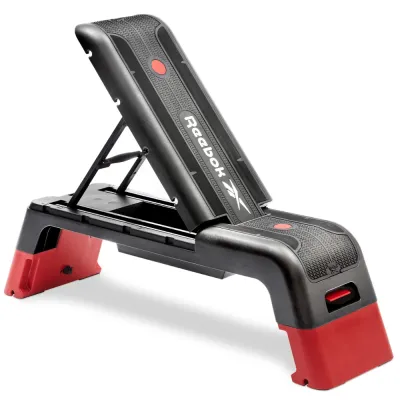
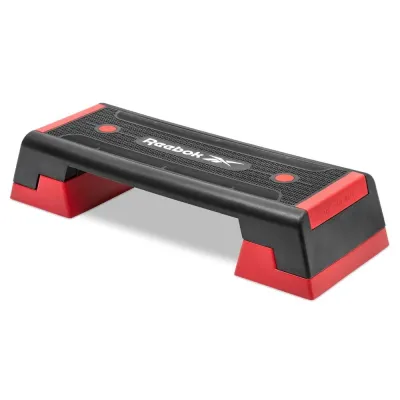
Prices are valid at publication and may change. Please refer to the product page for the latest price.
The transition speed between exercises is another critical factor to consider. The Reebok Deck utilizes built-in folding legs and a hinged backrest that lock securely into place, allowing you to change configurations in a matter of seconds during a circuit workout. Standard step platforms require you to manually add or remove plastic risers to adjust the height. If your workout routine demands rapid transitions between high-cardio stepping and angled strength training, a dual-function deck minimizes downtime. If your workouts consist of dedicated blocks of cardio followed by separate floor work, a standard step platform provides all the utility you need.
Your choice should align directly with your primary workout style. If your fitness regimen is heavily focused on step aerobics, bodyweight conditioning, and high-rep cardio, a standard step platform is highly efficient. If you incorporate free weights, resistance bands, and varied bench angles into your strength routines, the multi-functional design of a deck-style platform offers a more comprehensive training solution.
Key Comparison Dimensions for Your Workout Needs
Adjustability and Height Levels
Adjustability directly influences the intensity of your workouts and the impact on your joints. Standard step platforms typically adjust by stacking or removing modular risers beneath the main deck. These risers allow you to set the platform at specific heights, usually ranging from 10 centimeters to 20 centimeters. This incremental adjustment is ideal for gradually increasing cardio intensity or accommodating different family members with varying fitness levels. When purchasing a standard step, verify that the risers lock securely into the base to prevent shifting during lateral movements.

The Reebok Deck offers a different approach to height adjustment. It generally features two primary height settings, typically 20 centimeters and 35 centimeters, controlled by folding support legs. While it offers fewer incremental height options than some multi-riser standard steps, its true adjustability lies in its bench configurations. The backrest can be adjusted into flat, incline, and decline positions. This allows you to perform a wider variety of strength exercises that are impossible on a flat step, though you should check the specific locking mechanisms to ensure they engage smoothly before lifting heavy weights.
Surface Grip and Texture
Maintaining a secure footing is paramount during high-impact workouts, especially when sweat is introduced. Look closely at the texture of the top surface of any platform you consider. High-quality step platforms feature a rubberized or textured thermoplastic overlay that provides traction even when wet. Avoid platforms with smooth plastic tops, as these can become dangerously slick during intense cardio sessions.
When evaluating the Reebok Deck, inspect the raised bobble or ribbed texture on the main surface. This pattern is designed to grip the soles of your athletic shoes during dynamic movements. For standard steps, check whether the non-slip material covers the entire top surface or just the center. A full-coverage non-slip mat is preferable, as it ensures stability even if your foot lands near the edge during rapid lateral stepping patterns.
Weight Capacity and Stability
Before purchasing any fitness equipment, you must verify its maximum weight capacity to ensure safe operation. This capacity must account for both your body weight and any external weights, such as dumbbells or barbells, you plan to lift while on the platform. Always check the manufacturer’s product label or official specification sheet rather than relying on third-party retail descriptions. A robust platform should support a combined weight that comfortably exceeds your maximum lifting load.
Stability is equally dependent on how the platform interacts with your floor. Look for wide, rubberized feet on the base of the step or deck. These feet prevent the platform from sliding across hard surfaces, such as tiles or vinyl flooring, during explosive movements. When setting up your equipment, place it on a flat, level surface and check for any wobble or rocking. If the base does not sit flush, it can compromise your balance and increase the risk of joint strain or falls.
Space, Portability, and Storage Considerations
Living in Singapore often means managing limited residential space, making the physical footprint of your fitness equipment a major decision factor. A standard step platform has a relatively compact footprint when fully assembled, but its modular risers can be bulky to store if they do not nest neatly beneath the platform. Some models allow you to store the risers directly inside the underside of the step, which is an excellent space-saving feature for HDB flats or apartments.
The Reebok Deck, while highly versatile, has a larger overall footprint and is significantly heavier than a standard step platform due to its internal steel framing and adjustment mechanisms. This added weight provides excellent stability during heavy lifts, but it makes the unit less portable. If you plan to move your equipment frequently between rooms, look for models that feature built-in carrying handles or integrated wheels to ease transport.
Storage options vary significantly between the two styles. Standard step platforms can often be slid flat under a bed or sofa, or stood vertically against a wall in a utility closet. The Reebok Deck can also be folded flat by collapsing its support legs, reducing its height significantly for under-furniture storage. However, because of its weight and rectangular shape, you should measure your intended storage space beforehand to ensure it fits comfortably without blocking walkways or creating tripping hazards.
Evaluating Price, Value, and Product Specifications
When shopping in Singapore, you will find a wide range of price points for step platforms. Basic, single-purpose step platforms are highly budget-friendly, with prices on online marketplaces often ranging from S$30 to S$80 depending on the brand and the number of included risers. This makes them an accessible entry point for those starting a home fitness routine or focusing primarily on cardio.
Multi-functional options like the Reebok Deck represent a larger financial investment, typically positioned from S$150 to over S$300. While the initial cost is higher, you must evaluate this against the value of the equipment it replaces. If the deck eliminates the need to purchase a separate flat weight bench and an incline bench, it can save you both money and valuable floor space in the long run.
To ensure you are getting an authentic product that meets safety standards, always cross-reference product listings on online retailers with the official manufacturer specifications. Check the exact dimensions, weight limits, and materials listed by the brand. Additionally, review the warranty terms and return policies offered by the seller in Singapore. A reliable warranty provides peace of mind, especially for equipment with moving parts like the hinges and locking collars on a dual-function deck. Reading verified user feedback can also reveal how well the platform holds up under regular use over time.
Decision Framework: Which Step Platform Fits Your Routine?
To finalize your decision, assess your specific fitness goals and home environment against these clear guidelines. Choose the Reebok Deck if you require a highly versatile, space-saving hybrid tool that supports both high-energy step aerobics and structured strength training with free weights. Its ability to transition into incline and decline positions makes it an excellent substitute for a traditional workout bench, provided you have the budget and don’t mind a heavier piece of equipment.
Opt for a standard step platform if your workouts are centered strictly on cardiovascular conditioning, high-rep stepping, and bodyweight exercises. A standard step is lighter, easier to store, more budget-friendly, and offers more granular height adjustments through modular risers. This makes it the ideal choice for smaller living spaces where quick setup and easy storage are top priorities.
Finally, always verify your physical requirements before purchasing. If you have existing knee, ankle, or hip concerns, you may require the lower, gentler height increments of a standard step with multiple thin risers rather than the higher starting height of a dual-function deck. Prioritize your physical comfort and safety to ensure your chosen platform remains a consistent, beneficial part of your daily fitness routine.
Frequently Asked Questions (FAQ)
Can I use a step platform on a carpeted floor?
Yes, you can use a step platform on a carpeted floor, but you must take precautions to ensure stability. Thick or plush carpeting can cause the platform to wobble or tilt during dynamic movements, which increases the risk of ankle sprains. To prevent this, check the base design of your step; platforms with wide, continuous contact points handle carpet better than those with small, isolated feet. For optimal safety, place a dense, non-slip fitness mat over the carpet before setting up your step platform to create a firm, level foundation.
How do I clean and maintain the non-slip surface?
To preserve the grip and structural integrity of your step platform, clean it regularly with mild soap and warm water. Avoid using harsh chemical solvents, bleach, or abrasive scrubbing pads, as these can degrade the rubberized non-slip texture and weaken the plastic frame over time. Wipe the surface down with a damp microfiber cloth after every workout to remove sweat and oils. Always allow the platform to air dry completely in a well-ventilated area away from direct sunlight before storing it or using it for your next session.
Community discussion
Share your experience or ask a question. Comments are reviewed before publication.