
Selecting the right finger guard support depends entirely on balancing the immobilization your joint requires with the mobility your daily activities or sports demand. Whether you are recovering from a sudden sprain, managing chronic joint discomfort, or looking to prevent hyperextension during high-impact activities, the level of structural restriction is your primary decision point. Finger guards generally fall into three distinct categories: rigid, flexible, and compression. Each type serves a specific purpose along the spectrum of recovery and protection, meaning that choosing the wrong style can either delay healing by allowing too much movement or cause unnecessary stiffness by restricting a healthy joint.
Rigid guards act as strict physical barriers, completely stopping movement to let injured tissues rest. Flexible guards offer a middle ground, using semi-rigid elements or reinforced fabrics to block extreme, harmful angles while allowing you to maintain a functional grip. Compression sleeves provide no structural block at all, instead focusing on gentle pressure to manage minor swelling and improve your spatial awareness of the joint. Understanding how these designs function allows you to match the guard to your specific recovery stage, sport, or daily routine without compromising safety.
Rigid Finger Guards: Maximum Immobilization
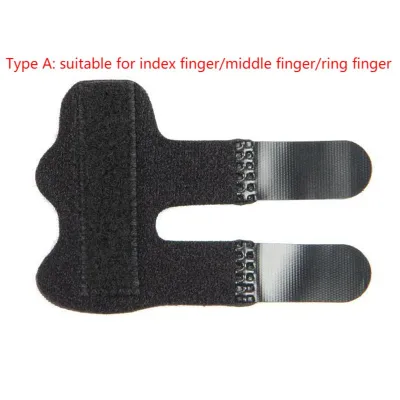
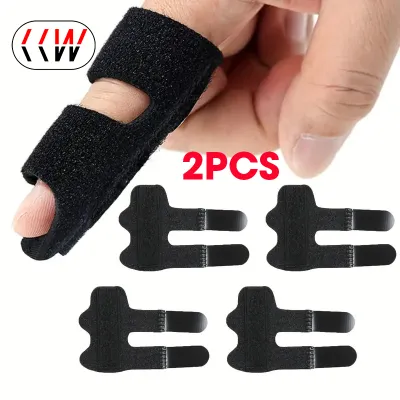
Rigid finger guards are designed for situations where any movement of the joint could disrupt the healing process or worsen an acute injury. These supports typically incorporate hard materials such as aluminum splints, molded plastics, or rigid internal stays that physically prevent the finger from bending or twisting. By locking the joint into a fixed, neutral position, a rigid guard takes the mechanical stress off damaged ligaments, tendons, or bones, allowing the body’s natural repair mechanisms to work without interruption.
Products mentioned in this guide
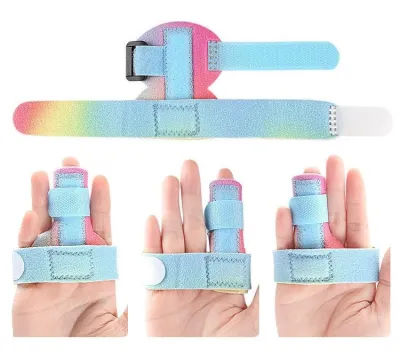
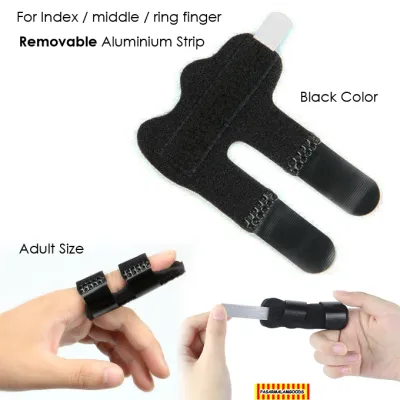
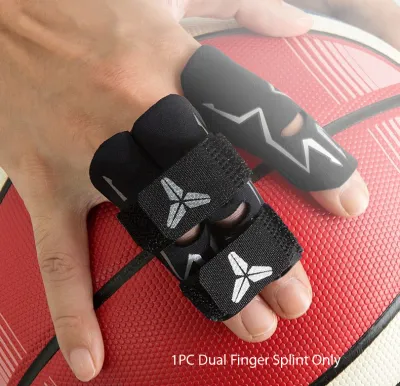
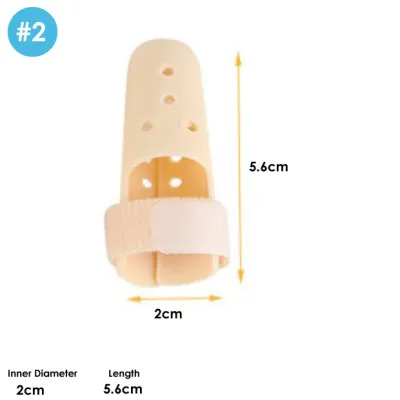
Prices are valid at publication and may change. Please refer to the product page for the latest price.
You will most commonly encounter rigid guards during the early stages of recovery from significant impacts, severe sprains, or suspected fractures. In these scenarios, protecting the structural integrity of the finger is far more important than maintaining your range of motion. For example, if you experience a severe jam or hyperextension injury, keeping the joint completely still prevents further micro-tears in the stabilizing tissues.
When selecting a rigid guard, verifying the manufacturer’s sizing guidelines is critical to avoid secondary complications. Because these devices do not stretch or conform to your hand shape, an improperly sized rigid splint can press directly against adjacent joints, causing skin irritation, localized bruising, or unwanted pressure points. You should ensure that the rigid elements align perfectly with the injured segment of your finger and do not dig into the webbing of your hand or the tips of neighboring fingers.
Flexible Finger Guards: Protection with Mobility
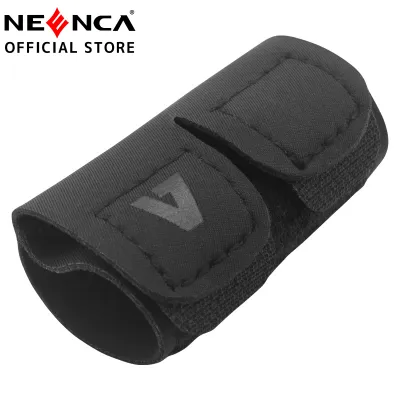
Flexible finger guards are engineered for active individuals who require structural reinforcement but cannot afford to lose their functional grip or hand dexterity. Instead of completely locking the joint, these supports utilize flexible stays, dense foam padding, or reinforced woven fabrics that bend under controlled force. This design allows you to perform natural movements, such as gripping a racket, holding a ball, or handling everyday tools, while still providing a protective barrier against sudden external impacts.

The primary role of a flexible guard is to prevent extreme movements, such as hyperextension or lateral bending, which are common in sports like volleyball, netball, or rugby. The built-in flexible stays act as a spring-like limit, absorbing and dispersing the force of a stray ball or a collision before the joint can be pushed past its safe physiological limit. This makes them an excellent choice for athletes transitioning back into training after a mild injury, where the joint is mostly healed but still vulnerable to re-injury under load.
However, it is important to recognize the limitations of flexible supports. Because they are designed to yield under sufficient pressure, they cannot provide the absolute stability required for severe ligament tears or unstable joint conditions. Relying on a flexible guard when your finger requires complete immobilization can lead to chronic joint laxity or prolonged recovery times, making it essential to assess the actual stability of your joint before choosing this level of support.
Compression Finger Guards: Mild Support and Swelling Control
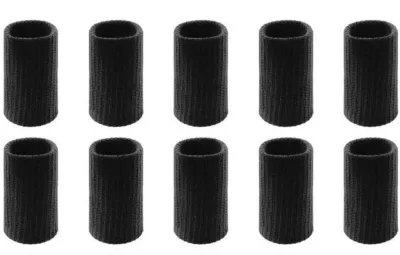
Compression finger guards, often referred to as finger sleeves, are lightweight, elastic tubes made from materials like neoprene, nylon, or spandex blends. Unlike rigid or flexible options, compression guards do not contain any hard splints or structural stays. Instead, they apply uniform, gentle pressure around the entire circumference of the finger, which helps manage minor localized swelling and keeps the joint warm during activity.
The primary benefit of a compression sleeve lies in its ability to enhance proprioception, which is your body’s subconscious awareness of joint position and movement. The continuous sensory feedback from the elastic fabric encourages better movement control and can help you avoid awkward angles during low-impact tasks. This makes compression sleeves highly popular among individuals dealing with mild joint stiffness, minor arthritis discomfort, or the lingering fatigue of old injuries during repetitive daily tasks.
Because compression sleeves lack structural blocking mechanisms, they offer no protection against sudden hyperextension, heavy impacts, or lateral forces. They are strictly supportive and therapeutic rather than protective. When using compression guards for extended periods, especially in warm or humid climates like Singapore, you must monitor the breathability of the material to prevent moisture buildup, skin maceration, or allergic reactions to synthetic fibers, and regularly check that the elastic has not degraded or stretched out.
How to Match the Guard to Your Specific Needs
Choosing the right finger guard requires a systematic look at your current physical condition, your immediate goals, and the environment in which you will use the support. A mismatch can either leave your finger vulnerable to further damage or unnecessarily restrict your hand function.
You should choose a rigid guard if your primary objective is strict immobilization during the initial phase of recovery from a significant injury. If you have been advised to keep the joint completely still, or if any movement causes sharp pain, a rigid splint is necessary to prevent further tissue damage. This is especially true when you are resting, sleeping, or in situations where accidental bumps are highly likely.
You should choose a flexible guard if you are returning to active sports, manual labor, or daily tasks that require you to grip objects, but you still need a safety net against sudden impacts or hyperextension. This option is ideal for the later stages of rehabilitation when the joint has regained basic structural integrity but requires external reinforcement during high-velocity movements.
You should choose a compression guard if you are managing mild stiffness, minor swelling, or chronic discomfort from repetitive strain, and do not require physical protection against impacts. These sleeves are perfect for low-impact activities, typing, or light gym work where you want to keep the joint warm, supported, and responsive without restricting any natural movement.
Before making your final choice, always verify the condition of your finger. If you are unsure about the severity of a ligament issue, or if you experience symptoms like persistent throbbing, numbness, tingling, or skin color changes while wearing any guard, you must stop using the device immediately and seek professional guidance.
Sizing, Fit, and Safety Checks
An improperly fitted finger guard can cause more harm than good by restricting blood circulation, irritating the skin, or failing to provide the intended level of support. To ensure a safe and effective fit, you must take accurate measurements before purchasing any support device.
Most manufacturers provide specific sizing charts based on two primary measurements: the circumference of the affected finger joint and the overall length of the finger. Use a soft measuring tape or a piece of string wrapped snugly around the widest part of the joint, then measure the length against a ruler. Avoid guessing your size based on general glove sizes, as finger proportions vary widely.
Once you put the guard on, perform a quick series of safety checks to verify the fit. Watch for observable signs of poor fit, such as the tip of your finger turning pale, blue, or feeling cold to the touch, which indicates restricted blood circulation. If you experience tingling, numbness, or a throbbing sensation, the guard is too tight and must be adjusted or replaced with a larger size.
Maintaining proper hygiene is also essential for preventing skin irritation and preserving the elasticity of your finger guard. Always check the product label for specific washing guidelines, as many flexible and compression guards require hand washing in cool water with mild soap. Ensure the guard is completely dry before wearing it again, as trapped moisture can lead to skin issues.
When to Seek Professional Medical Advice
While over-the-counter finger guards are highly useful tools for managing minor injuries and supporting recovery, they are not a substitute for professional medical evaluation. Certain symptoms indicate a more severe underlying injury that requires immediate clinical assessment.
You should seek immediate professional evaluation if you observe any visible deformity in the finger, such as an unnatural angle, or if you are completely unable to bend or straighten the joint. Severe, sharp pain, rapid and intense swelling, or a complete loss of sensation in any part of the finger are also critical red flags that suggest a fracture, complete ligament rupture, or nerve involvement.
Remember that finger guards are designed to be supportive devices to assist in recovery or protection; they do not replace a professional diagnosis or a structured rehabilitation plan. If your symptoms do not improve within a few days of using a guard, or if they continue to worsen despite resting the hand, consult a qualified healthcare provider to ensure you receive the correct treatment.
Frequently Asked Questions (FAQ)
Can I wear a finger guard while sleeping?
Whether you can wear a finger guard while sleeping depends entirely on the type of guard and the nature of your injury. Rigid guards are sometimes recommended for overnight wear if you need to keep a healing joint completely immobilized to prevent accidental bending or impact during sleep. However, you should only do this under the guidance of a healthcare professional or if specifically indicated by the product instructions. Conversely, compression sleeves and flexible guards are generally best removed before going to bed to allow your skin to breathe, prevent moisture buildup, and ensure that your blood circulation is completely unrestricted during rest.
How do I know if my finger guard is too tight?
You can easily determine if your finger guard is too tight by observing the physical condition of your fingertip and the sensations in your hand. Clear signs of excessive tightness include a cold sensation in the fingertip, a pale or bluish skin color, tingling, numbness, or a noticeable throbbing feeling under the guard. If you observe any of these signs, remove the guard immediately to restore proper blood flow. You should then adjust the straps if the device has customizable closures, or select a larger size based on the manufacturer’s sizing chart to ensure a safe, comfortable fit.
Community discussion
Share your experience or ask a question. Comments are reviewed before publication.