
Choosing the right dumbbell shape is one of the most critical decisions when setting up a home gym, directly impacting your safety, exercise variety, and storage layout. Hexagonal (hex) dumbbells are generally preferred for floor-based exercises and tight spaces due to their flat-sided, anti-roll design. Conversely, round dumbbells are the traditional choice for classic rack-based lifting, offering a familiar commercial-gym feel and smoother transitions during rotational movements. Deciding between them requires evaluating your specific workout routine, the type of flooring in your home, and how you plan to store your equipment.
In a home training environment, small design details can significantly alter your daily routine. A dumbbell that rolls away unexpectedly can damage household furniture or cause injury, while a shape that limits your exercise selection might stall your fitness progress. By understanding how geometry, materials, and storage compatibility interact, you can make an informed investment that aligns with your space and training goals.
How Shape Affects Stability and Rolling Behavior
The most obvious difference between round and hex dumbbells is how they behave when placed on a flat surface. Round dumbbells, by design, have a continuous circular perimeter that allows them to roll freely. While this rolling action is harmless on perfectly level, professional gym flooring, it can present challenges in residential settings. If your home gym floor has even a slight slope, or if you set a round dumbbell down quickly between intense sets, it can easily roll away, creating a tripping hazard or colliding with walls and glass doors.
Products mentioned in this guide
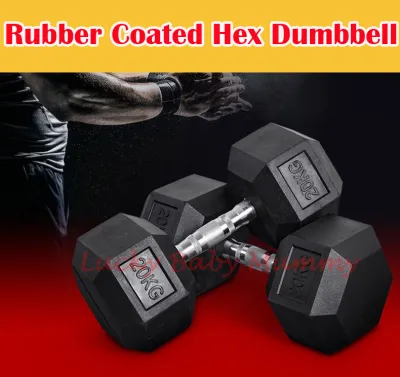
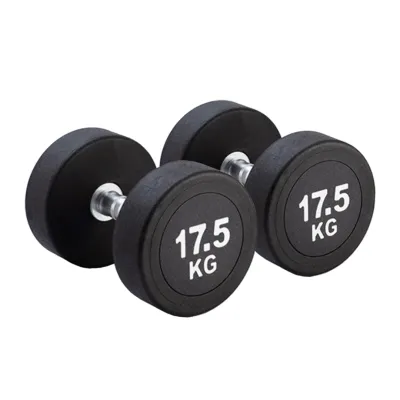
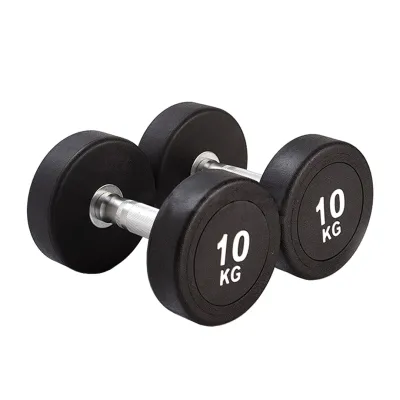
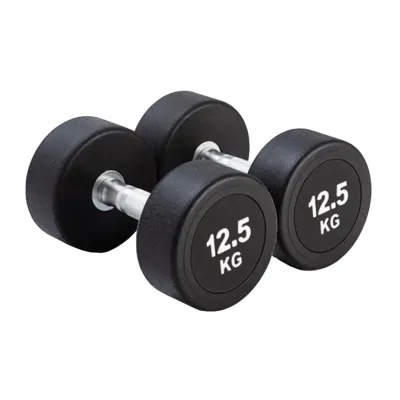
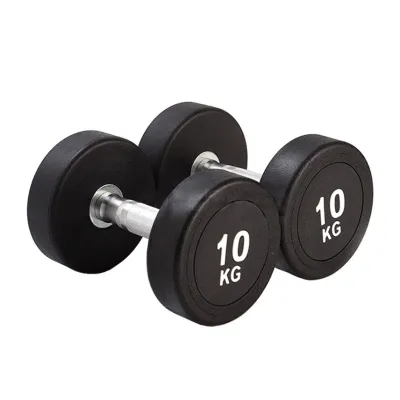
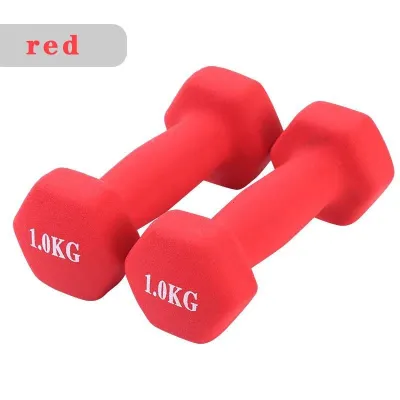
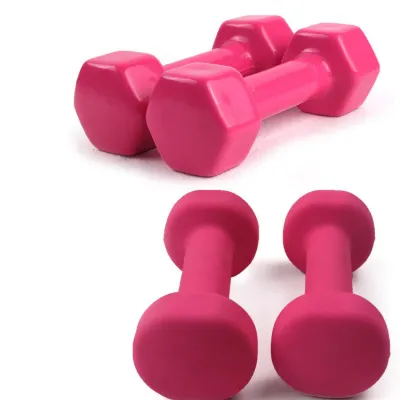
Prices are valid at publication and may change. Please refer to the product page for the latest price.
Hexagonal dumbbells feature flat, angled sides that act as built-in brakes. When you place a hex dumbbell on the floor, it remains exactly where you left it, regardless of the surface angle or the force of the impact. This anti-roll characteristic is particularly valuable during high-intensity interval training (HIIT) or circuit workouts, where you need to transition rapidly between different weights without chasing rolling equipment across the room.
The stability of the flat edges also changes how you interact with the weights during floor-based movements. Because a hex dumbbell resists lateral movement, it can support your body weight when used as a platform. Round dumbbells cannot offer this stationary support, as any shift in your center of gravity can cause the weight to roll outward, potentially straining your wrists or shoulders.
Evaluating Your Flooring and Storage Space
Your choice of dumbbell shape must complement the physical constraints of your living space, particularly your flooring and storage solutions. In Singapore, where residential space is often premium and apartments are common, protecting your floors from impact and pressure marks is a primary concern. Hardwood, laminate, and ceramic tiles are highly susceptible to scratches, cracks, and indentations. While heavy rubber gym mats are recommended for any home setup, the shape of your dumbbells still influences how wear and tear accumulates over time.

Hex dumbbells distribute their weight along flat edges when resting, but their sharp corners can concentrate pressure if dropped at an angle. If you drop a hex dumbbell on its corner, it can puncture thin foam tiles or dent softer wood floors. Round dumbbells distribute impact more evenly across a curved surface, but their tendency to roll means they can easily roll off a protective mat and onto exposed, delicate flooring. You must verify the thickness and density of your rubber flooring to ensure it can withstand the specific shape you choose.
Storage efficiency is another area where shape plays a decisive role. Hex dumbbells are highly versatile when it comes to storage; their flat sides allow them to be stacked neatly on top of one another in a corner or placed on simple flat shelves. Round dumbbells, however, require specialized storage racks with curved cradles or angled tiers to prevent them from rolling off. Before purchasing, check the specifications of your existing or planned storage rack to confirm whether it uses flat trays or cradled rails, as mismatching your dumbbells and rack can lead to storage instability.
Matching Dumbbell Shape to Your Workout Routines
Your training style should dictate the geometry of your equipment. If your workouts frequently incorporate functional fitness, calisthenics, or core-strengthening movements, hex dumbbells offer a distinct advantage. Exercises like renegade rows, dumbbell push-ups, and floor presses require a stable base. The flat faces of a hex dumbbell allow you to grip the handles while the weight rests firmly on the floor, enabling seamless transitions from a plank position to a row without needing separate push-up bars or parallettes.
For traditional strength training, bodybuilding, and Olympic lifting variations, round dumbbells are often the preferred choice. During movements like clean and presses, snatches, or overhead presses, the weight may need to rotate slightly in your hands. The symmetrical, balanced distribution of a round dumbbell feels more natural during these dynamic, rotational paths. Furthermore, if you prefer a classic commercial-gym experience, round dumbbells are the standard in professional facilities, offering a familiar feel that many lifters find more comfortable for high-repetition sets.
To make the right choice, audit your current training program and identify your most frequent movements. If more than a quarter of your routine involves floor-based stability work, the safety and utility of hex dumbbells are difficult to match. If your focus is almost entirely on standing or bench-based compound lifts, such as bicep curls, shoulder presses, and chest presses, the rolling behavior of round dumbbells is less of a concern, allowing you to focus on the balance and feel of the circular design.
Checking Materials, Grip, and Build Quality
Beyond the geometric shape, the materials used in construction determine the durability, noise level, and overall safety of your dumbbells. Common options include cast iron, rubber-coated, and urethane-coated designs. Raw cast iron is highly durable but can be exceptionally noisy and prone to rusting in humid climates, such as Singapore’s tropical environment. Rubber-coated dumbbells—often found in hex designs—help dampen noise and protect floors, though lower-grade rubber can emit a strong, persistent odor in enclosed spare rooms.
Urethane is the premium choice for both round and hex shapes. It is highly resistant to tearing, does not degrade under UV light or humidity, and is virtually odorless. When browsing options, verify the material specifications on the manufacturer’s product label rather than relying solely on online photos. Look for terms like “virgin rubber” or “polyurethane” to ensure you are getting a durable coating that will not crack or peel after a few months of use.
The handle design is equally critical for grip security and comfort. Most high-quality dumbbells feature steel handles with knurling—a cross-hatched pattern cut into the metal to improve friction. Check the manufacturer’s specifications for the knurling depth and handle diameter. A handle that is too thick can prematurely fatigue your grip during heavy pulling movements, while knurling that is too aggressive can cause discomfort without chalk. If you have smaller hands, look for contoured or slightly thinner handles to maintain a secure grip during dynamic exercises.
Final Decision Guide for Your Home Gym
To finalize your decision, evaluate your home gym setup against a clear set of practical criteria. Your choice should balance your physical space, flooring protection, and budget.
Choose hex dumbbells if:
- You perform floor-based exercises like renegade rows, planks, or push-ups directly on the dumbbell handles.
- Your home gym floor has a slight slope, or you train in a multi-use space where rolling weights pose a safety hazard.
- You plan to store your weights on flat shelves, in a closet, or stacked neatly in a corner without a dedicated cradled rack.
Choose round dumbbells if:
- You prefer the traditional, balanced feel of commercial gym equipment for standard lifting routines.
- You already own, or plan to purchase, a tiered dumbbell rack with curved cradles designed specifically for round weights.
- Your workouts consist primarily of standing, seated, or bench-based exercises where the weights are never placed on the floor during active movement.
Before making your purchase, verify the shipping terms and return policies of your chosen retailer. Because dumbbells are exceptionally heavy, shipping fees in Singapore can vary significantly based on weight thresholds, and some sellers may apply delivery surcharges for apartments without direct lift access. Ensure you calculate the total cost, including delivery, in S$ to avoid unexpected fees. Finally, double-check the weight tolerance specifications provided by the manufacturer; a tolerance of plus or minus three percent is standard for high-quality training weights, ensuring your progression remains accurate and consistent.
Frequently Asked Questions (FAQ)
Can I mix round and hex dumbbells in the same home gym?
Yes, you can absolutely mix both shapes in your home gym to leverage the unique benefits of each design. For example, you might purchase a heavy pair of hex dumbbells specifically for floor-based core work and renegade rows, while keeping a lighter set of round dumbbells for lateral raises and bicep curls. However, keep in mind that storing a mixed set can be challenging. Standard cradled racks designed for round dumbbells will not securely hold hex dumbbells, and flat shelves may not keep round dumbbells from rolling. If you mix shapes, you will need a versatile storage solution, such as a rack with both flat trays and cradled tiers.
Do hex dumbbells cost more than round dumbbells?
The shape of a dumbbell is rarely the primary driver of its price. Instead, manufacturing costs are determined by the materials used, the precision of the weight calibration, and the brand’s manufacturing standards. For instance, a urethane-coated round dumbbell will typically cost more than a basic rubber-coated hex dumbbell due to the premium nature of urethane. When comparing options, look at the price-per-kilogram rather than the flat price per pair. Additionally, purchasing dumbbells in bundled sets rather than individual pairs often provides better overall value, regardless of whether you choose a round or hexagonal design.

Community discussion
Share your experience or ask a question. Comments are reviewed before publication.