
Selecting the right dumbbell shape is a critical decision when setting up a compact home gym, especially in space-constrained living environments like Singapore apartments. The choice between a round dumbbell and a hex dumbbell directly impacts your storage efficiency, floor safety, and the variety of exercises you can perform. For most small-space lifters, hex dumbbells offer a practical advantage because they remain stationary when set down, making them easier to store on flat shelves and safer on slightly uneven floors. Round dumbbells, while offering a classic feel and smoother rotational balance, require dedicated storage solutions to prevent rolling hazards.
To build a functional workout space without cluttering your home, you must evaluate how these two geometries interact with your floor plan, your training style, and your safety requirements. Balancing these factors ensures your equipment supports your fitness goals without damaging your living space or disrupting your household.
Space, Storage, and Setup in Small Homes
In a compact home or multi-purpose room, every square meter of floor space is highly valuable. Storage efficiency is often the deciding factor when choosing fitness equipment. Hexagonal dumbbells are inherently space-efficient because their flat edges allow them to be stacked directly on top of one another or lined up neatly against a wall without the risk of rolling away. This flat-sided design means you can store a few pairs in a closet, under a bed, or in the corner of a room without investing in a dedicated rack immediately.
Products mentioned in this guide
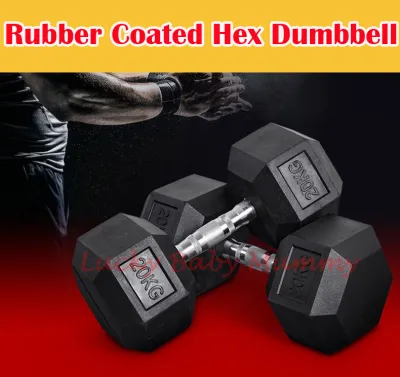
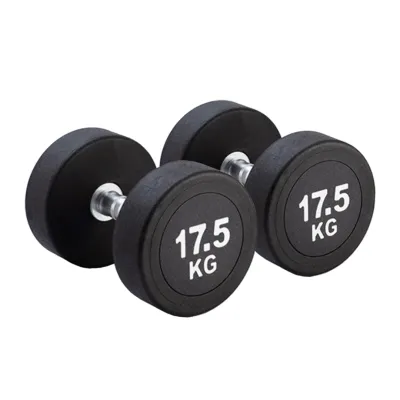
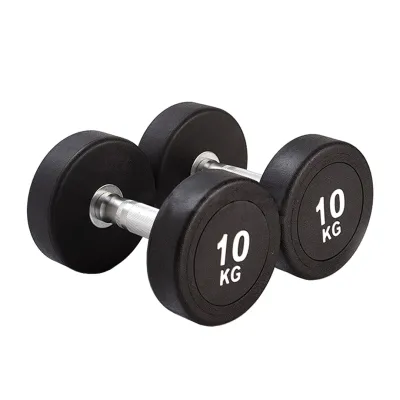
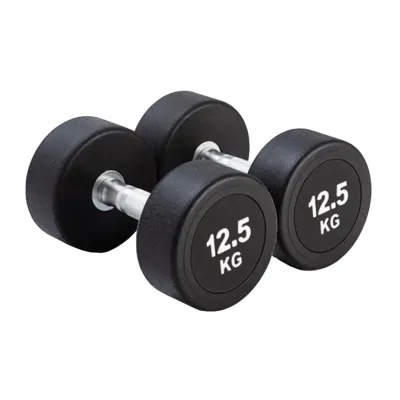
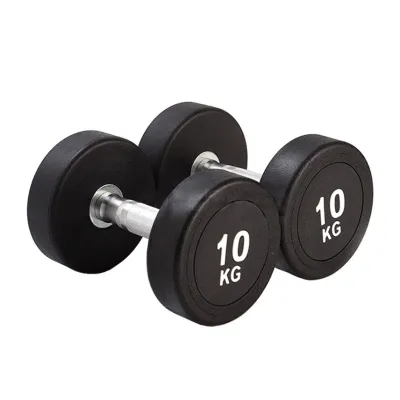
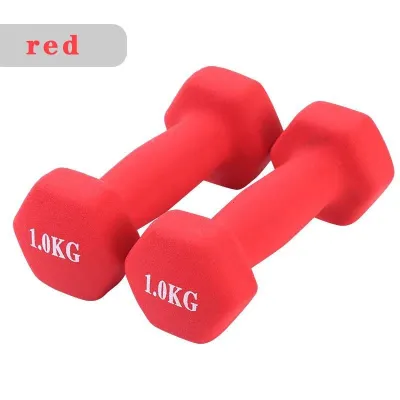
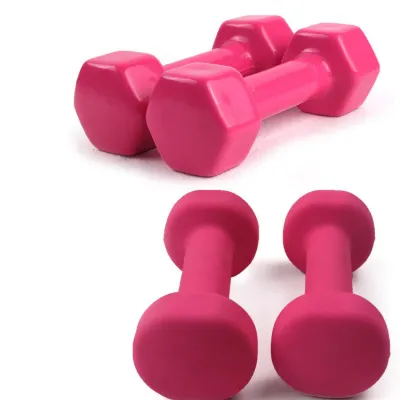
Prices are valid at publication and may change. Please refer to the product page for the latest price.
Round dumbbells, by contrast, present a distinct storage challenge. Because of their circular outer edges, they will roll on any surface that is not perfectly level. To store round dumbbells safely, you generally need a specialized dumbbell rack equipped with curved cradles or individual trays. While these racks keep the weights secure, they occupy a fixed footprint in your room, which may not be ideal if you need to clear your workout area after every session. If you choose round weights, you must factor the physical dimensions and cost of a compatible rack into your overall setup plans.
For those who prefer to keep their floor space completely clear, vertical A-frame racks are a popular choice. Many A-frame racks are designed specifically for hex dumbbells, utilizing the flat surfaces to hold the weights securely in a narrow vertical column. Trying to fit round dumbbells onto a standard flat-shelf rack without protective dividers can lead to shifting weights, pinched fingers, and unexpected noise. If you are retrofitting an existing shelf or cabinet for workout gear, the self-stabilizing nature of the hex shape makes it the more adaptable option.
Safety, Stability, and Floor Protection
Working out in a shared living space or an upper-floor apartment requires careful consideration of noise, vibration, and physical safety. The most immediate safety hazard with round dumbbells in a small room is their tendency to roll. If you set a round dumbbell down quickly between intense sets, a slight tilt in the floor can cause it to roll into furniture, glass doors, or your feet. In a tight workout area where you are constantly stepping around your equipment, an unsecured rolling weight is a constant tripping hazard.

Floor protection is another critical concern, particularly if your home features vinyl, laminate, or ceramic tile flooring. When you place a dumbbell down, the shape determines how the weight is distributed across the floor surface. Hex dumbbells distribute their weight across flat faces, which helps prevent them from rolling, but their sharp corners can concentrate impact force if they are dropped or set down heavily at an angle. This concentrated force can dent wood or chip ceramic tiles. Round dumbbells distribute impact along a continuous curved edge, which can be gentler on floors during a controlled descent, but the subsequent roll can cause secondary impacts with walls or furniture.
To mitigate these risks, home lifters often invest in protective flooring, such as high-density rubber mats. Even with mats, the stability of your weights matters. If you are performing dynamic movements like burpees, jump squats, or lateral hops near your equipment, having weights that stay exactly where you place them is essential. Hex dumbbells provide peace of mind because they remain stationary, allowing you to focus entirely on your movement form rather than tracking rolling equipment.
Exercise Versatility and Grip Comfort
Your training style should heavily influence your choice of dumbbell shape. If your routine includes floor-based, weight-bearing exercises, the stability of the dumbbell is paramount. Exercises like renegade rows, dumbbell push-ups, and plank transfers require you to place your full body weight onto the handle of the dumbbell while it rests on the floor. Performing these movements with round dumbbells is highly unstable and can lead to sudden wrist deviation or slipping, potentially causing joint strain or injury. Hex dumbbells provide a stable, flat-bottomed platform that acts as an extension of the floor, making them the standard choice for functional fitness and metabolic conditioning.
For traditional lifting movements, however, round dumbbells offer distinct ergonomic advantages. Because the weight is distributed evenly in a perfect circle around the handle, round dumbbells feel highly balanced during rotational movements, such as bicep curls, shoulder presses, and snatch variations. There are no corners to catch on your clothing or thighs during tight, linear paths. Additionally, high-end round dumbbells often feature slightly shorter overall heads compared to hex dumbbells of the same weight, which can make them feel more compact and easier to maneuver close to your body.
Grip comfort also varies by design. Many hex dumbbells feature contoured, chrome-plated handles with aggressive knurling to ensure a secure grip even when your hands are sweaty. Round dumbbells are available in a wider variety of handle styles, including straight, thick-grip, and rotating handles. Rotating handles, commonly found on premium round models, allow the weight plates to spin independently of the grip, reducing torque on your wrists during Olympic-style lifts. If your workouts consist primarily of classic strength training and slow, controlled lifts, the ergonomic feel of a round dumbbell may align better with your preferences.
How to Choose the Right Shape for Your Routine
To determine the best option for your home setup, evaluate your space constraints, flooring, and exercise preferences against this practical framework:
Choose hex dumbbells if:
- You have limited space and need to store your weights on the floor, under furniture, or on flat shelves.
- Your workouts frequently include floor-based movements like renegade rows, push-ups, or planks.
- You want to prevent rolling hazards on slightly uneven floors or in tight workout areas.
- You prefer a budget-friendly setup that does not immediately require a specialized storage rack.
Choose round dumbbells if:
- You have a dedicated workout room with enough space for a cradled dumbbell rack.
- Your routine focuses on traditional strength training, pressing, and rotational movements where balance is key.
- You prefer the classic aesthetic and feel of commercial gym equipment.
- You plan to use high-density rubber flooring mats that can accommodate rolling weights safely.
Before making a purchase, verify the dimensions of your designated workout area and check the weight capacity of your flooring. If you plan to buy a storage rack, always double-check its compatibility with your chosen dumbbell shape, as a mismatch can result in unstable storage and potential safety hazards.
Frequently Asked Questions (FAQ)
Can I mix round and hex dumbbells in the same home gym?
Yes, you can mix both shapes in your home gym, but doing so introduces storage and workflow challenges. Standard dumbbell racks are usually optimized for one specific shape; flat-shelf racks hold hex weights well but lack the cradles needed to keep round weights from rolling, while cradled racks may not accommodate the flat edges of hex weights properly. Additionally, mixing shapes can disrupt your momentum during fast-paced supersets, as the transition between a rolling round dumbbell and a stationary hex dumbbell alters your grip, balance, and floor placement habits mid-workout.
Does the coating material matter more than the shape for small spaces?
In a compact home environment, the coating material is just as important as the shape. Dumbbells coated in high-quality urethane or virgin rubber are highly recommended for small spaces because they dampen noise, reduce floor impact, and resist moisture in humid climates. Cheap rubber coatings can release a strong, persistent chemical odor that quickly overwhelms a small, poorly ventilated room. If you are working out in a shared living area, choosing a low-odor urethane or encased rubber dumbbell—regardless of whether it is round or hex—will significantly improve your indoor air quality and protect your floors from scratches.
Community discussion
Share your experience or ask a question. Comments are reviewed before publication.