
Setting up a strength training space within a Housing & Development Board (HDB) flat in Singapore requires balancing your fitness goals with the practical realities of high-density apartment living. When choosing between rubber and iron weight plates, your decision directly impacts your relationship with your neighbors, the structural integrity of your flooring, and the overall air quality of your home. While both materials serve the same fundamental purpose of providing resistance, their physical properties behave very differently within a typical concrete-walled apartment.
Selecting the wrong plate material can lead to costly floor repairs, noise complaints from the units below, or an unusable workout space due to chemical odors. To make an informed investment, you must evaluate how these materials interact with standard HDB floor finishes, tropical humidity, and limited storage spaces. By understanding the distinct characteristics of rubber and iron, you can build a safe, effective, and neighbor-friendly home gym that fits seamlessly into your living space.
Understanding the Core Material Differences
To choose the right equipment, you must first understand the physical composition of these two plate types. Iron plates are typically cast from molten iron, resulting in a highly dense, compact, and rigid disc. Because of this high density, iron plates are significantly thinner than their rubber counterparts, allowing you to fit more weight onto a standard barbell sleeve. The surface of an iron plate is usually finished with paint, enamel, or a hammertone coating to protect the raw metal from the elements.
Products mentioned in this guide
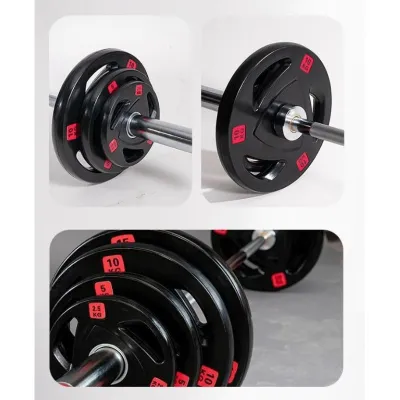
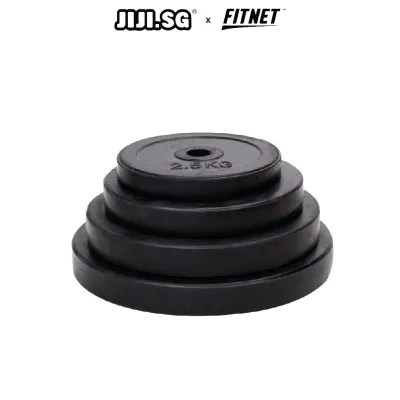
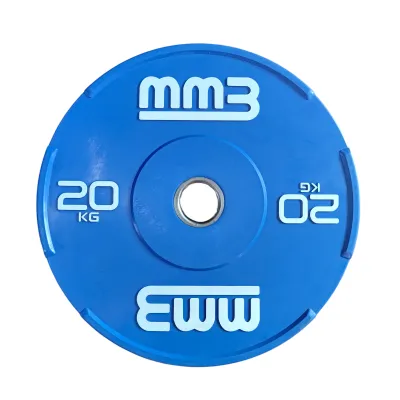
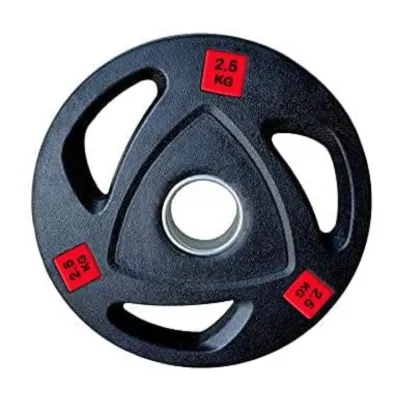
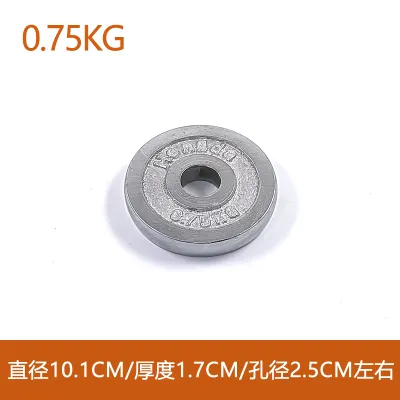
Prices are valid at publication and may change. Please refer to the product page for the latest price.
Rubber plates, which include solid rubber bumper plates and rubber-coated iron plates, have a much larger physical footprint. Bumper plates are constructed from dense vulcanized rubber molded around a central steel insert, ensuring a uniform diameter across different weight increments. Standard rubber-coated plates, on the other hand, feature a cast iron core encased in a protective layer of rubber. This rubber exterior is softer to the touch and provides a built-in buffer, but it significantly increases the thickness of each plate.
These manufacturing variations directly affect how much weight you can load onto your barbell. If you are using a shorter home-use barbell with limited sleeve space, thick rubber plates will quickly fill the sleeves, limiting your maximum lifting capacity. Conversely, thin iron plates allow for heavy loading on short sleeves but lack any external cushioning, leaving the hard metal completely exposed to your environment.
Managing Noise and Neighbor Disturbance
Noise mitigation is a primary concern when training in a Singapore apartment, where concrete floors and shared walls easily transmit sound. Iron plates are notorious for producing a sharp, high-frequency metallic clank whenever they touch, slide along a barbell sleeve, or contact the floor. This airborne noise can easily travel through open windows and thin doors, potentially disturbing family members and immediate neighbors during early morning or late-night workouts.

Rubber plates offer superior sound-dampening properties for airborne noise, muffling the metallic clatter during plate changes and adjustments. However, many lifters mistakenly believe that rubber plates will completely eliminate neighbor complaints. When a weight hits the floor, it generates structure-borne noise—low-frequency vibrations that travel directly through the concrete slab of an HDB building. Because concrete is an excellent conductor of vibration, even a controlled touchdown of a rubber plate can sound like a heavy thud to the neighbor living directly below you.
To manage noise effectively, you must combine your choice of plate material with controlled lifting techniques and proper flooring. You can perform an easy observable check by having a family member stand in an adjacent room or the floor below while you gently set a loaded barbell down. If they can feel the vibration through the floorboards, your current setup is transferring too much impact energy, and you will need to implement thicker dampening materials regardless of whether you use rubber or iron.
Preventing Floor Damage in HDB Flats
Standard HDB flooring typically consists of homogeneous tiles, ceramic tiles, or luxury vinyl tiles (LVT) laid over a concrete screed. These surfaces are highly susceptible to damage from concentrated impact forces. Dropping a bare iron plate, even from a height of just a few centimeters, can easily chip, crack, or shatter ceramic tiles, leading to expensive repair bills. Iron plates concentrate their entire weight onto a very small, hard contact point, making them highly destructive to unprotected floors.
Rubber plates distribute impact force over a slightly wider surface area, and the elastomeric material absorbs a portion of the initial shock. However, rubber is not a magic shield; a heavy rubber plate dropped onto a bare tiled floor can still cause subfloor cracking or loosen the tile adhesive over time. Therefore, using heavy-duty rubber gym mats or dedicated crash pads is an absolute necessity for home workouts, regardless of which plate material you choose.
Before starting any heavy lifting routine, establish clear stop conditions to protect your home’s structure. Inspect your floor regularly for hairline cracks in the tiles or crumbling grout lines around your lifting area. If you observe any signs of structural stress, floor indentation, or tile movement, you must immediately stop training and upgrade your protective flooring platform before resuming your workouts.
Navigating Space and Storage Constraints
HDB flats are known for their compact layouts, meaning every square meter of floor space must be utilized efficiently. Because iron plates are thin, they require very little storage space. You can easily stack a substantial amount of iron weight in a small corner, under a bed, or on a compact A-frame plate tree without encroaching on your living area. This small footprint makes iron highly attractive for lifters operating in tight spare bedrooms or study corners.
Rubber plates, particularly solid bumper plates, demand a much larger storage footprint. Because even light bumper plates (such as 5kg or 10kg variants) share the same large outer diameter as heavier plates, they cannot be easily tucked away in small drawers or low-clearance spaces. Stacking them flat on the floor can quickly create a tripping hazard, meaning you will likely need to invest in a dedicated, heavy-duty plate rack, which takes up valuable floor real estate.
Handling and maintenance also differ between the two materials in tight spaces. Iron plates often feature integrated grip holes or raised rims, making them easy to pick up flat off the floor and carry around. Solid rubber bumper plates can be slippery and difficult to pinch-grip when lying flat. However, rubber is generally easier to wipe clean of sweat and dust, whereas textured iron plates can trap dust in their crevices, requiring more detailed cleaning to maintain a pristine appearance.
Dealing with Odors and Indoor Air Quality
Indoor air quality is a frequently overlooked aspect of setting up an apartment gym. Many HDB training spaces are located in enclosed, air-conditioned bedrooms where ventilation is limited. New rubber products often undergo a process called off-gassing, where volatile organic compounds (VOCs) are released into the air, creating a strong, pungent smell of sulfur or chemicals.
This odor intensity varies significantly depending on the type of rubber used in manufacturing. Recycled rubber plates, which are often the most budget-friendly rubber option, typically emit the strongest and most persistent odors. Virgin rubber and polyurethane (urethane) coatings produce significantly less smell, but they come at a higher price point. If you choose recycled rubber plates, you should plan to leave them in a well-ventilated area, such as a service yard or balcony, for several weeks to allow the initial off-gassing to dissipate before bringing them into an air-conditioned room.
For individuals who are highly sensitive to chemical smells, or for rooms with no external windows, iron plates represent an excellent, completely odor-free alternative. Painted or urethane-coated iron plates do not off-gas, ensuring that your indoor air quality remains completely unaffected. This makes iron a highly practical choice if your workout space must double as a home office or bedroom during the day.
Evaluating Cost and Long-Term Value
When building a home gym in Singapore, budget considerations play a major role in equipment selection. On a per-kilogram basis, cast iron plates are generally the most cost-effective option available on the market. This lower entry price allows you to purchase a wider variety of weight increments for the same initial investment, making it easier to progress your strength training over time.
However, to determine the true long-term value, you must calculate the total cost of your training setup. If you opt for cheaper iron plates, you will need to spend more on high-quality, high-density rubber flooring mats or thick foam crash pads to mitigate the high risk of floor damage and noise. If you choose rubber plates, the initial equipment cost is higher, but you may be able to use slightly less expensive floor protection for controlled, slow-tempo lifting.
Before making a final purchase, always check the current specifications, material purity, and warranty terms provided by local sports retailers. Some warranties may be voided if plates are used on improper surfaces or stored in high-humidity environments. Factoring in these details ensures you do not face unexpected replacement costs down the road.
Making Your Final Decision for Apartment Training
Your choice between rubber and iron weight plates should align with your specific lifting style, budget, and HDB layout. To help guide your purchase, consider the following decision pathways based on common apartment scenarios:
- Choose rubber plates if: You prioritize noise reduction during plate adjustments, perform dynamic lifts where plates might occasionally contact the floor, and have a well-ventilated workout space (or the budget for low-odor virgin rubber or urethane).
- Choose iron plates if: You are working with a strict budget, train in a small, enclosed, air-conditioned room where chemical odors are unacceptable, perform only slow, highly controlled lifts, and have already invested in thick, high-density crash pads.
Keep in mind that neither option may be suitable if your planned equipment weight exceeds the structural limits of your home. Standard HDB residential floors are designed to support a structural load limit of 150 kg per square meter. While this is generally sufficient for standard strength training, you must avoid concentrating massive amounts of weight in a single, small corner of your room. Always verify the exact plate thickness, outer diameter, and material specifications on the product label before checking out to ensure the gear fits your barbell and your space.
Frequently Asked Questions (FAQ)
Can I drop rubber weight plates directly on my HDB floor?
No, you should never drop rubber weight plates directly onto a bare HDB floor. While rubber plates absorb some impact, they still transfer a massive amount of kinetic energy directly into the ground. This concentrated force can easily crack homogeneous or ceramic tiles, damage the underlying concrete screed, and send loud, disruptive vibrations through the building’s structure. To prevent costly property damage and neighbor complaints, you must always use high-density rubber gym mats or dedicated foam crash pads to absorb the impact energy during your lifts.
Do iron weight plates rust in Singapore's humid climate?
Yes, iron weight plates are highly susceptible to rust due to Singapore’s high ambient humidity, especially if they are stored in non-air-conditioned rooms or balconies. Any moisture from the air or sweat from your hands can react with exposed metal to cause oxidation. To prevent rust, wipe your iron plates down with a dry microfiber cloth after every workout to remove sweat. Additionally, periodically inspect the plates for paint chips and apply a thin layer of light mineral oil or a rust-prevention spray to keep the metal protected.
Are bumper plates better than standard rubber plates for home gyms?
Bumper plates offer distinct advantages for specific lifting styles, but they may not be the best choice for every HDB home gym. Bumper plates have a uniform outer diameter and are designed to absorb repeated impacts, making them excellent for Olympic weightlifting or cross-training movements. However, because they are much thicker than standard rubber-coated iron plates, they take up significantly more space on your barbell sleeve and in your storage area. If you primarily perform slow, controlled strength training movements like squats and bench presses, standard rubber-coated plates with integrated grip handles are often more space-efficient and cost-effective.
Community discussion
Share your experience or ask a question. Comments are reviewed before publication.