
Finding a single portable air pump that seamlessly transitions from inflating high-pressure road bike tires to high-volume car tires requires a careful look at technical specifications rather than relying on broad marketing promises. While modern battery-powered inflators offer unprecedented convenience, no single device is universally flawless for every scenario. The key to selecting the right multi-purpose pump lies in balancing maximum pressure capabilities, airflow volume, and battery limits against your specific daily activities. By understanding how these compact devices operate under load, you can choose a reliable tool that keeps your commuter bike, family vehicle, and sports gear properly inflated without risking equipment damage or battery failure.
Key Specifications to Evaluate in a Portable Air Pump
Modern portable air pumps have evolved from simple emergency tools into highly versatile, automated devices. The convenience of carrying a single, lightweight unit that can inflate a car tire on the roadside or top up a football at the pitch has made them a staple for active households. However, to ensure a pump can handle such diverse tasks, you must evaluate its core technical specifications on the product label before purchasing.
Maximum pressure, measured in Pounds per Square Inch (PSI) or Bar, is the first critical metric to check. High-pressure applications, such as narrow road bicycle tires, often require pressures between 80 and 120 PSI. Conversely, passenger car tires typically require much lower pressures, usually between 30 and 35 PSI, but demand a significantly larger volume of air. A pump rated for a maximum of 120 PSI can physically handle the pressure of a road bike, but you must verify that its internal motor and piston design can sustain the workload without overheating when filling larger volumes.
Products mentioned in this guide
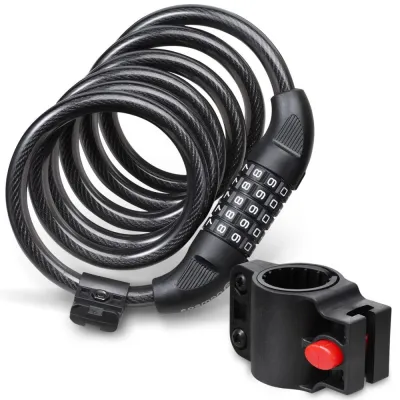
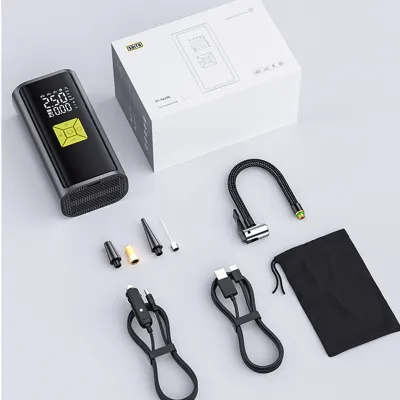
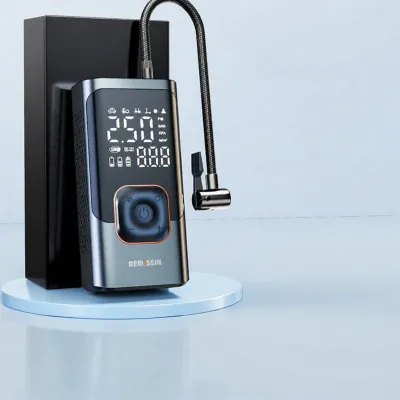
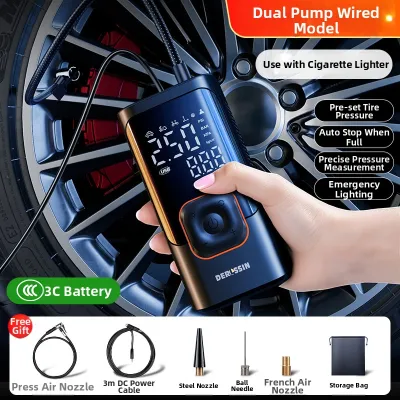
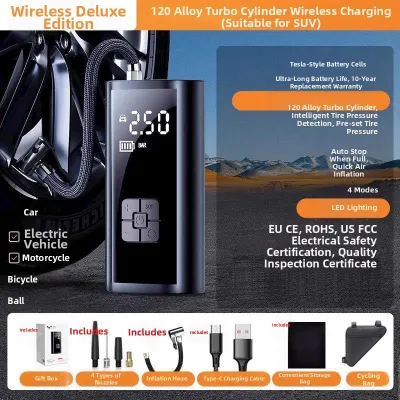
Prices are valid at publication and may change. Please refer to the product page for the latest price.
Airflow rate, typically expressed in liters per minute (L/min), directly dictates how quickly the pump can fill a tire. A compact pump designed solely for sports balls might have an airflow rate of 5 to 10 L/min, which would take an inconveniently long time to inflate a flat car tire. For true multi-purpose utility, look for devices that offer an airflow rate of at least 15 to 25 L/min. This ensures that vehicle tire top-ups can be completed in a few minutes, minimizing roadside exposure and reducing the strain on the pump’s motor.
Another vital specification is the accuracy of the built-in digital pressure gauge and the reliability of its auto-shutoff mechanism. High-quality portable pumps feature digital sensors that read real-time pressure and automatically stop inflating once the pre-set target is reached. This feature is not just a convenience; it is a crucial safety mechanism that prevents dangerous over-inflation. When evaluating a pump, check the manufacturer’s stated gauge tolerance, which should ideally be within +/- 1.5 PSI to ensure precise inflation across all your equipment.
Matching the Pump to Your Primary Inflation Tasks
To find the right balance between portability and power, you must weigh the trade-offs of your primary inflation tasks. A pump optimized for heavy vehicle tires will naturally be bulkier, while an ultra-lightweight cycling pump may struggle with high-volume demands.

Bicycle Tires and Sports Balls
Inflating bicycle tires and sports balls requires a pump that offers precise pressure control and versatile valve compatibility. Bicycles utilize three primary valve types: Schrader (the wide valve common on mountain bikes and cars), Presta (the slender, threaded valve found on road and gravel bikes), and Dunlop (common on utility and city bikes). A multi-purpose pump must include secure, leak-free adapters for all three styles. Using a poorly fitting adapter can lead to air loss during connection, resulting in inaccurate pressure readings and extended inflation times.
For sports balls, such as footballs, basketballs, and netballs, the primary concern is avoiding over-inflation, which can permanently warp the bladder or split the stitching. These items require very low pressures, often between 4 and 12 PSI. The portable pump you choose must have a sensitive digital sensor capable of registering these low thresholds and allowing fine-tuned adjustments in 0.5 PSI increments. Additionally, the pump should include a dedicated ball needle adapter that seats securely into the hose without bending or snapping under pressure.
Portability is another major factor for cyclists and sports enthusiasts. If you plan to carry the pump in a cycling jersey pocket, a small saddlebag, or a sports backpack, weight and physical dimensions are paramount. Look for compact, cylindrical, or pocket-sized designs that weigh under 500 grams. These smaller units are easy to transport but typically feature smaller batteries and lower airflow rates, making them best suited for quick trailside repairs and ball top-ups rather than heavy-duty automotive tasks.
Car Tires and Larger Inflatables
When transitioning to automotive tires or large recreational inflatables, the demands on a portable pump increase exponentially. Inflating a car tire from flat, or even topping up multiple tires before a road trip, requires sustained high-pressure output. This continuous operation generates significant internal heat. You must check the manufacturer’s specified duty cycle—the amount of time the pump can run continuously before requiring a cooling period. A standard duty cycle for a quality portable pump is typically 5 to 10 minutes of continuous run time, followed by a mandatory 15-minute cool-down period to prevent thermal damage to the motor.
Battery capacity and power delivery are equally critical for automotive use. A pump relying solely on a small internal battery may drain completely before finishing a single flat car tire. For peace of mind, consider models that offer dual-power functionality: an internal rechargeable lithium-ion battery for cordless convenience, and a backup 12V DC cable that plugs directly into your vehicle’s cigarette lighter socket. This ensures you are never stranded with a dead pump battery during a roadside emergency. Furthermore, verify that the 12V power cable is long enough to comfortably reach all four wheels of your vehicle from the power outlet.
Finally, pay close attention to the hose construction and connection mechanism. High-volume inflation builds up substantial backpressure, which can cause cheap push-on connectors to pop off the valve stem. A threaded screw-on connector or a heavy-duty quick-release brass chuck provides the most secure connection. The hose itself should be constructed from braided, heat-resistant materials to withstand the high temperatures generated near the pump’s outlet during extended operation.
Power Sources and Battery Management
Choosing the right power source for your portable air pump depends heavily on where and how you plan to use it. The three primary configurations available on the market are cordless lithium-ion units, corded 12V DC plug-in models, and traditional manual pumps. Cordless lithium-ion pumps offer the highest level of convenience, allowing you to inflate tires anywhere without being tethered to a vehicle. However, they require active battery management to ensure they are ready when needed.
When evaluating cordless models, look closely at the battery capacity, usually stated in milliampere-hours (mAh) or Watt-hours (Wh). Do not rely solely on these numbers to estimate performance; instead, look for manufacturer guidelines on how many standard tires the device can inflate on a single charge. For example, a reliable multi-purpose pump should be capable of topping up four car tires or fully inflating several bicycle tires before requiring a recharge. Keep in mind that battery performance naturally degrades over time, so choosing a slightly higher capacity than your bare minimum requirement is a wise long-term strategy.
Charging interfaces and times are also important for daily usability. Modern portable pumps increasingly utilize standard USB-C charging ports, allowing you to recharge the device using common phone chargers, power banks, or vehicle USB ports. This eliminates the need to carry proprietary charging bricks. Check the expected charging time from empty to full; most quality units require between two and four hours to recharge completely. Avoid leaving the pump permanently connected to a charger once it reaches 100%, as prolonged overcharging can shorten the lifespan of the lithium-ion cells.
Environmental factors play a massive role in battery health and safety, particularly in tropical climates like Singapore. High ambient temperatures can accelerate the self-discharge rate of lithium-ion batteries and cause permanent capacity loss. Storing a battery-powered pump inside a hot car trunk or glove compartment parked under direct sunlight can lead to thermal degradation or, in extreme cases, safety hazards. To maximize the lifespan of your cordless pump, store it in a cool, dry, climate-controlled indoor environment when not in use, and bring it along only when planning trips or activities.
Practical Shortlisting Checklist for Online Shopping
When browsing e-commerce platforms and online marketplaces, it is easy to get overwhelmed by flashy graphics and exaggerated performance claims. To make an objective decision, use a structured checklist to filter and compare different models based on practical, verifiable features.
First, set a realistic budget. In the local market, reliable multi-purpose portable air pumps generally range from S$40 to S$120. Entry-level models around S$40 to S$60 often provide basic digital displays and sufficient power for bicycles and occasional car tire top-ups. Premium models ranging from S$80 to S$120 typically offer higher airflow rates, larger battery capacities, robust thermal management, and more durable metal construction. Avoid ultra-cheap, unbranded options under S$20, as they often compromise on gauge accuracy, battery safety, and motor durability.
Next, evaluate the physical design and ergonomics. A good portable pump should feel solid and balanced in your hand, with an intuitive button layout that is easy to operate even when wearing cycling gloves. Look for models with rubberized grips or anti-slip textures to prevent the device from slipping out of your hands during roadside use. Additionally, check the weight; a unit weighing between 400 and 700 grams strikes a good balance between robust internal components and comfortable portability.
Noise and vibration are often overlooked but can significantly impact your user experience. Small, high-speed electric motors and pistons generate substantial noise, often exceeding 80 decibels (dB) during operation. This can be surprisingly loud, especially in enclosed spaces like multi-storey car parks. Look for product specifications or user feedback that mention noise levels, and prioritize models that incorporate internal dampening materials or rubber feet to minimize vibration and noise transmission to the ground.
Finally, consider the storage and organization of accessories. A multi-purpose pump is only useful if you have the correct adapter on hand when you need it. Look for models that feature integrated storage compartments directly on the pump body to hold the ball needle and valve adapters. Alternatively, choose a pump that comes with a dedicated, durable carrying pouch or hard case that keeps the pump, hose, charging cable, and all adapters neatly organized together, preventing the loss of small, critical components.
Frequently Asked Questions (FAQ)
Can one portable air pump safely handle both high-pressure road bikes and car tires?
Yes, a single high-quality portable air pump can safely handle both applications, provided you verify its technical limits before use. To do this, check the maximum PSI rating of the pump against the recommended inflation pressure printed on your road bike tire’s sidewall. If your road bike requires 100 PSI and the pump is rated for up to 120 PSI, it is physically capable of reaching that pressure. However, because road bike tires require high pressure but very low volume, the pump must have a highly accurate digital gauge to prevent over-inflation. Conversely, car tires require low pressure but high volume. While the pump will not struggle with the pressure limit of a car tire, it will run longer to fill the larger volume. Always monitor the pump’s temperature during automotive use and allow it to cool down to prevent overheating.
How should I maintain the battery of a cordless air pump for long-term reliability?
Maintaining the lithium-ion battery of a cordless air pump requires adhering to standard battery care practices to prevent premature capacity loss. First, avoid letting the battery drain completely to 0% before recharging, as deep discharges place significant stress on the cells; instead, recharge the device after each major use or when the battery indicator drops below 30%. Second, store the pump in a cool, dry place away from direct sunlight and extreme heat. Avoid leaving the device in a parked car trunk during hot days, as high temperatures accelerate battery degradation. Finally, if you store the pump for extended periods without use, check the battery level every three to six months and top it up to approximately 50% to 80% capacity. Storing a lithium-ion battery completely empty or completely full for long periods can permanently reduce its overall lifespan.

Community discussion
Share your experience or ask a question. Comments are reviewed before publication.