
Selecting the ideal ROCKBROS bike light for navigating Singapore’s Park Connector Network (PCN) requires balancing personal visibility with the safety of other path users. The PCN is a shared space where cyclists, runners, and pedestrians coexist, meaning your lighting setup must illuminate dark stretches without causing discomfort or temporary blindness to oncoming traffic. To find the right model, you must evaluate the specific light output, beam shape, battery capacity, and mounting stability that align with your typical riding hours and route conditions.
Understanding Lighting Needs on the Park Connector Network
The PCN spans hundreds of kilometers across Singapore, connecting various parks and residential estates. While many sections of these paths are well-lit by municipal streetlights, the lighting environment is highly inconsistent. Cyclists frequently transition from brightly illuminated urban corridors to pitch-black stretches under dense tree canopies, coastal paths, or beneath low-clearance underpasses. These sudden transitions require a front light that can adapt quickly to changing ambient light levels, ensuring you can spot obstacles like tree roots, debris, or wet patches on the pavement.
Shared-path etiquette is a critical consideration when riding at night in Singapore. High-powered bicycle lights can easily blind oncoming pedestrians, runners, and other cyclists if the beam is directed too high or lacks proper beam control. Blinding other path users increases the risk of head-on collisions or sudden swerves. Therefore, selecting a light with adjustable brightness modes or a dedicated anti-glare lens design is not just a matter of convenience, but a fundamental safety requirement for PCN riders.
Products mentioned in this guide
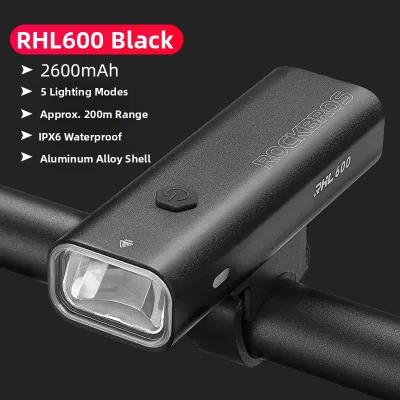
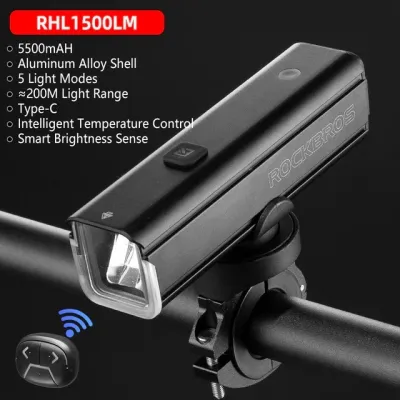
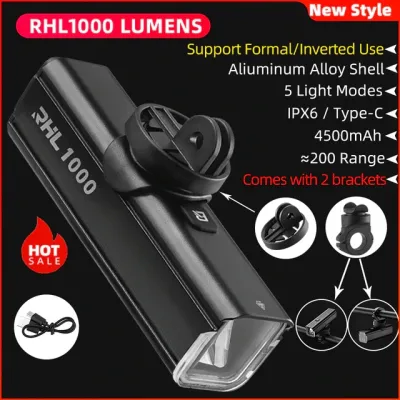
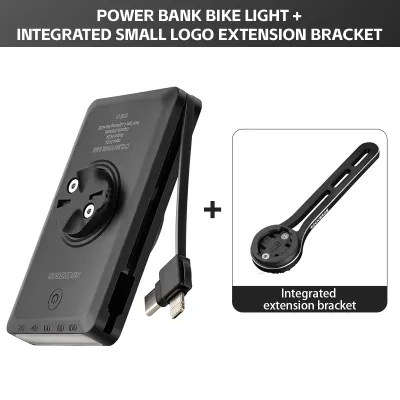
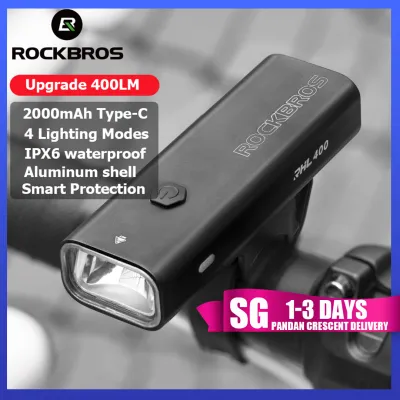
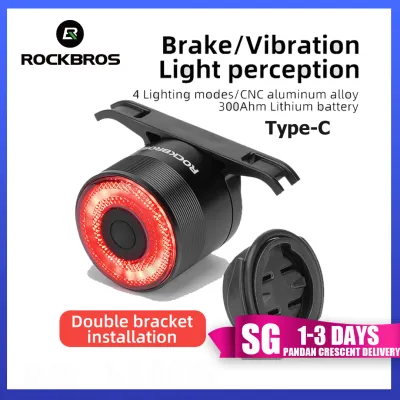
Prices are valid at publication and may change. Please refer to the product page for the latest price.
In addition to forward illumination, side visibility is paramount when navigating the PCN. The network frequently intersects with minor roads, driveways, bus stops, and pedestrian crossings where vehicles or pedestrians may emerge unexpectedly from the side. A bike light that projects light laterally, or has side cut-outs in the bezel, ensures that you remain visible to traffic approaching from perpendicular angles. This lateral visibility is crucial during twilight hours and heavy downpours when overall road visibility drops significantly.
Evaluating Brightness, Beam Pattern, and Battery Specs
When browsing ROCKBROS bike lights on online marketplaces, brightness is measured in lumens. For the PCN, a light producing 400 to 800 lumens is generally sufficient. In well-lit park sections, a lower setting of 150 to 200 lumens conserves battery while keeping you visible. When entering unlit, wooded zones, ramping up the output to 400 or 800 lumens provides enough throw to react to obstacles. Avoid excessively high outputs unless the light features a highly controlled beam pattern, as uncontrolled beams scatter light in all directions.

The beam pattern is just as important as raw lumen output. Standard flashlight-style lights project a symmetrical, circular beam that shines into the sky and directly into the eyes of oncoming path users. Look for models featuring an asymmetric or cut-off beam pattern, often referred to as an anti-glare beam. This design shapes the light so the top of the beam is cut off horizontally, directing illumination downward onto the path surface while keeping oncoming pedestrians in the shadow.
Battery runtime must match your riding habits. Manufacturers list runtimes for each brightness level, and running a light at maximum output drains the battery much faster than using a medium setting. If your typical night ride along the PCN lasts two hours, select a light with a stated runtime of at least three to four hours at your preferred brightness. This safety margin ensures you are not left in the dark if your ride is delayed by a flat tire or a sudden rainstorm.
The mounting mechanism is another critical specification to verify. The PCN features various surface textures, including smooth asphalt, concrete slabs, and wooden boardwalks. A flimsy mount will cause the light to rattle or shift position when riding over bumps. Check the product specifications to ensure the mount is compatible with your handlebar diameter, whether you have standard round bars or aerodynamic integrated bars. Look for robust silicone straps, reinforced plastic brackets, or out-front mounts that bolt securely.
Singapore’s tropical climate demands excellent weatherproofing for cycling electronics. Sudden, heavy downpours can occur at any time of year, and high humidity is a constant factor. When evaluating a bike light, check the official Ingress Protection (IP) rating. An IPX6 rating indicates protection against powerful water jets, making it highly suitable for heavy rain. Avoid lights with lower ratings, such as IPX4, if you plan to ride regularly in wet weather, as they may fail during a sudden thunderstorm.
Configuring a Complete Front and Rear Setup
A safe night-riding configuration on the PCN requires a dual-light strategy consisting of a primary front light and a reliable rear light. The front light illuminates your path so you can see obstacles while alerting others to your approach. When riding through brightly lit urban sections of the PCN, switching your front light to a low-power steady or gentle pulsing mode is often sufficient. This alerts pedestrians without causing glare, while preserving battery life for the darker segments of your route.
The rear light is your primary defense against rear-end collisions from faster cyclists or personal mobility device users approaching from behind. A good rear light should offer both steady and flashing modes. While a flashing mode is highly effective at catching attention in busy environments, a steady mode makes it easier for trailing riders to judge their distance. Many cyclists prefer using a light that combines a low-intensity flash with a steady background glow, or using two small rear lights for optimal depth perception.
If your chosen front and rear lights have narrow beam angles, you should consider adding supplementary side-visibility accessories. These can include small amber lights that clip onto your frame, reflective wheel strips, or spoke lights. Because the PCN crosses numerous driveways and side streets, ensuring that your bicycle profile is visible from the side is just as important as forward and rearward visibility. These simple additions create a 360-degree safety envelope, making your presence clear to drivers and pedestrians from any angle.
Maintaining Your Lights in a Tropical Climate
Operating electronic devices in Singapore’s hot and humid environment requires regular maintenance to prevent premature failure. The combination of high humidity, sweat, and road grime can degrade rubber seals and corrode charging ports over time. After every wet ride, make it a habit to wipe down your bike lights with a soft, damp cloth to remove dirt and salt residue. Pay close attention to the charging port cover; ensure it is fully seated and dry before plugging in a charging cable to prevent short circuits.
Lithium-ion batteries, which power most modern rechargeable bike lights, are sensitive to extreme temperatures. Never leave your bike lights inside a parked car under the sun or exposed to direct sunlight on a balcony for extended periods. High heat accelerates battery degradation, reducing its overall lifespan and capacity. Additionally, avoid storing your lights with a completely depleted battery. If you finish a ride and the battery indicator is red, charge the light to at least half capacity before storing it to prevent permanent cell damage.
Regularly inspect the mounting brackets and rubber straps for signs of wear. The intense UV radiation in Singapore can cause rubber and silicone components to become brittle and crack over time. If you notice any fine cracks or loss of elasticity in the mounting straps, replace them immediately to prevent the light from falling off during a ride. Applying a thin layer of silicone grease to the rubber seals of the charging port can also help maintain their flexibility and water-resistant properties over years of use.
Frequently Asked Questions (FAQ)
How do I avoid blinding pedestrians on shared paths?
To prevent blinding pedestrians and oncoming cyclists on the PCN, you should physically angle your front light downward so the center of the beam hits the ground approximately five to ten meters in front of your bicycle. This ensures the brightest part of the light illuminates the path surface rather than shining directly into the eyes of oncoming trail users. Additionally, when transitioning from dark, unlit sections to well-lit areas or crowded plazas, manually switch your light to a lower brightness setting or a dedicated anti-glare mode to maintain a polite and safe riding environment.
What water resistance rating should I look for?
For reliable performance in Singapore’s tropical climate, look for a bike light with an official rating of at least IPX6. This rating ensures the light can withstand high-pressure water sprays from any direction, which is typical of heavy downpours on the PCN. While an IPX5 rating offers decent protection against light rain, an IPX6 or IPX7 rating provides the peace of mind needed when caught in a sudden monsoon storm. Always verify this rating on the manufacturer’s official packaging or product specifications, and ensure the USB charging port cover is tightly sealed before heading out into the rain.

Community discussion
Share your experience or ask a question. Comments are reviewed before publication.