
Choosing between a side mount and a center mount bicycle kickstand depends on your bike’s frame design, its carrying load, and where you plan to park. Side mounts offer lightweight agility and clear ground clearance, while center mounts provide robust, upright stability for heavy cargo or daily utility setups. Before making a purchase, understanding how these two mounting styles interact with your bicycle frame is essential for ensuring a secure fit and preventing damage to your ride.
The fundamental difference between these two styles lies in where they attach to the frame and how they distribute the bicycle’s weight. A side mount kickstand attaches near the rear hub, supporting the bike by leaning it over at an angled stance. A center mount kickstand attaches directly behind the bottom bracket, holding the bike in a more upright position. While personal preference plays a role, your bike frame’s physical mounting points and the manufacturer’s structural specifications are the ultimate limiting factors.
For riders navigating urban pathways, commuting to work, or enjoying weekend rides along the Park Connector Network (PCN), a reliable kickstand prevents the need to lean a clean frame against rough concrete walls or signposts. However, installing the wrong type can lead to frame scratches, mechanical interference, or even a tipped-over bicycle. By evaluating your frame’s geometry and your typical cargo load, you can select a kickstand that keeps your bicycle secure in any parking scenario.
Products mentioned in this guide
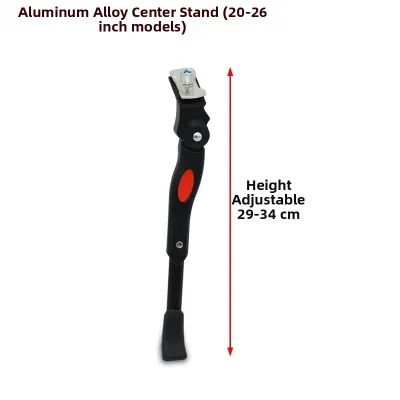
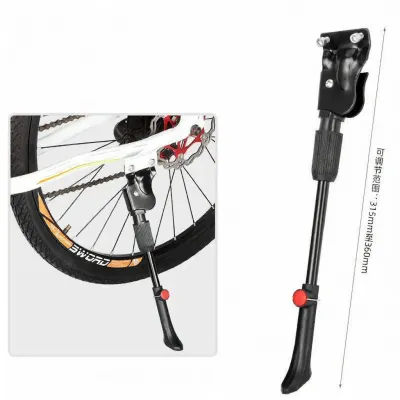
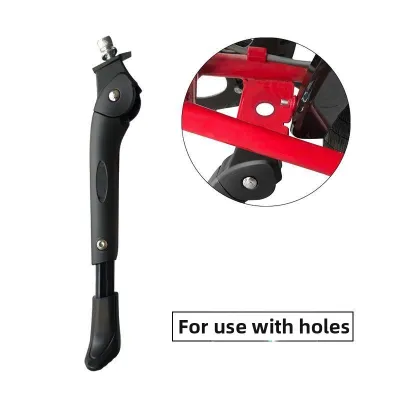
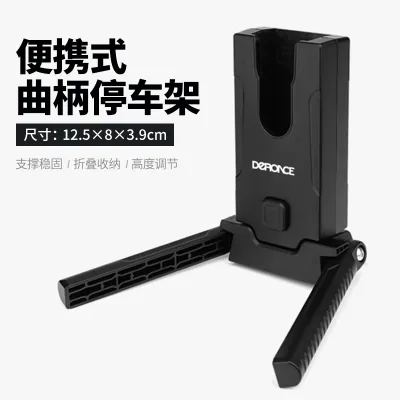

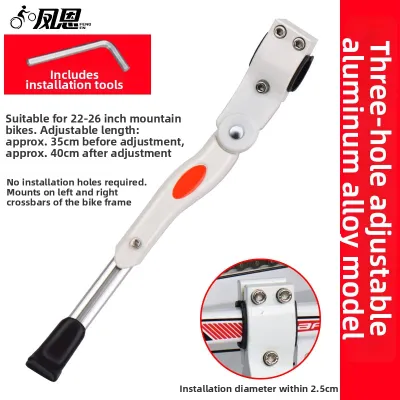
Prices are valid at publication and may change. Please refer to the product page for the latest price.
Side Mount Kickstands: Agility and Minimalist Setups
Side mount kickstands are the go-to choice for riders who prioritize a lightweight setup, clean aesthetics, and maximum ground clearance. These kickstands typically clamp onto the left chainstay and seatstay near the rear wheel axle, or bolt directly into integrated frame eyelets. Because they are positioned far back on the bicycle frame, they remain completely out of the way of your pedaling stroke, eliminating any risk of heel strike.
One of the primary advantages of a side mount is its minimalist profile. When folded, the kickstand arm tucks neatly along the chainstay, maintaining the bike’s aerodynamic lines and preventing it from catching on low-lying brush or trail obstacles. This makes side mounts highly popular for gravel bikes, cross-country mountain bikes, and sporty hybrid commuters where maintaining ground clearance is crucial for handling uneven terrain.
However, the leaning angle inherent to side mounts introduces specific balance challenges. Because the bike rests at an angle, its stability relies heavily on the front wheel remaining straight. If the front wheel flops to one side, the bike’s center of gravity shifts, which can cause the bicycle to pivot and fall over. Additionally, on soft grass, wet soil, or hot asphalt, the concentrated weight on the single foot of a side mount can cause it to sink, leading to a tip-over.
Clearance is another factor to verify when choosing a side mount. If your bicycle is equipped with wide tires, large rear panniers, or low-hanging gear, you must ensure the kickstand arm does not rub against these components when retracted. Furthermore, modern disc brake calipers are often mounted on the inside of the rear triangle, which can limit the physical space available for traditional clamp-on side mounts.
Center Mount Kickstands: Stability and Cargo Capacity
Center mount kickstands are designed for maximum stability, making them the preferred option for heavy utility bikes, touring rigs, e-bikes, and family commuters. These kickstands mount directly behind the bottom bracket shell, utilizing either a dedicated metal mounting plate built into the frame or a sandwich-style clamp that grips the chainstays. By supporting the bicycle at its physical center of gravity, center mounts provide a highly balanced foundation.

Within the center mount category, you can choose between single-leg and dual-leg designs. Single-leg center mounts function similarly to side mounts but keep the bike more upright due to their central positioning. Dual-leg center mounts, however, lift the front or rear wheel completely off the ground when deployed, holding the bicycle perfectly vertical. This vertical stance is incredibly beneficial when loading heavy groceries into panniers, adjusting gear, or securing a child into a rear-mounted seat.
Despite their superior stability, center mounts come with notable trade-offs, primarily regarding weight and ground clearance. A robust dual-leg center mount is significantly heavier than a minimalist side mount, which may concern riders focused on climbing efficiency. Additionally, because they sit low beneath the bottom bracket, center mounts reduce the bike’s ground clearance, making them prone to scraping when riding over high curbs, speed bumps, or rocky paths.
Pedal clearance is another critical consideration with center-mounted options. When the kickstand is deployed, the left crank arm cannot rotate fully without striking the kickstand arm. If you accidentally roll your bicycle backward with the kickstand down, the pedal strike can scratch your crank arms or bend the kickstand mechanism. Riders must develop the habit of fully retracting the kickstand before moving the bicycle even a few inches.
Verifying Frame Compatibility and Mounting Points
Before purchasing a bicycle kickstand, you must perform a physical inspection of your frame to determine which mounting styles are physically compatible. The most reliable connection is achieved through dedicated, pre-drilled mounting points integrated by the frame manufacturer. For center mounts, look for a flat metal plate with a central bolt hole located directly behind the bottom bracket shell. If this plate is absent, installing a center mount requires a clamp-on adapter, which can easily crush thin-walled aluminum or steel chainstays if over-tightened.
For side mounts, inspect the left rear dropout area near the axle. Many modern commuter and hybrid frames feature integrated eyelets specifically designed for direct-mount kickstands. The two most common industry standards are KSA 18 (which features an 18mm bolt hole spacing) and KSA 40 (which features a 40mm spacing). Measuring the distance between these holes with a caliper or ruler ensures you purchase a compatible direct-mount model that bolts securely to the frame without the need for bulky clamps.
If your frame lacks any dedicated mounting points, clamp-on options are the alternative, but they require careful installation. Clamp-on side mounts use rubber-lined brackets to grip the chainstay and seatstay. While functional, these clamps carry a risk of slipping over time, especially if the bike is parked on a slope or loaded with gear. If the clamp slips, the kickstand arm can swing inward and jam into your rear wheel spokes, causing severe wheel damage or a sudden crash.
You must also check for mechanical clearance conflicts with other bicycle components. Ensure that the mounting hardware does not pinch or rub against rear derailleur cables, rear brake hoses, or sensor wires on e-bikes. On full-suspension mountain bikes, the rear triangle moves independently of the front triangle; consequently, traditional kickstands are generally incompatible because the suspension movement will cause the kickstand to bind or strike the frame.
Matching the Kickstand to Your Riding Routine
To finalize your decision, evaluate your typical daily riding routine, parking environments, and cargo habits. If your rides consist of quick cafe stops, casual cruising along paved paths, or commuting with a lightweight backpack, a side mount kickstand offers the perfect balance of convenience and weight savings. It provides quick deployment for brief stops without adding unnecessary bulk to your bicycle.
Conversely, if your routine involves heavy-duty utility tasks, a center mount is the superior choice. If you regularly carry loaded panniers, transport children, or ride a heavy e-bike that is difficult to balance on a lean, the upright stability of a center mount—especially a dual-leg model—is essential. It ensures your bike remains upright on busy pavements, in sheltered bike bays, or inside HDB void decks, preventing expensive damage to your accessories and frame.
Consider also the typical terrain where you park. If you frequently park on soft grass, gravel, or uneven dirt paths, a side mount with a wide plastic foot or a dual-leg center mount will prevent the bike from sinking. For flat, concrete surfaces, either style will perform well, allowing you to base your choice entirely on your bike’s frame compatibility and carrying capacity. Investing in a high-quality, adjustable kickstand tailored to your specific frame ensures your bicycle remains safe and upright wherever your journey ends.
Frequently Asked Questions (FAQ)
Can I Install a Kickstand on a Carbon Fiber Frame?
Installing a kickstand on a carbon fiber frame is generally not recommended and can void your manufacturer’s warranty. Carbon fiber tubes are engineered to withstand specific riding forces but are highly vulnerable to localized clamping pressure. Clamping a kickstand onto carbon chainstays can easily crush or micro-fracture the composite layers, leading to sudden frame failure under load. If your carbon frame does not feature dedicated, manufacturer-approved direct-mount eyelets, you should avoid kickstands entirely and utilize alternative parking solutions, such as leaning the rear tire against a wall or using a portable, plug-in floor stand.
Do Kickstands Affect Bicycle Resale Value?
Yes, aftermarket kickstands can negatively impact a bicycle’s resale value if they leave permanent physical damage on the frame. Clamp-on kickstands frequently scratch the paint, wear away protective clear coats, or leave deep gouges in aluminum and steel tubes over time. For high-end road, gravel, or mountain bikes, these cosmetic blemishes can deter potential buyers and lower the market value. To preserve your bike’s resale value, consider applying thick, clear frame protection tape beneath any clamp-on mounting brackets, or stick exclusively to direct-mount kickstands that bolt into dedicated eyelets without contacting the painted frame surfaces.
Community discussion
Share your experience or ask a question. Comments are reviewed before publication.