
Setting up a suspension trainer in an HDB flat is highly feasible, but it requires careful evaluation of three spatial dimensions: anchor height, body extension length, and lateral movement width. Before purchasing or installing, you must measure your available clearance and verify that your chosen anchor point can safely handle dynamic body weight. This guide will help you assess your living room or bedroom to ensure a safe and effective workout environment.
To use a suspension trainer comfortably in an HDB flat, you generally need a clear floor area of about 2.4 to 2.8 meters in length and 1.5 to 2 meters in width, along with an anchor point positioned between 2.1 and 2.7 meters high. This space allows you to lean back, extend your limbs, and swing safely without hitting walls, furniture, or ceiling fixtures. While HDB flats are highly suitable for suspension training, success depends on verifying your specific room dimensions, ceiling height, and structural anchor points before you begin.
Assessing Ceiling Height and Anchor Point Clearance
HDB ceiling heights typically range from 2.6 meters to 2.8 meters, with some newer BTO flats or older units varying slightly. Most suspension trainer manufacturers recommend an anchor height of 2.1 to 2.7 meters. This means standard HDB ceilings are generally ideal, but you must measure your exact vertical clearance from the floor to your intended mounting point to ensure the straps can hang at the correct angle.
Products mentioned in this guide
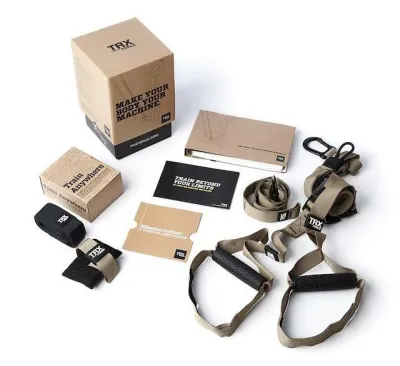

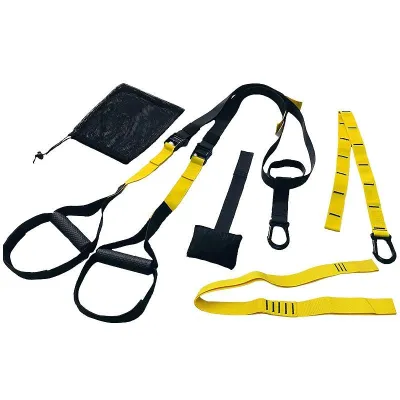
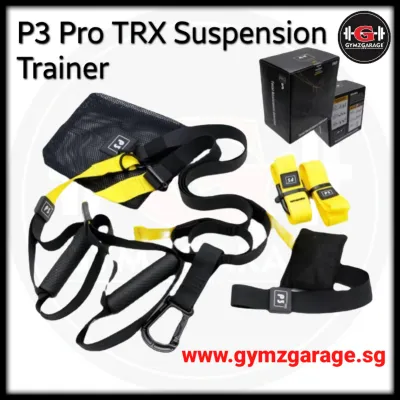
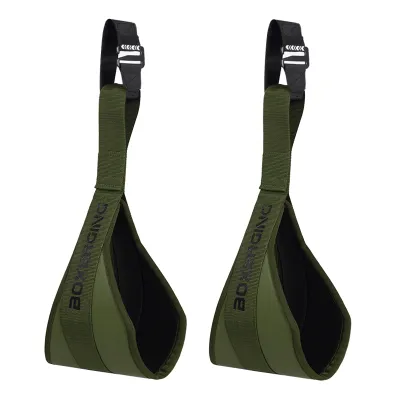

Prices are valid at publication and may change. Please refer to the product page for the latest price.
A critical step is checking for overhead obstructions. Ceiling fans, hanging light fixtures, and air conditioning trunking are common in Singaporean homes. A spinning ceiling fan poses an immediate hazard if your straps or limbs drift into its path. Ensure your anchor point keeps the straps at a safe distance—ideally at least 1.5 meters away from the sweep radius of any ceiling fan.
Lower ceiling heights or low-hanging beams can restrict certain exercises. For example, fully upright overhead presses or standing jumps might cause your hands or head to contact the ceiling. If your clearance is tight, you will need to modify these movements by performing them from a kneeling, seated, or more inclined position to keep your workouts safe and effective.
Calculating Floor Space for Full-Body Movements
The floor space you need is dynamic, not static. When you perform exercises like chest presses, rows, or lunges, your body leans at an angle, extending your overall footprint. To calculate the required length, stand at your planned anchor point and walk backward. You need enough length to fully extend your arms and body at a 30- to 45-degree angle, plus an extra safety buffer. Typically, a clear path of 2.4 to 3 meters extending outward from the anchor point is sufficient.

Lateral width is equally important for stability and multi-directional movements. Exercises like side lunges, crossover lunges, or wide-grip rows require you to step or swing sideways. A clear width of at least 1.5 to 2 meters centered along your workout path ensures you can adjust your stance or recover your balance without colliding with nearby objects.
Always establish a clear safety buffer zone. HDB living rooms often feature coffee tables, TV consoles, sofas, and dining sets. Before starting a session, push lightweight furniture aside to create an open zone. Ensure there are no sharp corners, glass surfaces, or fragile home decor items within your maximum reach in any direction.
Choosing a Safe Anchor Point in Your HDB Flat
Finding a secure anchor point is the most critical safety factor in suspension training. If you plan to use a door mount, you must evaluate the door’s construction. Standard HDB bedroom doors are often hollow-core composite doors, which are not designed to support dynamic human weight. Using a suspension trainer on a hollow-core door can crack the wood panels or pull the hinges out of the frame. Solid timber doors, such as main entrance doors, are far more robust and suitable, provided you check that the hinges are tightly screwed and the frame is solid.
For those considering a permanent ceiling or wall mount, structural concrete is the only safe option. In an HDB flat, structural beams and concrete ceiling slabs offer excellent load-bearing capacity. However, you must never drill into pre-tensioned concrete components or structural columns without verifying HDB renovation guidelines. Always check for concealed electrical wiring or water pipes before drilling, and consider hiring a licensed contractor to ensure the mount is anchored securely with appropriate heavy-duty concrete expansion bolts.
If permanent drilling is not permitted—such as in rental flats—or if your walls are unsuitable, alternative solutions are available. A heavy-duty doorway pull-up bar that wedges securely into a solid door frame can serve as a temporary anchor point, provided it is rated for your weight and checked before every use. Alternatively, freestanding suspension training frames or outdoor fitness corners in your neighborhood estate can offer excellent, drill-free workout spaces.
Space-Saving Storage and Quick Setup Solutions
One of the greatest advantages of a suspension trainer in a compact HDB flat is how easily it can be packed away. Look for systems that feature quick-release carabiners or modular straps. When your workout is finished, you can unhook the trainer, roll up the straps, and place them into a compact mesh storage bag in under a minute, keeping your living room completely free of clutter.
Discreet storage spots help maintain a tidy home. The rolled-up trainer can be hung on a simple hook behind a bedroom door, placed in a drawer, or tucked into the dead corners of your wardrobe. This ensures that your daily walking paths remain clear and your home aesthetic is preserved when you are not exercising.
It is highly recommended to avoid leaving your suspension straps permanently hanging, especially near windows or balconies. Prolonged exposure to direct sunlight and UV rays can degrade the nylon webbing over time, weakening the material and compromising safety. Storing the straps indoors in a dry, shaded place also prevents accidental snagging by pets, children, or passing family members.
Common Space Planning Mistakes to Avoid
A frequent mistake is failing to account for dynamic load. When you perform explosive movements, jumps, or rapid transitions, the force exerted on the anchor point can be significantly higher than your static body weight. An anchor that feels secure during a gentle lean might fail under sudden, dynamic stress. Always verify that your mounting hardware and structural anchor are rated to handle several times your body weight to ensure a wide safety margin.
Ignoring the swing radius is another common hazard. When you lose balance or transition between exercises, the straps act as a pendulum. If your workout space is too narrow, any sudden slip can swing you directly into a nearby wall, door frame, or furniture piece. Always test your full range of motion at a slow, controlled pace before increasing your workout intensity.
Lastly, never rely on improper hardware. Standard plastic wall plugs, drywall anchors, or adhesive hooks are entirely unsuitable for suspension training and will fail immediately under load. Only use heavy-duty, steel structural mounts specifically rated for human suspension, and install them using high-quality concrete sleeve anchors or lag bolts into solid structural elements.
Frequently Asked Questions (FAQ)
Can I use a suspension trainer on a standard HDB bedroom door?
Yes, but only if you perform specific safety checks first. Many HDB bedroom doors are hollow-core doors, which lack the internal structural strength to support dynamic body weight and may crack or warp under load. Solid wood doors, such as those often used for main entrances, are much safer. Always place the door anchor on the side of the door that closes toward you, so your body weight pulls the door shut against the sturdy door frame rather than pulling it open against the latch. Inspect the hinges, latch, and frame for any signs of wear or looseness before every workout.
Do I need to drill holes in my HDB ceiling for a permanent mount?
A permanent ceiling mount does require drilling into the concrete slab, which must be done carefully. You must consult HDB renovation guidelines to ensure you do not drill into structural columns or pre-cast walls where drilling is restricted. It is highly recommended to engage a professional handyman or contractor who can use a digital scanner to avoid concealed electrical conduits. If you are renting or prefer not to drill, non-permanent alternatives like a heavy-duty doorway pull-up bar or a freestanding training frame are excellent options that require no structural modifications.
Community discussion
Share your experience or ask a question. Comments are reviewed before publication.