
Starting your taekwondo sparring journey is an exciting milestone, but walking into a martial arts supply store or browsing online can quickly become overwhelming. With dozens of protective items available, from headguards to specialized instep protectors, it is easy to overspend on gear you might not actually use for months. Knowing what to prioritize ensures you stay safe on the mats without draining your budget on unnecessary equipment.
The key to smart purchasing lies in distinguishing between immediate safety essentials and optional upgrades that you can acquire as your skills progress. Beginners do not need the most expensive, competition-grade gear on day one. Instead, focusing on basic, well-fitting protective items that meet your specific school’s requirements will keep you protected while allowing you to focus on mastering your kicks and footwork.
Check Your Dojang Rules and Sparring Style Before Buying
Before spending a single dollar on taekwondo sparring gear, your very first step must be to consult your instructor and review your dojang’s specific rules. Every training hall operates differently, and buying gear prematurely often leads to costly compatibility mistakes. Many schools in Singapore provide communal chest protectors and headgear for beginners to use during class, meaning you might only need to purchase personal items like groin guards and mouthguards initially.
Products mentioned in this guide
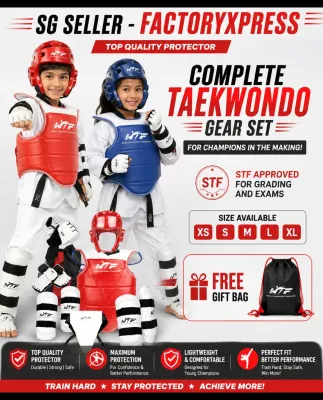
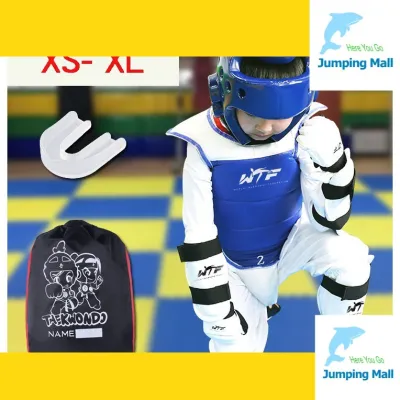
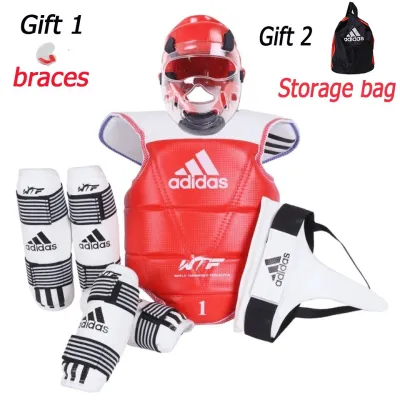
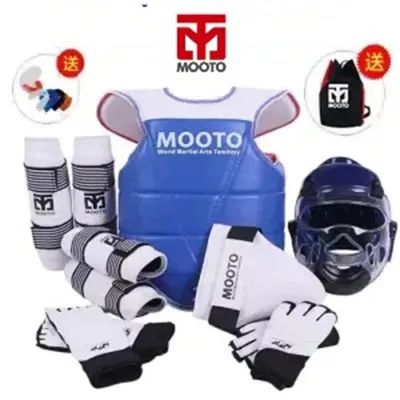
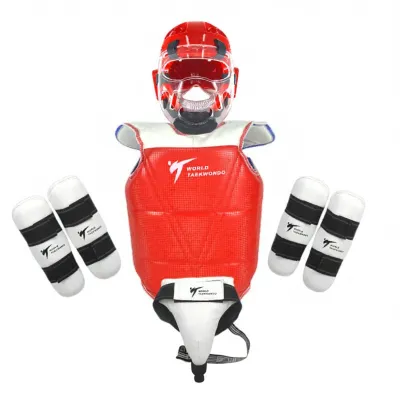
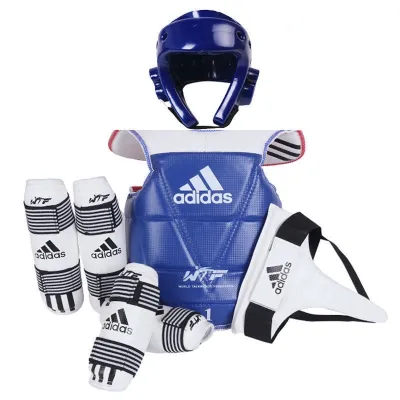
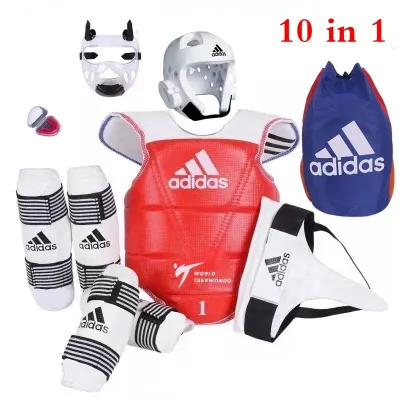
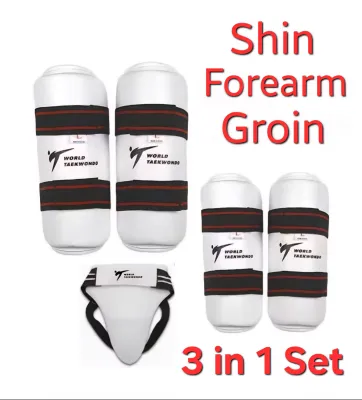
Prices are valid at publication and may change. Please refer to the product page for the latest price.
Furthermore, the style of taekwondo practiced at your school dictates the exact type of gear you must use. If your dojang is affiliated with World Taekwondo (WT), sparring is typically full-contact, requiring a specific style of trunk protector (hogu) and dipped foam headgear designed to absorb heavy impacts. Conversely, if your school follows International Taekwon-Do Federation (ITF) rules, sparring is semi-contact, and the gear requirements shift toward padded gloves and open-heel boots rather than a heavy chest protector.
Finally, assess your current training frequency and long-term commitment before investing in premium gear packages. If you only spar once a week or are still deciding whether taekwondo is the right sport for you, basic entry-level gear is more than sufficient. There is no need to purchase high-end, competition-approved equipment until you are certain you will be participating in active sparring sessions regularly or preparing for your first tournament.
The Essential Taekwondo Sparring Gear You Need on Day One
Once you have confirmed your school’s requirements, you can focus on the essential protective gear required for safe, contact-based beginner sparring. The most critical piece of equipment is the trunk protector, commonly known as the hogu. This dense, padded vest shields your chest, ribs, and abdomen from powerful roundhouse kicks. When selecting a hogu, look for a reversible red and blue model that offers a snug fit around your torso without restricting your breathing or preventing you from bending at the waist.

Your headgear is equally non-negotiable for protecting against accidental high kicks or falls. Beginner headgear is typically made of high-density dipped foam, which provides excellent shock absorption while remaining lightweight. The headgear must fit securely around your forehead and temples without shifting when you move your head quickly. Ensure the chin strap is adjustable and does not pinch your throat, and verify that the design does not block your peripheral vision, which is crucial for spotting incoming kicks.
For localized impact protection, you will need dedicated forearm guards and shin guards. In taekwondo, blocking kicks with your arms and executing shin-to-shin contact are common occurrences, making these guards vital for preventing painful bruises and bone contusions. Look for guards with secure hook-and-loop straps that do not slip down during sweaty training sessions. Additionally, a groin guard is an absolute necessity for both male and female practitioners from day one, as accidental low strikes can happen even during light, controlled sparring drills.
Optional and Upgrade Gear You Can Buy Later
While the essentials keep your vital areas safe, several other pieces of gear can be safely delayed until you advance in rank or increase your sparring intensity. Mouthguards, for instance, are highly recommended but sometimes optional for very light, non-contact beginner drills. However, as soon as you transition to free sparring where head contact is permitted, a basic boil-and-bite mouthguard becomes essential to protect your teeth and prevent soft tissue cuts inside your mouth.
Instep guards and sparring gloves are other items that beginners can usually skip during their first few months. Instep guards wrap around your feet to protect the delicate bones on the top of your foot when kicking an opponent’s hard elbow or chest protector. While useful, many beginners find that starting with basic shin guards is enough, especially since early sparring focuses on control rather than maximum power. Similarly, lightweight taekwondo gloves offer minimal hand protection but are mostly used in advanced WT sparring to prevent finger scrapes; they can easily be purchased later.
As you progress from a beginner to an intermediate color belt, you will naturally recognize the signs that it is time to upgrade your gear. If you find that your basic foam guards are shifting constantly, causing chafing, or failing to absorb impacts as sparring intensity rises, it may be time to invest in premium, multi-layered foam gear or custom-fitted protection. Upgrading should always be a response to increased training demands rather than an immediate upfront expense.
How to Verify Fit and Safety Standards for Your Gear
When shopping for your sparring gear, safety and proper fit must take priority over aesthetics or brand names. To ensure your gear meets recognized safety standards, look for official certification labels printed directly on the tags or molded into the foam. For WT-style sparring, look for the “WT Approved” mark, which guarantees the gear has undergone rigorous impact testing. If you plan to compete locally in Singapore, tournament organizers will often inspect your gear for these specific certification stamps during weigh-ins.
Evaluating the physical fit of your gear requires active testing rather than just relying on size charts. When trying on shin and forearm guards, the padding should cover the entire length of the bone without overlapping your joints; guards that are too long will dig into your ankles or elbows, restricting your mobility. For headgear, perform a quick shake test: put the helmet on, fasten the strap, and shake your head side to side. If the helmet slides or covers your eyes, it is too large and will not protect you properly during a strike.
Lastly, you must regularly inspect your gear for signs of wear and tear that compromise its protective capabilities. Over time, the internal foam of chest protectors and headgear can degrade, lose its resilience, or develop deep cracks that are not visible from the outside. If you notice that the foam feels unusually soft, does not spring back after compression, or if the outer vinyl shell is peeling and exposing the inner padding, the gear’s ability to absorb shock is severely diminished. Replace any damaged gear immediately to avoid unnecessary injuries on the mat.
Frequently Asked Questions (FAQ)
Can I use second-hand taekwondo sparring gear to save money?
Buying second-hand gear is a viable way to save money, but you must be highly selective about which items you purchase used. Hard-surface items like forearm guards, shin guards, and chest protectors can be safely bought second-hand, provided you inspect them thoroughly for structural integrity, secure velcro straps, and clean them properly. However, you should never buy used mouthguards or groin guards due to obvious hygiene concerns. Additionally, avoid buying used headgear, as you cannot verify if the internal foam has suffered micro-fractures from previous heavy impacts, which compromises its ability to protect your head.
How do I clean and maintain my sparring gear after each session?
Proper maintenance is essential for keeping your gear hygienic and extending its lifespan, especially in Singapore’s humid climate. After every training session, remove your gear from your gym bag immediately; leaving damp gear in a closed bag promotes the growth of odor-causing bacteria and mold. Wipe down the non-porous surfaces of your chest protector, headgear, and guards with a damp cloth and a mild, non-abrasive soap or a specialized sports gear disinfectant spray. Avoid using harsh chemical bleach or throwing foam gear into a washing machine or dryer, as extreme heat and aggressive agitation will warp the foam and ruin the protective structure. Always allow your gear to air-dry completely in a well-ventilated indoor space away from direct sunlight.
Community discussion
Share your experience or ask a question. Comments are reviewed before publication.