
Choosing a compact 20-inch bike often leaves riders torn between the nimble, pavement-oriented city bike and the rugged, trail-ready mountain bike, especially when navigating mixed urban paths, park connectors, and occasional dirt tracks. The choice comes down to how tire tread and frame geometry align with your primary riding surface: city bikes use slick tires and upright geometry to maximize speed and visibility on paved roads, while mountain bikes employ knobby tires and slacker, longer frames to provide stability and traction on loose terrain. Because smaller 20-inch wheels complete more revolutions per kilometer than standard adult wheels, they naturally transmit more road vibration and accelerate faster, making these design differences highly noticeable during your daily ride. Understanding how these two configurations perform under different conditions will help you select a bike that keeps you comfortable, safe, and efficient.
How Do Tire Tread Patterns Change Your Ride on Paved and Unpaved Surfaces?
Tire tread patterns directly dictate your bike’s rolling resistance, grip, and noise by controlling how much rubber contacts the ground. Slick or semi-slick city tires minimize friction for effortless speed on asphalt, whereas knobby mountain bike tires bite into loose dirt and mud to prevent slipping. Because 20-inch wheels have a smaller circumference, they rotate more times to cover the same distance as larger wheels, meaning tread characteristics and rolling resistance are amplified on every journey.
City bike tires feature slick or semi-slick tread patterns designed specifically for hard, paved surfaces like concrete pavements and asphalt park connectors. These tires have a smooth center strip that minimizes rolling resistance, allowing you to maintain momentum with minimal pedaling effort. The absence of deep knobs means there is no high-frequency vibration or loud humming noise when riding at speed. Many city tires also incorporate subtle siping—shallow grooves designed to channel water away from the contact patch—which helps maintain grip on wet roads during sudden tropical downpours.
Products mentioned in this guide
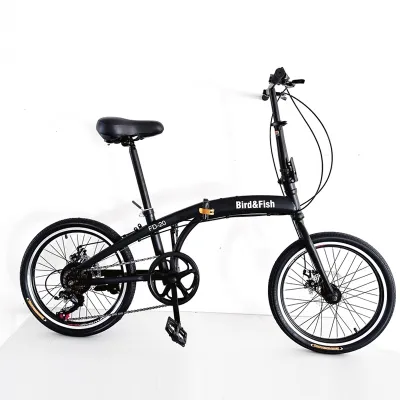
9 Lazada user ratings
Price and quality is good. Customer service is not good. Take long time to deliver.
The black bicycle arrived with plastic covering most of the parts.
Item received n in good condition
脚车good又配送前后灯.密码锁y手动充气器。
Stylish black color,
66 Lazada user ratings
Delivery delay, received product after 2 weeks without basket. the reissued basket delivered after one week. Product is good, come with gift…Read full reviewShow less
Delivery delay, received product after 2 weeks without basket. the reissued basket delivered after one week. Product is good, come with gift ( small air pump and 2 bicycle lights)
Very fast delivery. Ordered on 28th and received on 30th. Same as advertised. And lock free gifted. Thanks supplier
prompt delivery. item was delivered in assembled state. very thoughtful of seller. meet my expectations
Smooth gear shifting., Easy to assemble and use., Comfortable riding experience.,
my 2nd purchase...14 inch is so cute but got scracth havent try
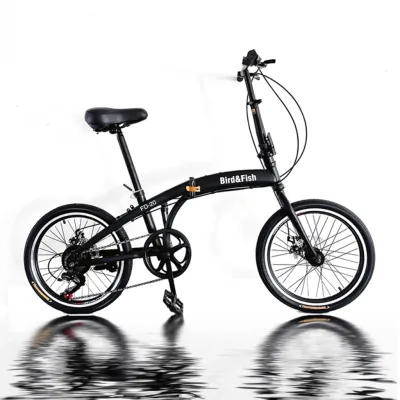
52 Lazada user ratings
Great value for money, highly recommended!, The seat is comfortable for long rides., Fast shipping, received within a week., High-quality Sh…Read full reviewShow less
Great value for money, highly recommended!, The seat is comfortable for long rides., Fast shipping, received within a week., High-quality Shimano gear system., Surprisingly come with free gift 🎁, 2bicycle led lights front n back and lock
Just right for the price. Item received in good condition. NEED TO IMPROVEMENT ON DELIVERY TIME AS PER DELIVERY STATUS DISPLAY ON LAZADA APP…Read full reviewShow less
Just right for the price. Item received in good condition. NEED TO IMPROVEMENT ON DELIVERY TIME AS PER DELIVERY STATUS DISPLAY ON LAZADA APPS.
the bicycle is nice. the colour is nice. delivery is fast.
Convenient and space-saving foldable design.
Great value for money, highly recommended!,
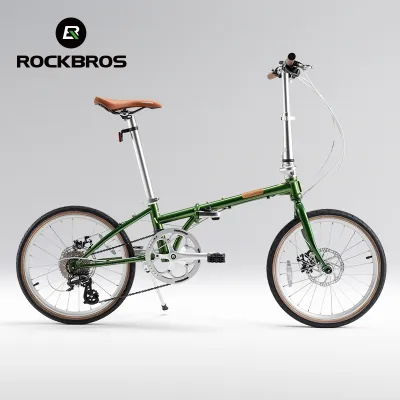

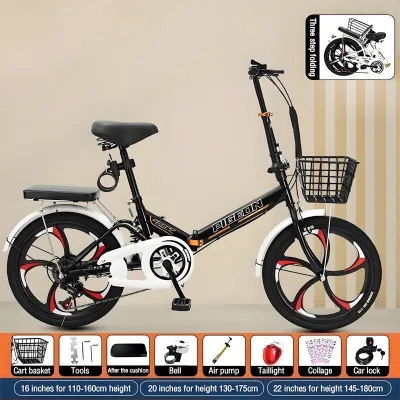
1 Lazada user ratings
My son loves his bicycle. Happy with this purchase.
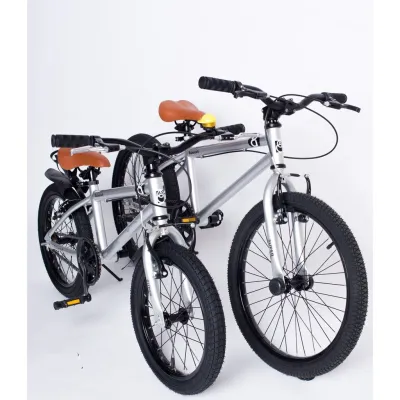
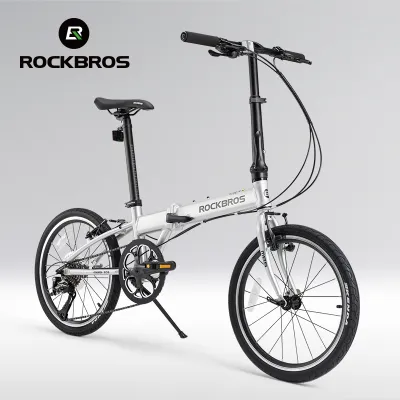
6 Lazada user ratings
Nice bike. Faster delivery. Seller accommodated our requests for delivery. Have give few goodies too.
Beautiful, sturdy bicycle. Seller is very helpful and responsive. Highly recommended!
Excellent service from the seller, excellent product and fast delivery.
Bike is good for my grand daughter. Very sturdy, quality looks good
Prices are valid at publication and may change. Please refer to the product page for the latest price.
Mountain bike tires utilize aggressive, knobby tread patterns featuring raised rubber blocks spaced widely apart. This design is engineered to dig into loose soil, gravel, sand, and mud, providing the mechanical grip necessary to climb steep dirt paths or corner safely off-road. The wide spacing between the knobs allows the tire to shed mud automatically as it rotates, preventing the tread from becoming packed with debris. However, when ridden on dry asphalt, these knobs squirm and flex under your weight, which significantly increases rolling resistance, wastes your pedaling energy, and accelerates tread wear.
Using the wrong tire type on a surface can compromise your safety and damage your equipment. Riding slick city tires on wet grass or loose gravel can lead to immediate traction loss, causing the wheels to slide out during cornering or braking. Conversely, riding knobby tires on hard pavement results in a rough, noisy ride and reduces the tire’s contact patch on the flat ground, which can actually decrease braking efficiency on dry asphalt. Additionally, city tires often feature integrated puncture-resistant belts beneath the tread to protect against glass and metal debris, while mountain tires prioritize reinforced sidewalls to resist cuts from sharp rocks and roots.
To ensure optimal performance and safety, always check your tire sidewalls before setting off. Manufacturers print the recommended inflation pressure range (measured in PSI) directly on the tire; city tires generally require higher pressures to maximize rolling efficiency, while mountain tires perform best at lower pressures that allow the rubber to deform and grip trail obstacles. You should also inspect the tread regularly for embedded debris, uneven wear, or cracking, and replace tires promptly when the tread depth falls below safe limits.
How Does Frame Geometry Influence Riding Position and Comfort?
Frame geometry determines your physical relationship with the bike, directly influencing your posture, weight distribution, and muscle strain. A 20-inch city bike positions you upright for comfort and visibility, while a 20-inch mountain bike uses a slacker, longer frame to help you actively balance over rough terrain. Because 20-inch frames are inherently compact, small variations in tube lengths and frame angles have a dramatic impact on how the bike fits your body.

City bike geometry is optimized for casual cruising, short commutes, and urban utility. These frames typically feature a steep seat tube angle, a shorter top tube (shorter reach), and swept-back handlebars that sit relatively high. This configuration places you in an upright riding position, keeping your spine in a natural, neutral alignment. This posture minimizes strain on your lower back, neck, and wrists, making it highly comfortable for relaxed rides. Furthermore, the elevated head position significantly improves your peripheral vision, allowing you to spot traffic, pedestrians, and obstacles easily in busy urban environments.
Mountain bike geometry is engineered for stability, control, and active body movement over uneven terrain. These frames feature a slacker head tube angle, a longer top tube, and a wider handlebar set lower relative to the saddle. This design positions the front wheel further forward, creating a longer wheelbase that resists tipping forward when descending steep slopes or rolling over obstacles. The rider’s weight is distributed more evenly between the hands, feet, and saddle, which allows you to stand up on the pedals and shift your weight dynamically to absorb shocks and maintain balance.
The physical impact of these different postures becomes evident over longer distances or varied terrain. An upright city bike posture is highly comfortable for short trips, but because your entire body weight rests directly on the saddle, it can lead to tailbone discomfort or saddle soreness on longer rides or bumpy paths. The sportier, slightly leaned-forward posture of a mountain bike engages your core muscles and legs, taking pressure off your spine and saddle. However, this forward lean places more weight on your wrists and shoulders, which can cause fatigue if you are not accustomed to the riding position or if the bike is not properly adjusted.
To find the right fit, you must perform a physical check of the bike’s dimensions relative to your body. Stand flat-footed over the frame’s top tube; there should be at least two to three centimeters of clearance for a city bike, and five to eight centimeters for a mountain bike to prevent injury if you have to dismount suddenly. Sit on the saddle and check your reach to the handlebars; your elbows should have a slight, relaxed bend. If your elbows are locked straight, the reach is too long, which will strain your neck and shoulders and reduce your steering control.
Which Bike Handles Better for Speed, Cornering, and Obstacles?
Handling depends on how the bike’s frame dimensions and tire characteristics work together under different riding conditions. A 20-inch city bike excels at rapid acceleration and sharp cornering on smooth pavement, whereas a 20-inch mountain bike offers greater stability, braking grip, and obstacle clearance on unpredictable surfaces. Because 20-inch wheels are highly responsive, understanding these handling dynamics is essential for maintaining control.
When it comes to acceleration and speed, the lightweight wheels and narrow, high-pressure tires of a city bike have very low rotational inertia. This means the bike requires very little effort to accelerate from a complete stop, making it highly efficient for urban routes with frequent traffic lights and pedestrian crossings. A 20-inch mountain bike, equipped with wider, heavier knobby tires, requires more physical effort to get moving. However, the larger air volume of mountain tires helps maintain rolling momentum once you are up to speed, especially when traversing rough or unpaved surfaces that would slow down a narrower city tire.
Cornering dynamics differ significantly based on the tire tread and frame angles. On dry, clean pavement, a city bike’s slick tires provide a continuous rubber contact patch that delivers predictable, high-grip cornering. The steep head tube angle allows for quick, sharp steering adjustments in tight spaces. However, on wet pavement or loose sand, these slick tires can slide easily if you lean too aggressively. A mountain bike, with its slacker head tube angle, steers more slowly and predictably, preventing twitchiness. Its side knobs provide mechanical grip on loose dirt and gravel corners, but those same knobs can squirm and slip if you attempt sharp, high-speed turns on wet concrete.
Managing obstacles requires different riding techniques and equipment capabilities. Urban environments are filled with curbs, potholes, and drainage grates, while off-road trails feature tree roots, rocks, and loose soil. The high-volume tires of a mountain bike act as a natural cushion, absorbing impact energy and protecting the rims from damage when rolling over bumps. City bikes, with their narrower tires and rigid frames, transmit almost all impact energy directly to the rider. To ride a city bike safely over obstacles, you must actively scan the path ahead, slow down, and slightly lift your weight off the saddle to let your legs absorb the shock.
Braking safely requires understanding how tire grip and weight distribution interact during deceleration. Because 20-inch wheels have a smaller contact patch than larger wheels, locking up the brakes and skidding is a common risk. A mountain bike’s longer wheelbase and wider tires distribute braking forces more evenly, reducing the risk of the rear wheel lifting during sudden stops. City bikes, with their shorter wheelbase and forward-leaning weight transfer during braking, require careful modulation of both the front and rear brakes. Always apply pressure smoothly to both brake levers simultaneously, and avoid grabbing the front brake too hard to prevent losing control.
How to Choose Between a 20-Inch City and Mountain Bike for Your Daily Routes?
Choosing the right 20-inch bike requires matching the bike’s design limits to your actual riding environment and physical comfort preferences. Assess the surfaces you encounter daily, determine your primary use case, and verify key component specifications before making a final decision. Because both styles have distinct limitations, a systematic evaluation will prevent you from purchasing a bike ill-suited for your routine.
Begin by conducting a realistic assessment of your daily routes. If your typical ride consists entirely of paved park connectors, smooth sidewalks, and asphalt roads, a city bike is the most efficient and low-maintenance option. If your route includes unpaved gravel paths, muddy shortcuts, grassy fields, or sandy coastal trails, a mountain bike is necessary to provide the traction and stability required to ride safely. Do not buy a mountain bike simply for its rugged appearance if you only ride on smooth concrete, as the extra weight and rolling resistance will make your daily commute unnecessarily tiring.
Align the bike’s design with your practical daily needs and storage constraints. City bikes are built for utility and convenience; they often feature integrated mounting points for mudguards, rear cargo racks, and front baskets, making them highly suited for commuting to work, carrying groceries, or running errands without getting splashed by road grime. Mountain bikes prioritize frame strength and trail performance, meaning they rarely come with these utility mounts, and adding them can be difficult due to frame shapes and suspension components. If you need to carry cargo or ride in work attire, a city bike is highly preferable.
If you find yourself riding on a mix of surfaces, consider the modification potential of each bike style to bridge the gap. You can easily install wider, semi-slick tires on a mountain bike to improve its rolling efficiency on paved roads while retaining its stable frame geometry and comfortable riding position. However, modifying a city bike for off-road use is much more difficult; city frames and forks have limited clearance, meaning you cannot install wide, knobby mountain tires. If you want a single bike that can handle occasional light trail riding, starting with a mountain bike and swapping to smoother tires is often the most versatile approach.
Before making your final purchase, use this checklist to verify that the bike’s specifications match your local environment and weather conditions:
- Gear Range: Ensure the bike has a wide gear range, such as a 7-speed or 8-speed drivetrain, if your route includes steep flyovers, bridges, or hilly terrain.
- Brake System: Opt for mechanical or hydraulic disc brakes if you frequently ride in wet weather, as they provide consistent stopping power compared to rim brakes, which lose efficiency when wet.
- Frame Mounts: Verify the presence of eyelets on the frame if you plan to install mudguards, water bottle cages, or cargo racks.
- Weight and Portability: If you need to carry the bike up stairs or store it in a compact apartment, check the total weight; city bikes are often lighter and easier to maneuver indoors than rugged mountain bikes.
Community discussion
Share your experience or ask a question. Comments are reviewed before publication.