
Staying hydrated with cold water during a workout in a warm, humid climate like Singapore’s can significantly improve your exercise performance and comfort. While an Under Armour bottle is a popular choice for athletes, its ability to keep water cold compared to other sports bottles depends entirely on its construction rather than the brand name. Most premium Under Armour bottles utilize double-wall vacuum insulation, which performs on par with other leading insulation brands. To find the bottle that keeps your water coldest, you must look past the logo and evaluate the physical insulation technology, lid design, and material specifications.
Understanding Insulation: Under Armour vs. Common Bottle Types
To understand how these bottles perform, it helps to look at the physics of thermal retention. Double-wall vacuum insulation is the gold standard for modern sports bottles, including many premium offerings from Under Armour. This design features an inner and outer stainless steel container with a vacuum pocket sealed between them. Because a vacuum contains no air molecules, it prevents heat from transferring into your cold drink via conduction or convection.
In contrast, single-wall stainless steel or plastic bottles offer no thermal barrier. Heat from the surrounding air quickly warms the liquid inside. In humid environments, these single-wall bottles also suffer from heavy exterior condensation, commonly known as sweating, which can make them slippery to hold and wet your gym bag.
Products mentioned in this guide
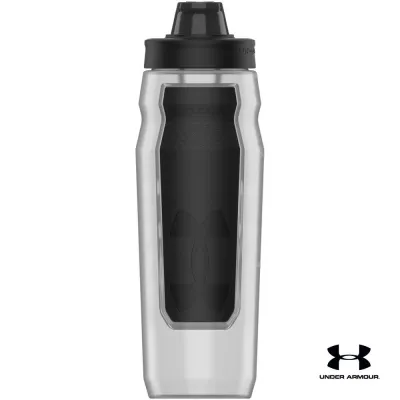
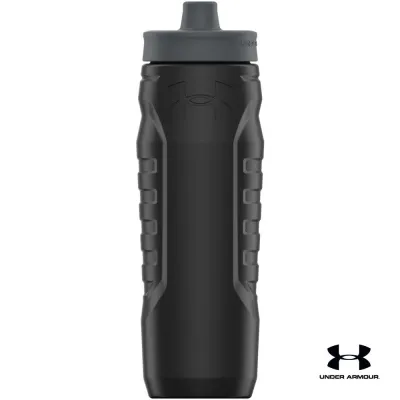
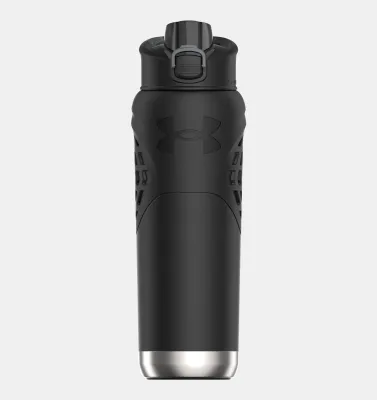
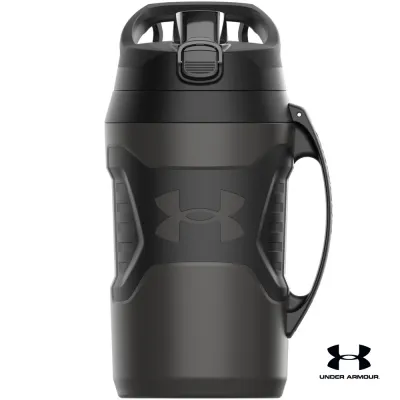
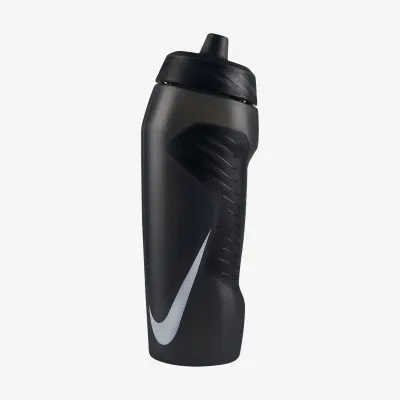
Prices are valid at publication and may change. Please refer to the product page for the latest price.
Some high-performance bottles go a step further by incorporating specialized interior linings, such as a copper coating on the outer surface of the inner wall. Copper acts as a radiant heat reflector, bouncing thermal radiation away from your cold beverage. While this feature is highly effective, it is not universal, so you should check product specifications if you require maximum thermal protection.
Regardless of how well-insulated the bottle body is, the lid and seal remain the weakest points for thermal leakage. Most lids are made of plastic or silicone, which conduct heat much faster than a vacuum gap. A bottle with a thick, well-gasketed lid will always retain cold longer than one with a thin, poorly sealed top.
Key Dimensions for Comparing Cold Retention
When comparing different sports bottles in a store or online, you can use several verifiable specifications to estimate their cold-keeping performance. Manufacturer-stated cold retention hours are a helpful starting point, but they must be interpreted cautiously. These ratings are typically generated in controlled laboratory settings with the bottle filled entirely with ice water and kept closed in a room-temperature environment.

In real-world workout conditions, you will open the bottle frequently, introducing warm ambient air and accelerating the warming process. Therefore, a bottle rated for 24 hours of cold retention might only keep your water ice-cold for a fraction of that time during an active training session.
The design of the lid mechanism plays a direct role in this thermal exchange. Screw-top lids provide the most secure seal and minimize the surface area exposed to external air. Flip-top lids and straw lids offer excellent convenience for quick sips during high-intensity workouts, but their internal gaskets, vents, and straw channels create more opportunities for cold air to escape and warm air to enter.
Bottle capacity also influences thermal longevity due to the volume-to-surface-area ratio. A larger volume of cold water contains more thermal mass, meaning a 1.2-liter bottle will naturally stay cold longer than a 500-milliliter bottle of the same design, assuming both start at the same temperature and are opened at similar intervals.
Finally, consider the exterior finish and grip texture of the bottle. While a powder-coated exterior or a silicone grip sleeve does not directly change the internal temperature of your water, it prevents the bottle from slipping out of sweaty hands during intense exercise, making the bottle far more practical for active use.
Feature Comparison: What to Look for on the Label
To help you evaluate your options, it is useful to compare the typical features of Under Armour insulated bottles against standard double-wall vacuum bottles and single-wall sports bottles.
| Bottle Category | Insulation Type | Common Lid Options | Relative Weight | Sweat Resistance |
|---|---|---|---|---|
| Under Armour Insulated | Double-wall vacuum | Flip-top, straw, or spout | Moderate to heavy | Excellent (no sweat) |
| Standard Vacuum Bottle | Double-wall vacuum | Screw-top or flex-cap | Moderate to heavy | Excellent (no sweat) |
| Single-Wall Sports Bottle | None (single-wall) | Push-pull spout or screw-top | Very lightweight | Poor (heavy sweating) |
When reading product labels, always check the material grades used in construction. High-quality insulated bottles are typically made from 18/8 food-grade stainless steel, which is highly durable, rust-resistant, and does not retain flavors from previous drinks. Additionally, ensure that all plastic components, including lids and straws, are certified BPA-free for safety.
Another critical detail to check on the label is dishwasher safety. Even if a manufacturer states that a bottle is dishwasher safe, repeated exposure to high-heat wash and dry cycles can degrade the silicone seals and eventually compromise the vacuum barrier. To maximize the lifespan of your bottle’s insulation, hand washing is highly recommended.
Choosing the Right Bottle for Your Workout Routine
Selecting the right bottle ultimately depends on matching these technical features to your specific workout routine. If your training consists of long, outdoor endurance sessions—such as running along coastal paths or cycling long distances—prioritize maximum cold retention. In these scenarios, a high-capacity, double-wall vacuum bottle with a secure screw-top lid is the most reliable choice, even if it adds extra weight to your gear.
For high-intensity indoor gym workouts or fitness classes, convenience often outweighs absolute thermal efficiency. A vacuum-insulated bottle featuring a flip-top or straw lid allows for quick, one-handed hydration between sets. While these lids permit slightly more thermal leakage than a screw-top, they will easily keep your water cold for the duration of a standard one- to two-hour gym session.
If your primary concern is minimizing weight rather than keeping water cold, such as during competitive running or track workouts, a lightweight single-wall plastic or squeeze bottle is often more practical. These bottles do not offer thermal retention, but they are easy to carry in a running vest or hand strap without adding unnecessary bulk.
Before finalizing your purchase, always verify that the bottle’s physical dimensions are compatible with your workout environment. Check if the bottle diameter fits standard gym bag side pockets, treadmill console cup holders, or bicycle bottle cages to avoid the inconvenience of a bottle that is too wide or too tall to secure properly.
Frequently Asked Questions (FAQ)
Does putting a sports bottle in the freezer damage the insulation?
Yes, placing a vacuum-insulated or single-wall metal bottle in the freezer can cause permanent damage. Water expands as it freezes, and this expansion can exert immense pressure inside a sealed container. In a vacuum-insulated bottle, the expanding ice can warp the stainless steel walls, bulge the bottom, or rupture the delicate weld that maintains the vacuum seal. Once this seal is broken, the bottle will lose its insulation capabilities entirely. To get colder water, it is much safer to add ice cubes directly to the bottle or chill the water in a separate container before filling your sports bottle.
How can I test my bottle's insulation performance at home?
You can easily test if your bottle’s vacuum seal is intact using a simple ice water test. Fill the bottle with cold water and a generous handful of ice cubes, then secure the lid tightly. Let the bottle sit on a counter at room temperature for about five to ten minutes. Feel the exterior of the bottle; it should remain at room temperature. If you feel cold spots on the outer stainless steel wall or notice condensation forming on the outside, it indicates that the vacuum seal has failed, allowing heat to transfer freely through the walls.
Community discussion
Share your experience or ask a question. Comments are reviewed before publication.