
Climbing carabiners are highly engineered tools designed to save lives in vertical environments, but they are not a direct substitute for dedicated security locks. While a safety-rated climbing carabiner offers exceptional strength against heavy loads and accidental openings, it lacks the hardened steel construction required to resist intentional cutting, sawing, or prying by a motivated thief. When used for anti-theft purposes, a climbing carabiner functions primarily as a highly effective physical deterrent that prevents quick opportunistic grabs, rather than an absolute security barrier. Understanding how these devices behave under tampering is essential before relying on them to protect valuable outdoor gear or travel luggage.
Understanding the Security Limits of Climbing Carabiners
To evaluate a climbing carabiner as an anti-theft tool, you must first understand the fundamental difference between life-safety engineering and security engineering. Climbing gear is designed to absorb dynamic forces during a fall, prioritizing high tensile strength, lightweight construction, and rapid, reliable gate operation. Security locks, conversely, are engineered specifically to resist destructive attacks, such as cutting, drilling, shearing, and picking.
Most climbing carabiners are manufactured from high-grade aluminum alloys. While this material provides an incredible strength-to-weight ratio for climbers, it is relatively soft compared to the hardened or boron-alloy steel used in high-security padlocks. A thief equipped with a basic hacksaw, portable angle grinder, or heavy-duty bolt cutters can cut through an aluminum carabiner spine in seconds with minimal noise.
Products mentioned in this guide
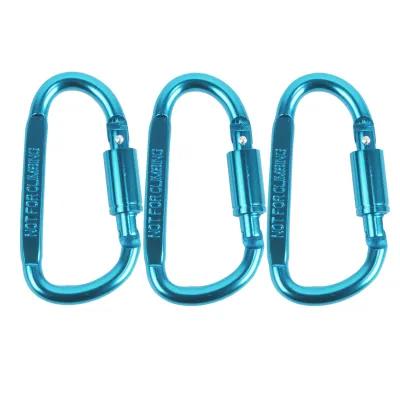
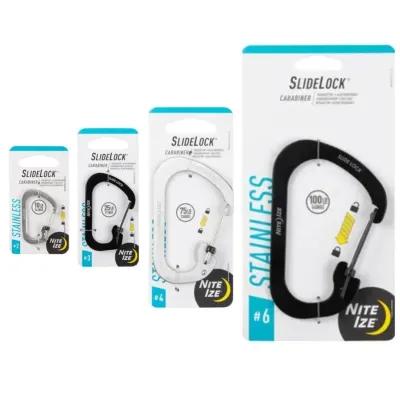
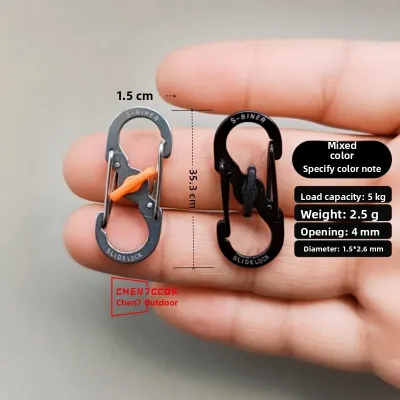
Prices are valid at publication and may change. Please refer to the product page for the latest price.
Furthermore, the gate mechanisms of climbing carabiners are exposed by design to allow quick rope clipping. This exposure makes them vulnerable to physical manipulation. A thief does not need to cut the spine if they can leverage a pry bar or screwdriver against the gate. Because climbing gates are designed to open inward under specific manual pressure, they do not feature the internal locking pins or hardened shackle shrouds that protect padlocks from prying tools.
Ultimately, a climbing carabiner excels at preventing accidental opening caused by rope drag, vibration, or movement. When attached to a backpack, bicycle accessory, or camping setup, it stops opportunistic thieves from quietly slipping a zipper open or lifting a bag off a chair in a crowded cafe. However, it will not stop a determined actor with dedicated tools, meaning it should only be used where visual deterrence and delay are the primary goals.
Decoding Safety Ratings and Certifications for Security Use
When selecting a climbing carabiner for security applications, verifying its safety ratings ensures you are using a genuine, structurally sound piece of equipment rather than a cheap novelty keychain. Genuine climbing carabiners carry strict certifications engraved directly onto their metal spines. Look for the CE mark (followed by a four-digit notary code) and the UIAA logo, which indicate the gear has passed rigorous European and international safety standards for mountaineering.

Alongside these certification marks, you will find load ratings stamped on the spine, typically expressed in kilonewtons (kN). A standard rating might read “24 kN” along the major axis (lengthwise with the gate closed), “8 kN” along the minor axis (cross-loaded), and “9 kN” with the gate open. One kilonewton represents roughly 100 kilograms of force, meaning a closed carabiner can withstand massive static loads.
However, it is critical to recognize that these kilonewton ratings measure tensile load capacity, not cut or pry resistance. A carabiner rated to hold 2,400 kilograms of pulling force can still be severed easily by a pair of hand-operated bolt cutters. The high load rating simply ensures that the carabiner will not snap or deform under heavy physical tension, such as securing a heavy gear haul bag or anchoring equipment on a steep slope.
To verify the exact material composition and intended use limits of your gear, always consult the manufacturer’s technical specifications. Reputable climbing brands publish detailed user manuals outlining the specific alloy treatments, gate open clearances, and environmental tolerances of their products. If a carabiner lacks these engraved markings or does not have accessible manufacturer documentation, it should be treated as a non-safety-rated accessory unsuitable for securing valuable items.
Evaluating Locking Mechanisms for Theft Deterrence
The choice of gate locking mechanism directly determines how effectively a carabiner deters tampering. Non-locking carabiners offer virtually no security, as anyone can open them with a simple push. For anti-theft purposes, you must evaluate locking options: screwgates, twist-locks, and multi-action auto-lockers.
Screwgate carabiners feature a threaded sleeve that must be manually spun down to lock the gate in place. These are highly reliable and resistant to environmental grit, but they require conscious effort to lock every time. A thief can easily unscrew them if given a few seconds of uninterrupted access, but the manual action required still serves as a strong deterrent against quick, silent theft.
Twist-lock and auto-locking mechanisms utilize spring-loaded sleeves that automatically lock when the gate snaps shut. A standard twist-lock requires a two-step motion (twist and push) to open, while more secure triple-action locks require three distinct movements (lift, twist, and push). These multi-action systems are exceptionally difficult for an opportunistic thief to open quickly or single-handedly, especially when the carabiner is positioned in an awkward, hard-to-reach angle.
However, complex locking systems introduce operational trade-offs, particularly in outdoor or travel environments. Fine sand, dirt, and salt residue can migrate into the spring-loaded sleeves of auto-lockers, causing them to stick or fail to close completely. In contrast, a manual screwgate is often easier to clean and operate under harsh conditions, though it demands user discipline to ensure it is fully locked.
Regardless of the mechanism you choose, always inspect the locking sleeve for smooth operation and complete engagement. The gate must close fully, and the sleeve must slide or twist completely over the gate nose to prevent accidental or forced opening. If the sleeve sticks or leaves a gap, the structural integrity and security of the system are severely compromised.
Practical Setup and Risk Reduction Strategies
To maximize the effectiveness of an anti-theft carabiner setup, you must look beyond the carabiner itself and evaluate the entire security chain. A high-quality locking carabiner is only as secure as the anchor point to which it is attached. If you clip a locking carabiner to a thin fabric loop on a backpack or a flimsy plastic strap, a thief can simply cut the fabric or plastic with a pocket knife, bypassing the carabiner entirely.
Always select robust, structural anchor points that cannot be easily dismantled or cut. When securing gear on a vehicle, a roof rack, or at a campsite, anchor the carabiner to welded metal loops, thick steel frames, or heavy-duty chain links. If you are securing travel bags in transit, loop the carabiner through the metal frames of the zippers or around the internal structural frame of the luggage.
Implementing redundancy is another highly effective strategy for protecting high-value gear. Instead of relying on a single point of failure, use multiple locking carabiners or combine them with a steel security cable. For example, threading a vinyl-coated steel cable through your gear and securing the ends with a triple-action locking carabiner forces a thief to deal with two entirely different tool requirements: cutting the cable and manipulating the lock.
Environmental factors must also be managed, especially in humid tropical climates like Singapore. High relative humidity, frequent rain, and coastal salt air accelerate the oxidation of aluminum and can cause internal steel springs to rust. This corrosion leads to gate jamming, sticky sleeves, and incomplete locking. To mitigate this risk, regularly clean your carabiners with fresh water to remove salt and grit, dry them thoroughly, and apply a dry, wax-based lubricant approved by the manufacturer to keep the moving parts operating smoothly.
Inspection and Conditions for Retiring Your Gear
Whether you use your carabiners for climbing, securing outdoor gear, or travel security, regular physical inspections are mandatory to ensure they remain functional and safe. Over time, exposure to friction, dirt, and physical impacts will degrade the metal and the gate mechanisms. You must establish a routine check to identify visual and functional warning signs before a failure occurs.
Begin by inspecting the body of the carabiner for deep grooves, sharp edges, or cracks. Grooves deeper than one millimeter—often caused by rope friction or rubbing against metal anchors—significantly reduce the strength of the aluminum spine. Hairline cracks, which can develop after a hard drop onto concrete, are particularly dangerous because they can propagate under load and cause sudden, catastrophic failure.
Next, test the gate and locking sleeve functionality. The gate should snap shut quickly and completely when released from any position, and the spring should feel firm. If the gate sluggishly returns to the closed position, or if the locking sleeve feels stiff, gritty, or fails to engage fully, the carabiner is no longer reliable. Using compromised gear to secure valuable items increases the risk of accidental loss or easy tampering.
Always follow the manufacturer’s specific retirement guidelines, which typically recommend retiring aluminum carabiners after ten years of light use, or immediately after any severe impact or exposure to harsh chemicals. If you acquire a used carabiner with an unknown history, do not use it for load-bearing or critical security applications. When in doubt, consult a qualified outdoor professional or retire the gear to prevent safety hazards.
Frequently Asked Questions (FAQ)
Can I use a non-locking carabiner for basic theft deterrence?
Non-locking carabiners are highly vulnerable to physical manipulation and should not be relied upon for securing valuable items. Because the gate opens with a simple inward push, anyone can bypass them in a fraction of a second without tools. They are only acceptable as a visual deterrent in low-risk scenarios where you simply want to prevent a bag zipper from sliding open due to movement or vibration.
Do wiregate carabiners offer better security than solid gate options?
Wiregate carabiners do not offer better security than solid gate options and are generally less suitable for anti-theft use. While wiregates are excellent for climbing because they resist freezing and reduce gate flutter, they cannot accommodate locking sleeves. Solid gate carabiners with screwgate or auto-locking sleeves provide far superior resistance to prying, tampering, and accidental opening.
What should I do if my carabiner locking mechanism gets jammed?
If a locking mechanism jams, start by rinsing the carabiner in warm, clean water to flush out any trapped dirt, sand, or salt residue. Once completely dry, apply a small drop of a manufacturer-approved dry lubricant to the gate hinge and locking sleeve threads. If the mechanism remains stiff, sticky, or fails to lock completely after cleaning, retire the carabiner immediately.
Community discussion
Share your experience or ask a question. Comments are reviewed before publication.