
Selecting your first set of hand weights is a pivotal step in building a sustainable home fitness routine, yet many beginners struggle to find the right starting point. There is no single universal starting weight that works for everyone. The ideal load depends entirely on your current physical baseline, your specific training goals, and the mechanics of the exercises you plan to perform. Choosing a weight that is too heavy can lead to joint strain and poor movement habits, while selecting a weight that is too light may fail to stimulate the muscle adaptation needed for progress.
To find the perfect balance, you must approach the selection process systematically. By evaluating your baseline strength, aligning your equipment with your fitness objectives, and performing a practical movement test, you can confidently choose a starting weight that challenges your muscles while keeping your joints safe.
Assess Your Current Strength and Mobility Baseline
Before picking up any weight, it is essential to evaluate your body’s current physical capacity and movement patterns. Your daily activities provide a natural starting point for this assessment. For instance, an individual who regularly carries heavy groceries, lifts young children, or engages in physically demanding work will naturally possess a higher baseline strength than someone with a sedentary desk job. Reflecting on your daily physical habits helps prevent the mistake of choosing a weight that either overestimates or underestimates your body’s readiness.
Products mentioned in this guide


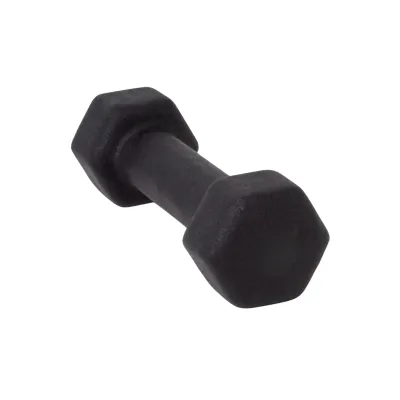
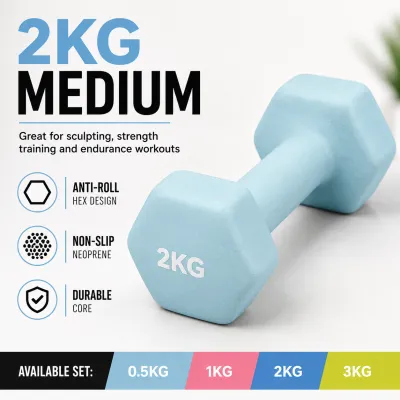
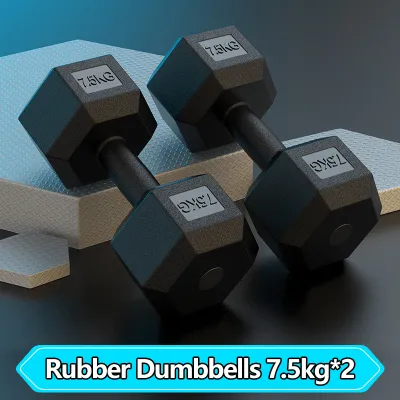
Prices are valid at publication and may change. Please refer to the product page for the latest price.
Joint mobility and core stability are equally critical factors when introducing external resistance. Before adding weight to any movement, you must ensure your joints can move through their full, pain-free range of motion. For example, if you cannot fully extend your arms overhead without arching your lower back or shrugging your shoulders, adding hand weights to an overhead press will only reinforce poor movement patterns and increase the risk of shoulder impingement. Prioritizing mobility checks ensures that your muscles, rather than your joints and ligaments, bear the load.
It is also important to recognize that your body does not have a single, uniform strength level. There are natural strength discrepancies between different muscle groups. Your lower body, which features large muscle groups like the glutes and quadriceps, is built to support your body weight and can handle significantly heavier loads. Conversely, your upper-body pulling muscles (like the biceps and upper back) and pushing muscles (like the triceps and shoulders) are much smaller and require lighter weights. Acknowledging these differences prevents the common mistake of trying to use a single weight for every exercise in your routine.
Align Your Weight Choice With Specific Training Goals
Your fitness objectives should directly dictate the weight you select, as different loads stimulate different physiological adaptations. If your primary goal is to improve muscular endurance, condition your joints, or add resistance to high-tempo cardiovascular circuits, you should opt for lighter hand weights. These lighter loads allow you to perform high-repetition sets—typically fifteen to twenty repetitions or more—without experiencing premature muscular fatigue. This approach is highly effective for building stamina and establishing solid movement patterns.

If your goal is to build foundational strength or promote muscle hypertrophy (muscle growth), you will need to select moderate to heavier loads. For these objectives, the weight should be heavy enough to induce muscular fatigue within a range of eight to twelve repetitions. The final few repetitions of each set should feel challenging, requiring focused effort to complete while still maintaining strict control. This level of resistance creates the necessary mechanical tension to stimulate muscle fiber repair and growth.
The specific exercises you choose also play a major role in determining the appropriate weight. Multi-joint compound exercises, such as squats, lunges, and bent-over rows, recruit multiple large muscle groups simultaneously, allowing you to lift heavier weights safely. In contrast, single-joint isolation exercises, such as lateral raises, bicep curls, or tricep extensions, isolate smaller muscles. These isolation movements require much lighter hand weights to prevent larger muscle groups from taking over the movement and to protect delicate joint structures.
Use the "Form-First" Test to Verify Your Selection
The most reliable way to confirm you have chosen the correct hand weight is to perform a practical, form-focused trial. To conduct this test, select a standard baseline exercise that targets the muscle groups you intend to train. A strict bicep curl is an excellent choice for testing upper-body isolation capacity, while a goblet squat—holding a single weight at your chest—is ideal for testing lower-body and core control.
Begin performing the exercise with your chosen weight while paying close attention to your body’s feedback. Watch for immediate signs of form breakdown, which indicate the weight is too heavy. These warning signs include swaying your torso to generate momentum, shrugging your shoulders toward your ears, arching your lower back, or experiencing a gripping sensation in your joints rather than a dull burn in the target muscles. If you cannot control the weight during both the lifting and lowering phases of the movement, put it down and select a lighter option.
To ensure long-term safety and progress, apply the “two-rep reserve” rule during your test. This rule dictates that you should end your set when you feel you could complete exactly two more repetitions with perfect technique before reaching absolute failure. Training to absolute technical failure—where your form completely breaks down—is unnecessary for beginners and significantly increases the risk of injury. By keeping a buffer of two repetitions in reserve, you ensure that your muscles receive an effective training stimulus while keeping your joints fully protected.
Recognize When It Is Time to Increase the Load
As your body adapts to resistance training, the weights that once felt challenging will begin to feel light. Recognizing the objective signs of adaptation is crucial for maintaining progress through progressive overload. The most obvious indicator that it is time to increase the load is when your target repetitions feel effortless. If you can complete your entire routine without any form degradation, joint discomfort, or elevated breathing, your muscles have adapted, and the current weight is no longer providing a sufficient challenge.
Other subtle signs of adaptation include a lack of mild muscle fatigue in the days following your workout and stagnant strength metrics over several consecutive weeks. If you find that you are no longer experiencing any physical challenge during your sessions, it is time to progress. To do this safely, increase the weight by small increments—typically five to ten percent—to allow your tendons and ligaments time to adapt to the new demands.
When upgrading your equipment, consider your living environment and budget. In Singapore, where residential space in HDB flats and condominiums is often at a premium, storing a large collection of fixed dumbbells can be highly impractical. Beginners must weigh the trade-offs between purchasing heavier fixed weights or investing in an adjustable dumbbell system. While fixed weights are durable and simple to use, adjustable systems allow you to change weights quickly using a dial or pin mechanism. Although adjustable dumbbells require a higher initial investment in S$, they save valuable floor space and offer excellent long-term cost efficiency as your strength continues to grow.
Frequently Asked Questions (FAQ)
Can I use the same hand weight for all exercises?
No, using a single hand weight for every exercise is highly inefficient because different muscle groups possess vastly different strength capacities. Your legs and back can easily handle heavier loads, while your shoulders and arms require much lighter weights. If you are working with a limited equipment setup, you can make a single pair of weights more versatile by modifying your exercises. For example, you can make lower-body movements more challenging by performing unilateral exercises, such as single-leg split squats, or by slowing down the tempo of the movement. For upper-body exercises, you can adjust your leverage or perform single-arm variations to safely manage the load.
Are adjustable dumbbells better for beginners than fixed weights?
Adjustable dumbbells offer significant advantages for beginners, particularly regarding space efficiency and long-term value. In typical Singapore apartments where space is limited, a single pair of adjustable dumbbells can replace an entire rack of fixed weights, keeping your living area clutter-free. They also allow for seamless progression, saving you from having to purchase new pairs of weights as you get stronger, which is highly cost-effective in S$ over time. However, fixed weights remain a popular choice for those who prefer a simpler, more durable design with no moving parts. Fixed weights also allow for faster transitions during fast-paced circuit training, where pausing to adjust dials might disrupt your workout momentum.

Community discussion
Share your experience or ask a question. Comments are reviewed before publication.