
Selecting the right thickness for your Adidas yoga mat is a decision that directly shapes your stability, comfort, and overall movement quality. While a thicker mat might seem like the most comfortable choice at first glance, it can introduce unexpected challenges during standing balances and active transitions. Conversely, an ultra-thin mat offers excellent ground feedback but may leave your joints feeling bruised after a floor-heavy session. Finding the right balance requires evaluating your primary practice style, identifying your body’s specific joint needs, and understanding how different materials behave under pressure.
In Singapore, where many practitioners commute between home, office, and downtown studios, portability also plays a major role in this decision. Carrying a bulky, heavy mat on a crowded MRT train during peak hours can quickly become a hassle, whereas a travel-friendly option might not provide enough cushioning on hard studio floors. By understanding the physical trade-offs of each thickness category and verifying product specifications before purchasing, you can select a mat that supports your practice without complicating your daily routine.
Understanding How Yoga Mat Thickness Affects Your Practice
Yoga mat thickness is typically measured in millimeters, generally ranging from ultra-thin 1mm travel mats to plush 8mm options. Each category serves a distinct purpose. Thin mats (1mm to 3mm) are designed primarily for travel and maximum ground connection, allowing your feet and hands to feel the solid floor beneath you. Standard mats (4mm to 5mm) represent the versatile middle ground, offering moderate cushioning while maintaining a stable foundation. Thick mats (6mm to 8mm or more) prioritize maximum impact absorption, making them ideal for restorative practices and sensitive joints.
Products mentioned in this guide
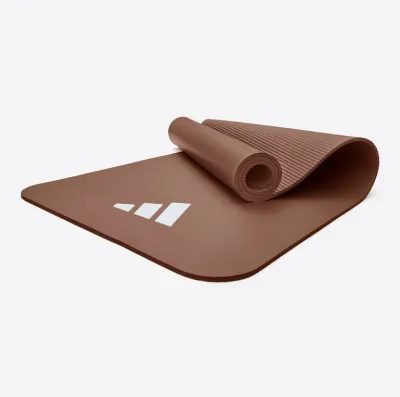
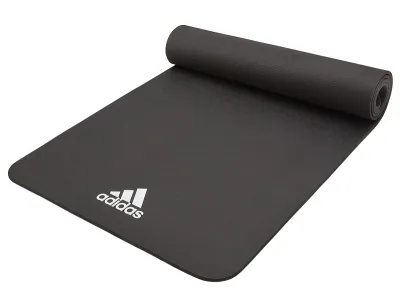
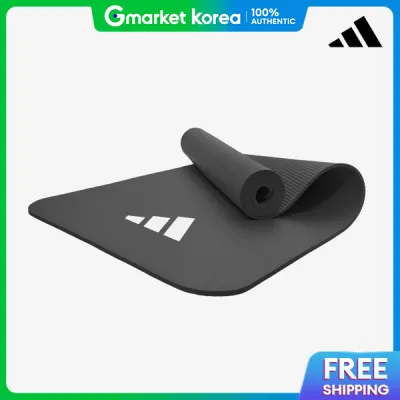
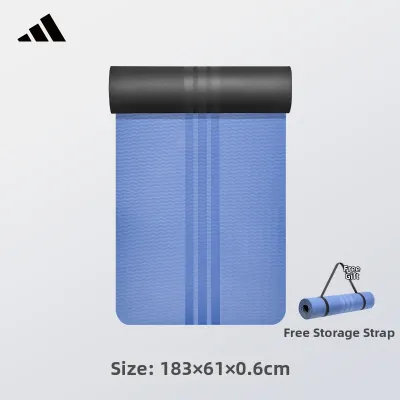

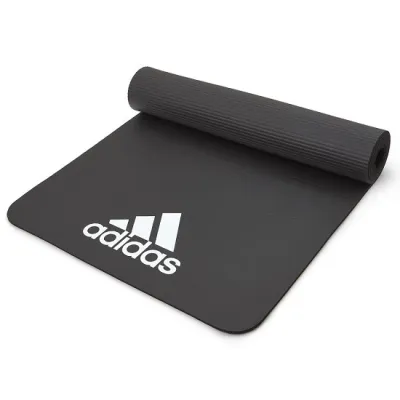
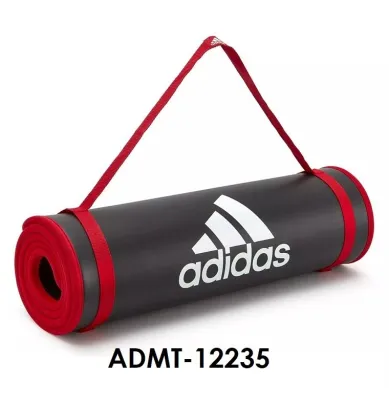
Prices are valid at publication and may change. Please refer to the product page for the latest price.
The physical trade-off between ground connection and impact absorption is a matter of biomechanics. When you stand on a thick, soft foam mat, your feet sink into the material. This compression reduces your proprioceptive feedback—the sensory information your brain receives from your feet to help you balance. On a thinner, firmer surface, your feet can easily make micro-adjustments to maintain alignment. However, that same firm surface offers very little protection when your knees, elbows, or spine bear your full body weight against a hard floor.
It is also important to recognize that thickness is only one part of the comfort equation; material density plays an equally critical role. A dense, heavy 4mm natural rubber mat can actually feel more supportive and protective than a lightweight, low-density 6mm foam mat that bottoms out under your weight. When evaluating Adidas mats, look closely at the material composition—such as Thermoplastic Elastomer (TPE), Ethylene-Vinyl Acetate (EVA), or polyurethane (PU)—as these materials compress differently under load and dictate the overall feel of the mat.
Matching Adidas Mat Thickness to Your Primary Yoga Style
Your primary yoga discipline should dictate the thickness of the mat you choose. For dynamic, fast-paced flows like Vinyasa, Ashtanga, or Power Yoga, a thinner to standard mat (2mm to 4mm) is highly recommended. These practices involve rapid transitions, jump-backs, and strong standing postures where a solid, non-slip foundation is essential. Sinking into a thick mat during a quick transition can slow down your movement and increase the risk of twisting an ankle or straining a wrist.

If your practice focuses on alignment, precise posture holding, and moderate pacing—such as Hatha or Iyengar yoga—a standard 4mm to 5mm mat provides the ideal balance. These styles require you to hold standing poses for extended periods, where some cushioning under the soles of your feet is welcome, alongside reliable support when you transition to kneeling or seated postures. This standard range ensures you do not lose your balance while still protecting your knees during low lunges.
For slow, floor-heavy practices like Yin Yoga, Restorative Yoga, or Yoga Nidra, a thicker mat (6mm to 8mm) is the most comfortable choice. In these styles, you hold passive stretches on the floor for several minutes at a time. Without sufficient cushioning, pressure points like the hips, knees, and tailbone can become painful, distracting you from the meditative aspects of the practice. A thicker mat creates a soft, insulating barrier between your body and the cold, hard floor, allowing you to relax fully into each pose.
Practitioners should also distinguish yoga mats from Pilates mats. While they may look similar, Pilates mats are typically much thicker (often 10mm to 15mm) to cushion rolling spine exercises and do not require the same level of standing grip. Using a thick Pilates mat for a dynamic yoga flow can compromise your stability and grip, so it is best to stick to dedicated yoga mat thicknesses for yoga practices.
Balancing Joint Protection with Pose Stability
If you experience joint sensitivity, previous injuries, or discomfort in pressure-prone areas, finding the right mat thickness is a delicate balancing act. Key pressure points like the knees in low lunges, the wrists in Downward-Facing Dog, and the tailbone in seated boat poses bear concentrated weight. A mat that is too thin can cause sharp discomfort in these areas, which often leads to poor alignment as your body instinctively tries to shift weight away from the pain.
However, compensating by choosing the thickest mat available introduces stability risks. Excessively thick, soft mats allow your ankles to wobble and roll during single-leg balances like Tree Pose or Warrior III. This instability forces the small stabilizing muscles in your ankles and feet to work overtime, which can lead to fatigue and joint strain. Furthermore, soft foam can cause your wrists to sink and hyperextend during weight-bearing poses like planks, increasing wrist fatigue.
To balance joint protection with stability, look for high-density mats rather than simply choosing the thickest option. High-density materials offer firm support that prevents your joints from sinking all the way through to the floor, even at a moderate 4mm or 5mm thickness. If you still require extra padding for specific poses, a practical solution is to use a standard-thickness mat and place a folded yoga blanket or a small foam pad under your knees or wrists only when needed, keeping your standing foundation firm.
Factoring in Portability and Gym Commutes
Your lifestyle and where you practice should heavily influence your choice of mat thickness. If you primarily practice at home, weight and rolled-up volume are minor concerns, allowing you to prioritize a thicker, heavier mat that stays rolled out in your dedicated workout space. However, if you regularly attend classes at a local studio or gym, you must consider how easily you can transport your gear.
Thicker mats (6mm to 8mm) are naturally bulkier and heavier, making them cumbersome to carry on public transport or during long walks. They also have a much larger rolled diameter, which can make them difficult to fit into standard yoga mat bags, slings, or commuter backpacks. If you are navigating busy transit lines in Singapore, a lightweight 2mm to 4mm mat is far more practical, rolling up tightly and weighing significantly less.
Before purchasing, check the rolled dimensions of the mat and compare them with your carrying gear. If you find yourself torn between comfort and portability, consider whether a two-mat system makes sense for your routine. Keeping a thicker, high-cushion mat at home for restorative sessions and investing in an ultra-thin travel mat to lay over studio-provided mats can offer the perfect combination of hygiene, comfort, and convenience.
Verifying Specifications Before You Buy
To ensure you get the exact performance you expect from an Adidas yoga mat, it is crucial to verify the physical specifications rather than relying solely on marketing images or product titles. Online photos can be deceptive, often making a mat look thicker or more cushioned than it actually is. Always locate the technical specifications section on the product page to confirm the exact millimeter (mm) thickness and weight.
Pay close attention to the material listed in the specifications. Adidas utilizes several materials across their mat range, each offering a different tactile experience:
- TPE (Thermoplastic Elastomer): Lightweight, PVC-free, and offers moderate cushioning with a closed-cell structure that resists moisture absorption.
- EVA (Ethylene-Vinyl Acetate): Extremely lightweight and budget-friendly, but tends to compress more easily and may wear down faster under heavy use.
- Natural Rubber or PU: Heavier and more expensive, but provides exceptional grip and dense, firm support that does not bottom out.
Finally, take the time to read user reviews on retail sites or online marketplaces, focusing on feedback regarding long-term compression and durability. Look for comments mentioning whether the mat retains its shape after repeated use, if the edges curl up during practice, or if the surface becomes slippery when wet. This real-world feedback is invaluable for determining whether a specific mat’s thickness and material density will hold up to your personal practice style over time.
Frequently Asked Questions (FAQ)
Can I use a thick Adidas yoga mat for standing balance poses?
While you can use a thick Adidas yoga mat for standing balances, it is significantly more challenging. The thick, compressible foam creates an unstable surface that reduces sensory feedback to your feet, making your ankles wobble and increasing the risk of losing your balance. If you prefer a thick mat for floor work but struggle with standing balances, a simple workaround is to step off your mat onto the hard floor during balance sequences, or use a firm, thin prop under your standing foot to maintain stability.
Does a thicker yoga mat automatically provide better grip?
No, thickness and grip are entirely independent properties. A mat’s grip is determined by its surface material, texture, and moisture-wicking capabilities, not by how many millimeters of foam it has. A thick mat made of a smooth, non-porous material can still feel slippery, especially during sweaty practices in humid climates. If slip resistance is your primary concern, look for mats featuring textured surfaces, open-cell materials, or specialized grip technologies in the product specifications rather than focusing on thickness.

Community discussion
Share your experience or ask a question. Comments are reviewed before publication.