
Selecting the right portable air pump requires balancing weight, pressure, and battery capacity against the specific demands of your outdoor gear. If you are preparing for a multi-day trek, every gram in your pack matters, making a pocket-sized, ultralight pump the logical choice. Conversely, if you are setting up a basecamp with large air mattresses or preparing a stand-up paddleboard for a day on the water, you will need to prioritize high airflow volume or high-pressure output over absolute packability. By matching the technical specifications of different pump categories to your primary activities, you can ensure your gear inflates quickly and safely without carrying unnecessary weight.
Key Factors to Consider Before Buying a Flextail Pump
When evaluating different portable pump models, weight and packability serve as your primary constraints. For self-supported travel styles like backpacking, bikepacking, or kayak touring, space inside your pack is at a premium. A heavy, bulky pump defeats the purpose of a streamlined setup. You must look closely at the physical dimensions and weight listed on the product packaging, ensuring the unit can easily fit into a side pocket or a small storage sack alongside your sleeping system.
Inflation and deflation speed are determined by two distinct technical metrics: airflow volume and air pressure. Airflow volume, often measured in liters per minute, dictates how quickly a pump can fill a large space. Air pressure, measured in pounds per square inch (PSI) or kilopascals (kPa), determines how firm the pump can make the inflatable. Low-pressure, high-volume pumps are excellent for rapidly filling camp mattresses, but they cannot generate the force required to rigidify a stand-up paddleboard. Conversely, high-pressure pumps can achieve high PSI levels but may take longer to fill high-volume items because they move less air per minute.
Products mentioned in this guide
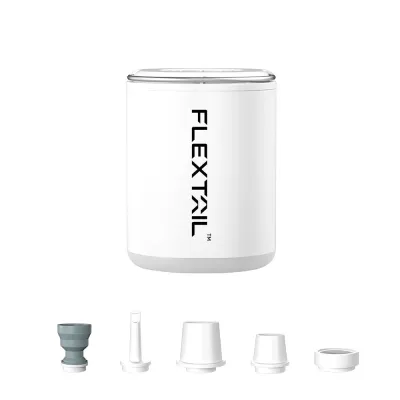
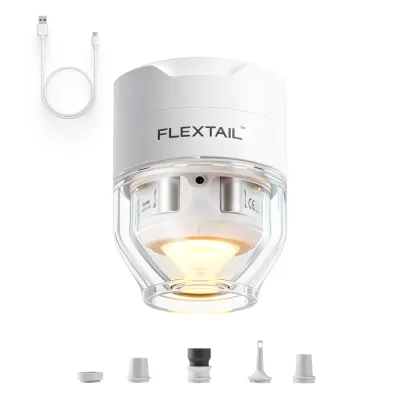
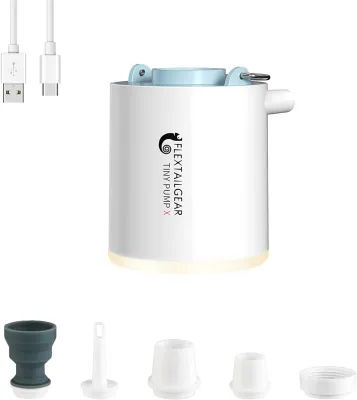
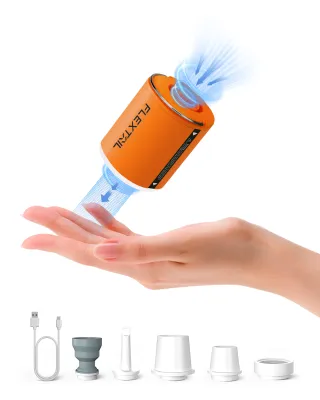
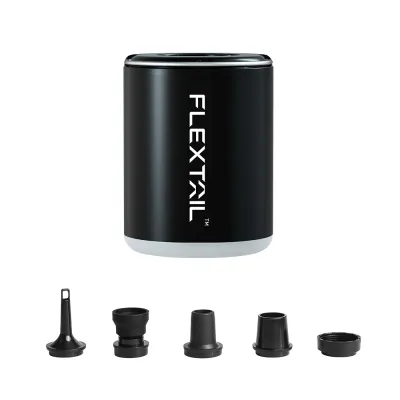
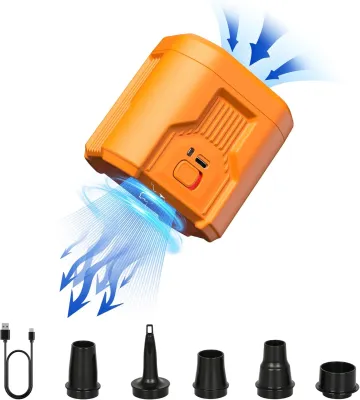
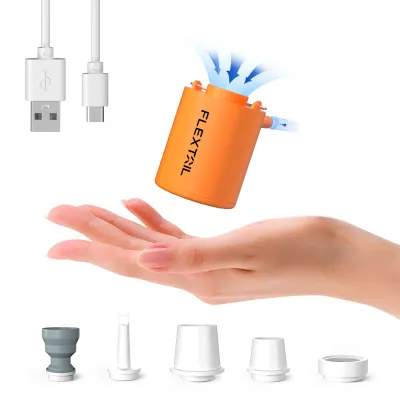
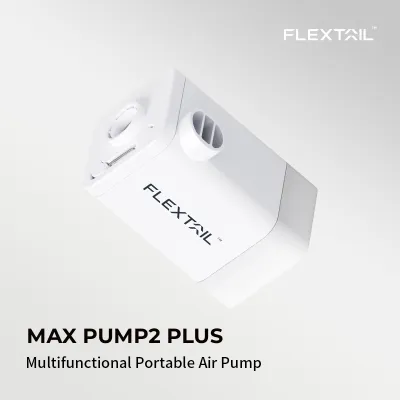
Prices are valid at publication and may change. Please refer to the product page for the latest price.
Battery capacity and charging infrastructure are critical for off-grid reliability. You must verify the battery capacity, typically rated in milliampere-hours (mAh), and compare it to the power consumption of the pump’s motor. Consider the environment where you will be traveling; cold weather can significantly reduce battery efficiency, meaning you may get fewer inflation cycles than the manufacturer’s standard rating suggests. Look for models that utilize universal USB-C charging ports, which allow you to recharge the pump using the same power banks, solar panels, or vehicle chargers you already carry for your other electronic devices.
Nozzle adapters and valve compatibility are the final pieces of the selection puzzle. A pump is only as good as its connection to your gear. Most portable pumps come with a selection of interchangeable nozzles designed to fit common valve types, such as pinch valves, double-lock valves, and Boston valves. Before making a purchase, inspect the valves on your sleeping pads, pillows, and camp furniture, and verify that the pump package includes matching adapters that create an airtight seal. A poor fit leads to air leakage, which wastes battery power and prolongs inflation times.
Matching Flextail Pump Features to Your Outdoor Activity
Your primary outdoor activity dictates which technical specifications you must prioritize and which ones you can safely compromise on. A single pump model is rarely ideal for every scenario, so understanding your typical environment is key to making an informed decision.

Backpacking and Hiking
In the backcountry, physical fatigue is directly linked to the weight on your back. For backpacking and hiking, you should prioritize ultralight, pocket-sized designs that minimize your base weight. These compact pumps are engineered to inflate low-volume items like single sleeping pads and inflatable camp pillows quickly, saving your breath after a long day of trail navigation.
Because these mini pumps prioritize weight reduction, they feature smaller internal batteries. This creates a trade-off between weight and runtime. While a smaller battery is sufficient for a weekend trip involving a few inflation and deflation cycles, it may require careful power management on multi-day hikes. You must verify the estimated number of inflation cycles per charge for your specific sleeping pad model. If you plan to be off the grid for a week, ensure your portable power bank is compatible with the pump’s charging input so you can top up the battery on the trail.
Compatibility with delicate sleeping pad valves is another crucial consideration. Backpacking pads often use proprietary, high-efficiency valves designed to prevent air from escaping during manual inflation. Ensure the pump you select includes soft silicone or rubber adapters that can stretch over these specialized valves without damaging them. A secure, snug fit ensures that the low-pressure motor can inflate the pad to its optimal comfort level without slipping off or wasting precious battery life.
Car Camping and Basecamp
When your vehicle handles the heavy lifting, you can shift your focus from weight savings to comfort, convenience, and high-volume performance. Car camping and basecamp setups often involve larger, more luxurious gear, such as double-thick air mattresses, inflatable camp sofas, and heavy-duty lounge chairs. These items require a pump with a high airflow rate to avoid spending your entire evening waiting for camp to be set up.
For these larger tasks, look for pump models that offer higher continuous runtimes and larger battery capacities. A larger battery allows you to inflate multiple high-volume items on a single charge, making it ideal for family camping trips or group basecamps. Additionally, these robust pumps are less prone to overheating during extended use, which is a common issue when smaller pumps are forced to run continuously for more than a few minutes.
Many camping-specific pumps also incorporate multi-device utility features, such as integrated LED lanterns with adjustable brightness levels. This dual-purpose design is highly practical for camp life, allowing you to hang the pump from the ceiling of your tent to serve as an overhead light after you have finished inflating your bedding. Some models also feature magnetic bases or hanging hooks, further increasing their utility around the campsite and reducing the number of individual gadgets you need to pack and charge.
Water Sports and Inflatables
Water sports involve high-risk environments where equipment failure can have serious safety implications. Whether you are preparing a stand-up paddleboard (SUP), an inflatable kayak, or a towable tube, your gear must be inflated to precise, high-pressure specifications to ensure stability, buoyancy, and structural integrity on the water. Under-inflated watercraft can bend, drag, or capsize, putting you in a dangerous situation.
To achieve the rigidity required for water sports, you must select a pump specifically rated for high-pressure output. Standard camping pumps are physically incapable of generating the PSI required for a SUP. Verify that the pump’s maximum pressure rating matches or exceeds the recommended PSI printed on your watercraft’s inflation valve. These specialized pumps often feature a two-stage inflation process: a high-volume stage to quickly fill the chamber with air, followed by a high-pressure piston stage to compress the air to the final target PSI.
Continuous runtime and thermal protection are critical for high-pressure pumps, as compressing air generates significant heat. Ensure the pump is designed to run continuously for the ten to fifteen minutes required to fully inflate a large kayak or paddleboard without shutting down due to thermal overload. Furthermore, because these pumps operate near shorelines, docks, and wet decks, you must verify their water resistance or splash-proof ratings. Look for clear IPX ratings on the product specifications to ensure the internal electronics are protected against water splashes and high humidity.
How to Verify Compatibility and Safety Limits
Before connecting any pump to your valuable outdoor gear, you must establish a clear verification routine to prevent accidental damage or equipment failure. Always locate the manufacturer’s label on your inflatable item to identify its maximum pressure limit. This limit is typically printed directly next to the inflation valve and is measured in PSI, bar, or kPa. Compare this number to the maximum output of your pump; never use a pump that exceeds the safe limit of the inflatable unless the pump features an adjustable, automatic shutoff mechanism.
Next, identify the specific valve type on your gear and locate the corresponding adapter from your pump’s accessory kit. Common valves include the Boston valve (often found on inflatable kayaks and heavy-duty air beds), the pinch valve (common on pool floats and small pillows), and the Halkey-Roberts valve (standard on high-pressure SUPs). Push the adapter firmly into or onto the valve to ensure a tight, mechanical seal. If the adapter is loose, do not attempt to hold it in place manually during high-pressure inflation, as this can cause the adapter to pop off, potentially damaging the valve threads or injuring your hands.
Recognizing the signs of over-inflation is vital for safety, especially when inflating gear in warm, sunny conditions. As the temperature rises, the air inside your inflatable expands, naturally increasing the internal pressure. If you inflate a kayak or sleeping pad to its maximum limit in the cool morning air, it may over-pressurize and rupture when exposed to the hot midday sun. Establish a safe stopping condition by inflating the item slightly below its maximum rating, and regularly check the firmness of your gear throughout the day, releasing small amounts of air if the material becomes excessively tight or rigid.
Maintenance and Storage for Long-Term Reliability
To ensure your portable pump performs reliably season after season, you must implement a regular maintenance and storage routine. The lithium-ion batteries used in these devices require specific care to prevent premature degradation. Never store your pump with a completely depleted battery, as this can cause the battery cells to fall into a deep discharge state from which they cannot recover. Conversely, storing the battery at 100% charge in hot environments accelerates capacity loss. For long-term storage during the off-season, charge the battery to approximately 50% to 60% and store the unit in a cool, dry place away from direct sunlight.
Outdoor use inevitably exposes your pump to environmental contaminants like sand, fine dust, salt spray, and moisture. After every trip, take a few minutes to clean the unit. Inspect the air intake and exhaust vents for any blockages; even a small buildup of sand or lint can restrict airflow, causing the motor to work harder and run hotter. Use a clean, dry microfiber cloth to wipe down the exterior casing, and use a can of compressed air or a soft-bristled brush to gently clear debris from the vents and nozzle attachment points.
Finally, inspect the physical integrity of the pump’s seals and O-rings before packing it for your next adventure. The small rubber or silicone rings inside the nozzles and valve adapters are critical for maintaining an airtight connection. Over time, these seals can dry out, crack, or become misplaced. Check them for elasticity and wear; if they appear dry, apply a tiny amount of silicone-based lubricant to keep them pliable. If a seal is cracked or missing, replace it immediately to maintain the pump’s inflation efficiency and prevent unnecessary battery drain.
Frequently Asked Questions (FAQ)
Can a Flextail pump be used as a power bank for other devices?
Yes, certain multi-functional pump models are designed with a dedicated USB output port, allowing them to function as an emergency power bank for your mobile phone, headlamp, or GPS device. Before relying on this feature, you must check the specific model’s user manual to verify its power output specifications and battery capacity. Keep in mind that using the pump to charge external electronics will directly consume the battery power needed for inflation. If you are on a multi-day backcountry trip, prioritize your primary inflation needs first, and use the power bank function only as a secondary backup to ensure you are not left with a flat sleeping pad at the end of the day.
How do I know if the pump has enough pressure for my stand-up paddleboard (SUP)?
To determine if a pump can handle a stand-up paddleboard, you must compare the board’s required PSI with the pump’s maximum pressure specifications. Locate the recommended inflation pressure printed near your SUP’s valve, which is typically between 12 and 15 PSI. Standard pocket-sized camping pumps are designed for high-volume, low-pressure applications and usually output less than 1 PSI, making them completely unsuitable for SUPs. You must use a specialized high-pressure pump rated for at least 15 to 20 PSI. For maximum safety and convenience, select a model equipped with an integrated digital pressure gauge and an automatic shutoff feature, which stops the pump automatically once the target pressure is reached to prevent dangerous over-inflation.

Community discussion
Share your experience or ask a question. Comments are reviewed before publication.