
Selecting the ideal football mat requires balancing your immediate training environment with your specific development goals. A player practicing solo footwork in a compact apartment needs a vastly different setup than a coach organizing tactical drills for an entire squad on an outdoor field. The decision hinges on three primary factors: the physical constraints of your training space, the nature of your daily drills, and how often you need to assemble or transport the surface. By analyzing these variables, you can select a mat that enhances your ball control, protects your joints, and fits seamlessly into your daily routine.
Step 1: Assess Your Training Space and Surface Conditions
Before browsing product catalogs, you must accurately measure the physical footprint of your intended training zone. For indoor setups, such as a spare room or a balcony, map out the exact dimensions and ensure there is a clear safety buffer around the perimeter to prevent collisions with walls or furniture. The underlying floor must be structurally sound, level, and free of debris; any minor unevenness in a concrete subfloor or tiled surface can cause a thin mat to warp, disrupting ball roll and creating tripping hazards.
Outdoor environments introduce additional variables, particularly regarding weather exposure and ground preparation. If you plan to lay a mat over a backyard lawn or a dirt patch, the base must be compacted and leveled to prevent the material from shifting during high-intensity lateral movements. In tropical climates prone to sudden, heavy downpours, drainage is a critical consideration. You must verify whether the ground slopes naturally to shed water or if you need a highly permeable mat system that allows moisture to pass directly through to the soil, preventing pooling and slippery surface conditions. Finally, consider the logistics of storage and transport; if the space is multi-use, you will need a solution that can be quickly packed away without requiring excessive physical effort.
Products mentioned in this guide
Prices are valid at publication and may change. Please refer to the product page for the latest price.
Step 2: Identify Your Primary Training Drills
The specific football exercises you perform dictate the surface characteristics, thickness, and visual markings your mat must possess. Agility and rapid footwork drills, such as ladder runs and cone weaves, place immense lateral stress on the training surface. For these movements, you require a mat with exceptional grip characteristics and clear, high-contrast visual markers that help you track your foot placement without slipping. Without adequate surface traction, rapid direction changes can cause the mat to bunch up or slide, increasing the risk of ankle strains.

If your training centers on dribbling, close ball control, and freestyle tricks, the mat must replicate the natural roll and bounce of a well-maintained pitch. Look for materials that offer realistic surface friction, allowing the ball to glide smoothly without sticking or accelerating unnaturally. For passing and shooting drills, the primary concern shifts to impact resistance and joint protection. Repetitive striking motions and landing on hard surfaces can strain your knees and ankles over time, making shock-absorbing backing materials essential for long-term joint health.
Step 3: Evaluate the Three Main Football Mat Types
To find the right balance between portability, durability, and performance, you must compare the three primary categories of football mats. Each type is engineered for specific training scenarios, ranging from permanent team installations to highly portable home setups.
Rolling Turf (Roll-Out Mats)
Rolling turf mats provide a continuous, seamless surface that closely mimics a professional artificial pitch, making them highly suitable for team practices and spacious home training zones. These mats are excellent for long dribbling runs, passing sequences, and multi-player drills where seam separation could disrupt the ball’s path or cause a player to trip. Because they roll out in long, uninterrupted sheets, they offer superior surface continuity and a highly realistic playing experience.
However, the continuous design comes with trade-offs in terms of weight and installation effort. Roll-out turf is often heavy and bulky, typically requiring multiple people to transport and deploy for team sessions. When setting up these mats, you must carefully inspect the edges and seams; using heavy-duty outdoor tape or specialized securing pins is often necessary to prevent the edges from curling upward and creating safety hazards. Storage also requires a dedicated, dry space where the rolls can be kept upright or flat without being crushed under other heavy training gear.
Interlocking Tiles
Interlocking tiles offer a modular, highly customizable solution that is ideal for fixed home gyms, garage setups, or permanent outdoor training zones. The primary advantage of modular tiles is their spatial flexibility; you can assemble them into custom shapes, such as long, narrow running lanes or wide square grids, to fit the exact contours of your available space. If a specific section of the surface becomes worn or damaged over time, you can easily replace individual tiles rather than purchasing an entirely new mat system.
When selecting interlocking tiles for outdoor use, it is essential to verify the drainage specifications of the product. High-quality outdoor tiles typically feature integrated drainage holes and raised under-structures that allow rainwater to flow freely beneath the surface, keeping the top layer dry and slip-resistant. While the initial assembly requires some patience to ensure all interlocking tabs are securely snapped together, the resulting surface is highly stable and resistant to shifting, making it a reliable long-term investment for dedicated training spaces.
Portable Pitch Mats (Agility and Skill Mats)
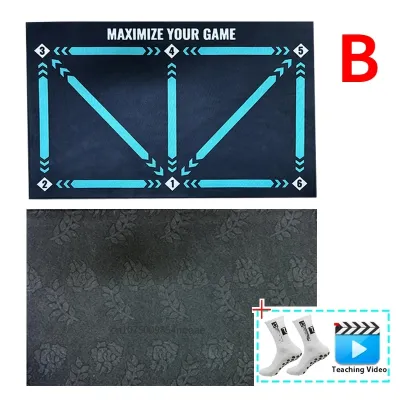
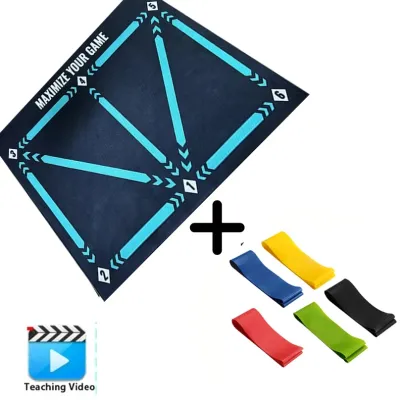
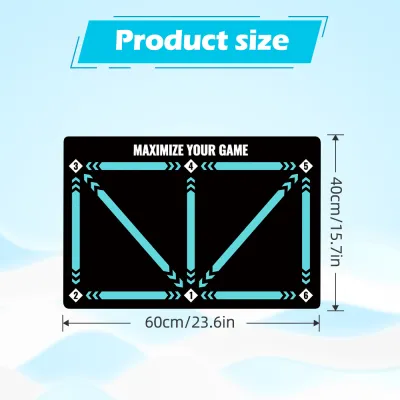
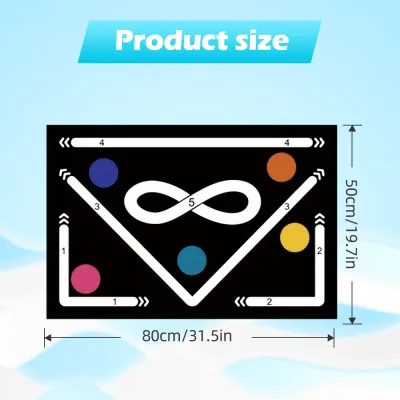
Portable pitch mats are compact, lightweight, and specifically designed for targeted skill work, making them the go-to choice for apartments and small indoor spaces. These mats often feature printed training guides, such as grid lines, numbers, or foot placement markers, which are invaluable for structured agility drills and solo ball-control practice. Because they are designed for quick deployment, you can easily unroll them in a living room or hallway and roll them back up for storage in a closet or under a bed within seconds.
When evaluating portable mats, pay close attention to the durability of the surface markings and the overall grip of the backing material. Because these mats are lightweight, they rely heavily on specialized non-slip backings to remain anchored to smooth indoor floors like hardwood or tile. Ensure the product description specifies a high-traction underside, and look for durable, wear-resistant printed markings that will not fade or peel after repeated contact with training shoes and footballs.
Step 4: Verify Safety, Durability, and Maintenance Requirements
Before finalizing your purchase, you must thoroughly evaluate the safety features and maintenance guidelines of your shortlisted mats to ensure they can withstand your training intensity. First, check the manufacturer’s specifications for a dedicated non-slip backing. This is especially critical for indoor training on polished surfaces; a mat that slides even slightly during a rapid turn can lead to severe falls or joint hyperextension. Look for materials like textured rubber or specialized thermoplastic elastomers (TPE) that grip the subfloor securely.
Next, review the cleaning and mold-prevention instructions provided on the product label. In warm, humid environments, sweat and ambient moisture can quickly accumulate in the fibers of artificial turf or the crevices of interlocking tiles, leading to mold growth and unpleasant odors. Opt for mats made from water-resistant, antimicrobial materials that can be easily hosed down or wiped clean with mild soap.
Finally, inspect the edge finishing and overall thickness of the mat. Beveled edges are highly desirable as they reduce the risk of catching your shoe during lateral movements. The thickness should match your training surface; a thicker mat provides better shock absorption for high-impact drills, but it must be dense enough to prevent your feet from sinking, which can compromise ankle stability.
Final Decision Matrix: Choosing Your Football Mat
To make your final decision, synthesize your spatial constraints, training goals, and budget into a clear action plan. If you are working within a limited indoor space, such as a typical apartment, a portable pitch mat offers the best balance of targeted training utility, easy storage, and affordability. For dedicated home training areas where the setup can remain permanent, interlocking tiles provide the customization and durability needed for years of daily use. If you are managing team practices or require a large, continuous field simulation, rolling turf remains the gold standard despite its higher storage and transport demands.
When budgeting, balance the upfront cost against the expected lifespan of the material. While portable mats generally have a lower initial price point, modular tiles and high-grade rolling turf often deliver better long-term value due to their superior wear resistance and repairability. If you are purchasing equipment for a school, club, or professional training facility, always consult with a qualified coach or facility manager to ensure the selected mat meets the specific safety standards and performance requirements of your organization before making a large-scale investment.
Frequently Asked Questions (FAQ)
Can I use a football mat directly on concrete or hard indoor floors?
Yes, but you must ensure the mat has adequate cushioning and a highly secure non-slip backing. Placing a thin, unpadded mat directly on concrete can lead to joint fatigue and increased impact stress on your knees and ankles during repetitive drills. Always check the manufacturer’s guidelines to verify if the mat is rated for hard-floor use and features sufficient shock absorption to protect your joints.
How should I maintain a football mat in humid or tropical climates?
To prevent mold and material degradation in humid climates, establish a regular cleaning routine using mild, non-abrasive soap and water. After cleaning, or after high-intensity sessions where sweat accumulates, ensure the mat is completely dry before rolling or stacking it for storage. Store the mat in a well-ventilated, shaded area away from direct sunlight, which can break down the backing material and fade the turf fibers over time.
Do I need specific football boots when training on artificial turf mats?
For optimal safety and to preserve the life of your mat, avoid using firm ground (FG) boots with long, aggressive studs, which can tear the surface and increase the risk of ankle injuries. Instead, opt for flat-soled indoor (IN) shoes or turf shoes with short, multi-stud rubber outsoles (TF). Always consult the mat manufacturer’s footwear recommendations to ensure compatibility and maintain your product warranty.
Community discussion
Share your experience or ask a question. Comments are reviewed before publication.