
Selecting the right Yonex overgrip is the most direct way to customize your badminton racket’s handle to match your physiological needs and playing style. The ideal choice hinges on a balance between your hand’s natural sweat production and how you handle the racket during fast-paced rallies. In Singapore’s characteristically warm and humid climate, a grip that performs beautifully in an air-conditioned sports hall might fail on a non-air-conditioned community court. By evaluating whether your hands require a high-friction tacky surface, a moisture-wicking dry wrap, or a shock-absorbing cushioned layer, you can maintain a secure hold, prevent costly racket damage, and execute precise shots with confidence.
Understanding Tacky, Dry, and Cushion Yonex Overgrips
Tacky overgrips are the most common polyurethane (PU) wraps available. They feature a smooth, slightly sticky surface designed to adhere closely to your skin. This high-friction interface allows you to hold the racket with minimal finger pressure, which is essential for executing delicate net drops and quick defensive blocks. Because they rely on a sealed, non-porous surface to create this stickiness, they perform exceptionally well for players with low to moderate hand moisture. However, if sweat accumulates on the surface, it can form a slippery barrier, reducing control.
Dry overgrips are engineered specifically for moisture management, utilizing a porous, matte, or slightly powdery texture. Instead of relying on surface stickiness, they function like a towel or high-performance athletic fabric, drawing sweat away from your palm and dispersing it across the material. This ensures that even during intense, high-sweat rallies, your hand maintains a secure, slip-free connection with the handle. The trade-off is that when your hands are completely dry, these grips can feel somewhat chalky or paper-like, lacking the immediate, reassuring stickiness of their tacky counterparts.
Products mentioned in this guide
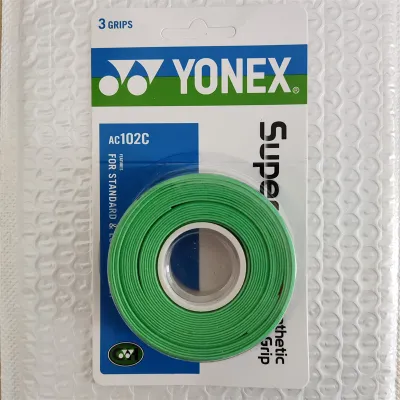
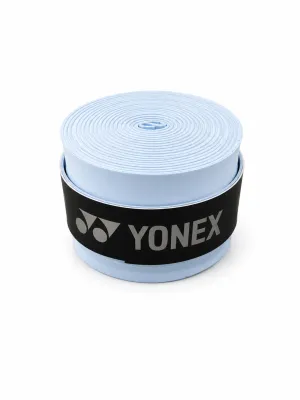
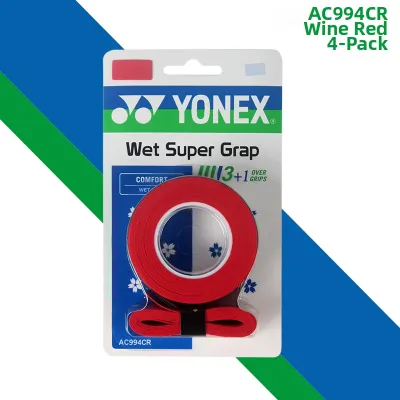
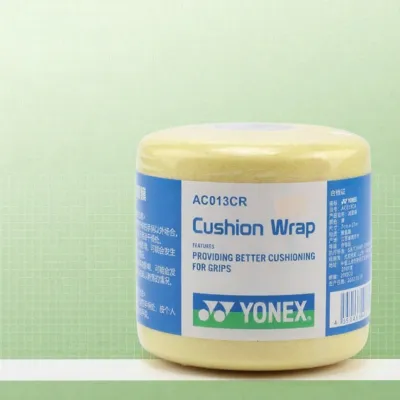
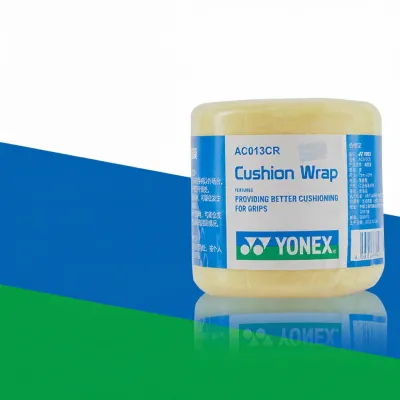
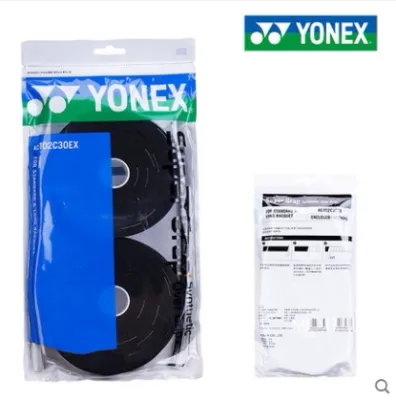
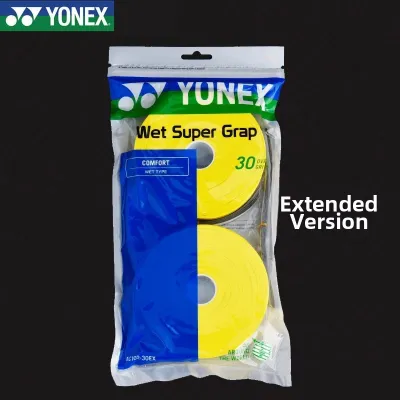
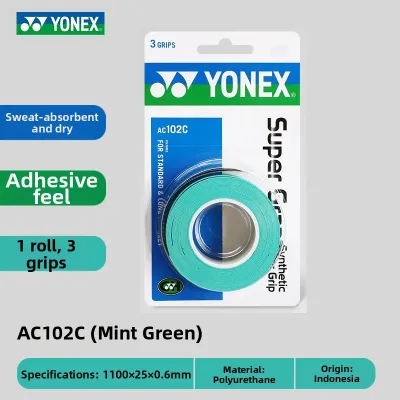
Prices are valid at publication and may change. Please refer to the product page for the latest price.
Cushion overgrips prioritize comfort, shock absorption, and handle customization. They are typically thicker than standard tacky or dry wraps, often incorporating an integrated foam strip or a raised center ridge. Alternatively, players can use a specialized polyurethane cushion wrap underneath a standard overgrip to adjust the handle size. Cushion grips are highly beneficial for players who suffer from joint fatigue, tennis elbow, or wrist discomfort, as they dampen the harsh vibrations transmitted up the shaft during heavy smashes. They also allow players with larger hands to build up a small factory handle to a more comfortable, ergonomic size.
Matching Your Sweat Level and Playing Style to the Right Grip
To choose the correct grip, you must first observe how your hands behave during a typical session. Light sweaters will notice their palms remain dry or only slightly warm, even after consecutive games. Moderate sweaters experience damp palms that might require wiping on a shirt or towel between games. Heavy sweaters will find sweat actively running down their forearms, leaving the racket handle visibly wet within fifteen minutes of play.

Your tactical approach on the court also dictates your grip requirements. Aggressive rear-court attackers who rely on heavy, explosive smashes need a highly secure grip to prevent the racket from slipping mid-swing. For these players, a slip can lead to a broken frame or a safety hazard for their doubles partner. Conversely, front-court playmakers and control-oriented singles players rely on rapid finger adjustments to change the racket face angle at the net. These players generally prefer a thinner, high-tactility grip that does not dull the feedback from the shuttlecock.
The playing environment in Singapore plays a massive role in grip performance. If you play primarily in modern, air-conditioned sports complexes, humidity is controlled, allowing tacky grips to retain their adhesive properties for longer periods. However, if you play in non-air-conditioned school halls or community centers, the ambient humidity accelerates sweating and prevents evaporation. In these high-humidity settings, even moderate sweaters often need to switch to dry overgrips or use grip powder to maintain a reliable hold.
| Sweat Level | Playing Style | Court Environment | Recommended Yonex Grip Type |
|---|---|---|---|
| Light | Technical / Net Play | Air-Conditioned | Thin Tacky Grip |
| Light to Moderate | All-Round / Attacking | Any | Standard Tacky Grip |
| Moderate to Heavy | Aggressive Smashing | Non-Air-Conditioned | Dry / Absorbent Grip |
| Heavy | Any | Humid / Hot | Dry Grip (with optional Grip Powder) |
| Any (Joint Pain) | Defensive / All-Round | Any | Cushion Grip / Underwrap + Tacky/Dry |
How to Apply and Maintain Your Overgrip for Maximum Lifespan
Before applying a new overgrip, completely remove the old, worn-out wrap. Inspect the underlying base grip or wood handle. If the base grip is deteriorating, crumbling, or saturated with old sweat, it can transfer moisture and odor to your new overgrip. Clean any adhesive residue off the handle using a dry cloth. If you prefer to protect the raw wood handle from sweat rot, consider wrapping a layer of waterproof electrical tape or specialized cushion wrap over the wood before applying your overgrip.
Start at the bottom of the handle (the butt cap). Secure the tapered end of the overgrip with a small piece of adhesive or by wrapping it tightly over itself. As you wind the grip upward toward the cone, maintain consistent, moderate tension. Avoid pulling the grip too tightly, as overstretching thins out the polyurethane material, reducing both its cushioning properties and its durability. Overlap each turn by approximately 1 to 2 millimeters. Ensure the overlap is uniform to prevent uncomfortable ridges. Once you reach the top cone, cut the excess grip at an angle and secure it firmly with the provided finishing tape.
Proper maintenance can significantly extend the life of your overgrip. After a demanding session, do not immediately pack your racket into a zipped, airtight bag. The trapped moisture creates a breeding ground for bacteria, which breaks down the polyurethane coating and causes unpleasant odors. Instead, allow your rackets to air-dry in a well-ventilated room. If your grip is exceptionally wet, wipe it down with a clean, dry microfiber cloth immediately after your session to remove excess sweat and salt deposits.
Signs It Is Time to Replace Your Overgrip
The most immediate indicator that your overgrip has reached the end of its functional life is a noticeable loss of performance. A tacky grip will begin to feel slick, smooth, or greasy, failing to provide friction even when your hands are dry. Alternatively, older grips can dry out completely, becoming stiff, brittle, or crusty to the touch. When a grip loses its elasticity, it can no longer absorb shock effectively, transferring more vibration to your wrist and elbow.
Inspect your handle regularly for physical wear. Discoloration—especially darkening around the thumb and index finger placement zones—indicates heavy sweat saturation and dirt buildup. You may also notice the top polyurethane layer peeling away from the fabric backing, leaving bald patches or loose fibers. Thinning or fraying along the overlapped edges is another clear sign that the material has degraded under the friction of your grip transitions.
Continuing to play with a worn-out, slippery overgrip introduces significant risks. To compensate for a lack of friction, players naturally squeeze the handle much harder than necessary. This constant, excessive muscle tension in the forearm limits your wrist snap, slows down your reaction time, and significantly increases the risk of developing repetitive strain injuries like tennis elbow. Furthermore, a loose racket can easily slip out of your hand during a high-speed smash, risking severe damage to your racket frame or causing injury to other players on the court.
Frequently Asked Questions (FAQ)
Can I use a dry overgrip if I have naturally dry hands?
Using a dry, moisture-wicking overgrip when your hands do not sweat can actually reduce your control over the racket. Dry grips rely on a small amount of moisture to soften their fibers and optimize friction. On naturally dry skin, the matte, powdery texture can feel slippery, chalky, and unstable. If your hands rarely sweat, you will achieve a much more secure and comfortable hold by choosing a classic tacky polyurethane overgrip.
How often should I change my Yonex overgrip?
There is no fixed calendar schedule for replacing an overgrip, as it depends entirely on your playing frequency, sweat volume, and local climate. As a general guideline, recreational players who play once or twice a week in Singapore’s humid conditions should replace their overgrip every 4 to 6 weeks. High-intensity players or heavy sweaters may need to change their grip every 2 to 3 sessions to maintain optimal performance and hygiene. If you notice any slipping, peeling, or persistent odor, replace the grip immediately.
Does a cushion overgrip change the balance of my racket?
Yes, adding a thicker cushion overgrip or applying multiple layers of underwrap will alter the overall feel and balance of your racket. Because you are adding mass directly to the handle, the racket’s balance point will shift slightly toward the grip end. This can make a head-heavy racket feel slightly more headlight or even-balanced, which increases maneuverability and defense speed but may slightly reduce the plow-through power of your smashes.

Community discussion
Share your experience or ask a question. Comments are reviewed before publication.