
Selecting your first tennis racket is one of the most critical decisions you will make as a new player. The right frame acts as an extension of your arm, helping you develop clean stroke mechanics, build confidence, and avoid early physical strain. While the Wilson Blade V9 98 is highly celebrated among intermediate and advanced players for its exceptional control and feel, it is generally not the right choice for absolute beginners. Its demanding specifications require a level of swing speed, timing, and physical conditioning that most new players have not yet developed.
In regions with high humidity and heat, such as Singapore, playing on outdoor public courts or condominium facilities can quickly sap your energy. When fatigue sets in, swinging a demanding, player-focused racket like the Blade V9 98 becomes even more difficult. This can lead to a rapid breakdown in form, shorter rallies, and an increased risk of injury. Understanding what your body and skill level require will help you make a more informed decision before investing in premium gear.
What Beginners Actually Need in a Tennis Racket
When you are first learning the game, your primary focus should be on establishing consistent contact with the ball and developing a repeatable swing path. To support this learning curve, a beginner-friendly racket must offer a high degree of forgiveness. This means having a generous sweet spot—the area on the string bed that produces a clean, predictable bounce even when your timing is slightly off. A forgiving frame keeps the ball in play during off-center hits, allowing you to sustain longer rallies and get more practice value out of every session.
Products mentioned in this guide
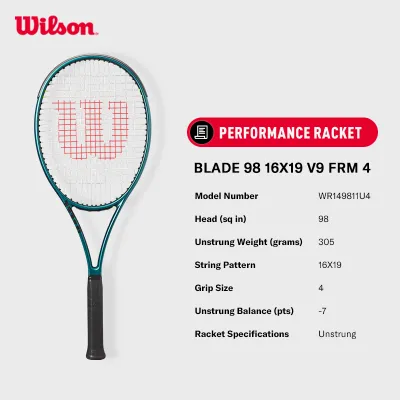
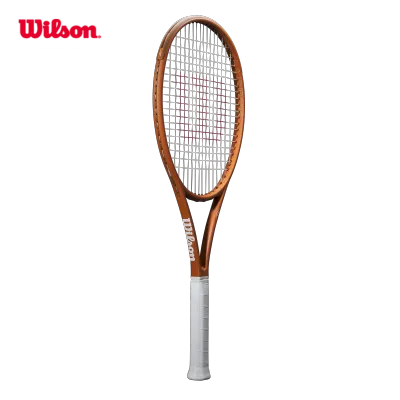
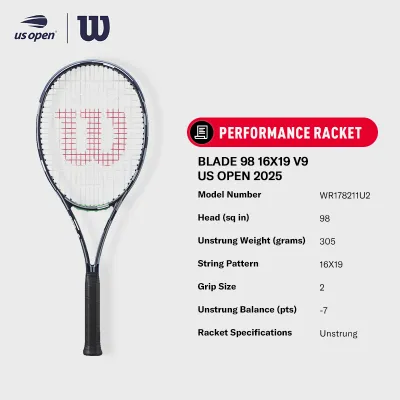
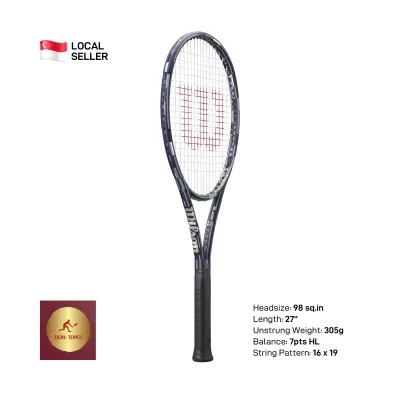
Prices are valid at publication and may change. Please refer to the product page for the latest price.
Another essential factor is the balance between power generation and control. Beginners naturally lack the refined technique, footwork, and core engagement required to generate high racket head speed. A racket designed for new players features a thicker, stiffer frame that inherently provides “easy power.” This built-in energy transfer helps push the ball deep into the opponent’s court without forcing you to overswing or strain your muscles to compensate for a lack of pace.
Maneuverability and weight distribution are equally vital for early skill development. A lighter racket is much easier to position quickly, helping you prepare early for incoming balls. It also allows you to focus on proper stroke mechanics rather than simply struggling to lift and swing a heavy piece of equipment. Using a frame that is too heavy often forces beginners to use improper wrist-flicking motions to get the racket through the contact zone, which severely limits technical progress and increases physical fatigue.
How the Wilson Blade V9 98 Specs Align With Beginner Needs
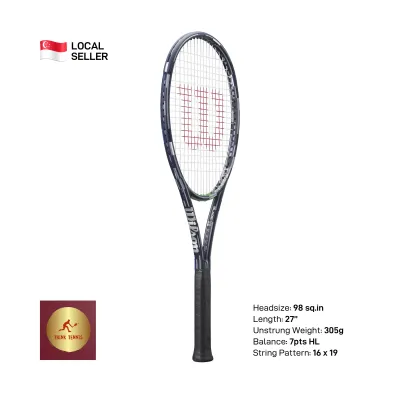
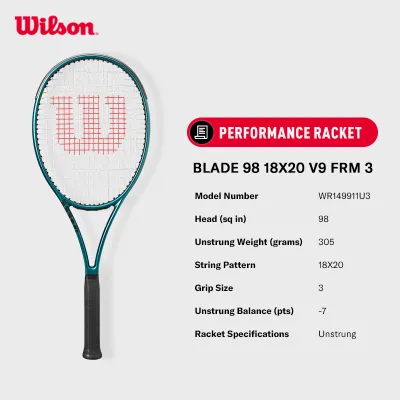
The Wilson Blade V9 98 features a 98-square-inch head size, which falls into the mid-plus category. This smaller head size results in a more compact sweet spot compared to standard beginner frames, which typically start at 100 square inches or larger. For a new player, this means a much smaller margin for error. Off-center hits on a 98-square-inch frame will feel dead, lose significant depth, and send harsh vibrations up your arm, making it difficult to find a comfortable rhythm.

In terms of weight and balance, this model is designed with a heavier static weight that typically sits around 305 grams unstrung. For a beginner, swinging this much mass repeatedly over a one-hour session can be exhausting. While the headlight balance helps with maneuverability at the net, the overall weight still requires established forearm and shoulder strength to swing consistently. On off-center hits, a heavier frame can twist in a beginner’s hand if they do not have the grip strength or clean contact to stabilize it.
The stiffness and feel of the Blade V9 98 are engineered for maximum control and flexibility. It is designed to absorb energy from fast, aggressive swings, allowing advanced players to keep the ball inside the lines. However, because a beginner’s swing is naturally slower and less developed, this flexible frame will feel underpowered. You may find yourself struggling to get the ball past the service line, which often leads to overswinging and muscle tension.
Before making any purchase, you must verify the exact unstrung weight, balance point, and string pattern on the manufacturer’s label or official store. Minor production updates or different model variations (such as the 16×19 versus the 18×20 string pattern) can significantly alter how the racket behaves on the court.
Signs the Wilson Blade V9 98 Might Be Too Advanced for Your Current Level
It is common for players to be drawn to premium, professional-grade rackets, but your performance on the court will quickly tell you if a frame is a poor match. One of the clearest signs is a persistent struggle to generate depth and pace. If your baseline groundstrokes consistently land short or fail to clear the net despite taking what feels like a full, aggressive swing, the racket is not providing the structural assistance your current technique requires.
Physical discomfort is another critical warning sign that should never be ignored. If you experience tightness, soreness, or sharp pain in your wrist, elbow, or shoulder during or after a practice session, your equipment may be to blame. This discomfort often stems from two factors: the physical strain of trying to muscle a heavy frame through the air, and the repetitive shock of hitting the ball outside of the small sweet spot.
Finally, pay attention to how often you frame or mishit the ball. If your rallies are constantly interrupted by balls striking the plastic bumper guard or the sides of the frame, your hand-eye coordination is still adapting. A larger, more forgiving string bed is necessary to bridge this gap, allowing you to build confidence and enjoy longer, more productive practice sessions.
Making the Final Decision: Adapt, Test, or Pivot
There are rare scenarios where an athletic beginner might adapt well to the Wilson Blade V9 98. If you have a strong background in other high-speed racket sports, such as squash or badminton, you may already possess the hand-eye coordination and natural wrist stability needed to handle a 98-square-inch head. If you are physically strong, plan to play multiple times a week, and are committed to rapid technical development, this frame can offer room to grow as your skills advance.
For the vast majority of new players, however, the smartest move is to pivot to a game-improvement racket. Look for frames that feature a 100 to 105-square-inch head size, a lighter unstrung weight between 270 and 290 grams, and a slightly thicker beam. These specifications are specifically engineered to maximize forgiveness, provide easy depth, and protect your joints while you master the fundamentals of the game.
Regardless of which direction you lean, never buy a premium racket without testing it first. Take advantage of local demo programs at specialty tennis shops, rent different frames from public court pro shops, or ask to borrow rackets from your coach or playing partners. Spending a few sessions testing different weights and head sizes will give you a clear, hands-on understanding of what feels comfortable and supportive for your current physical capabilities.
Frequently Asked Questions (FAQ)
Can a beginner use a 98 sq in head size racket?
While a beginner can physically swing a 98-square-inch racket, it is highly inefficient for learning the game. The smaller head size drastically reduces the size of the sweet spot, leaving very little margin for error. This leads to frequent mishits, shorter rallies, and slower skill progression compared to starting with a more forgiving 100 or 105-square-inch frame.
Will the Wilson Blade V9 98 cause tennis elbow for beginners?
Although the Blade series is known for its flexible and arm-friendly feel among advanced players, it can still contribute to tennis elbow in beginners. The combination of a heavier unstrung weight (around 305 grams) and a smaller sweet spot means beginners are more likely to hit off-center, transmitting harsh vibrations up the arm. Additionally, trying to muscle a heavy racket with underdeveloped technique can quickly strain the forearm tendons.
Should I buy the Wilson Blade V9 98 if I plan to take professional lessons?
Even if you are taking professional lessons, starting with a highly demanding player’s racket can hinder your progress. A qualified coach will focus on teaching you clean, relaxed stroke mechanics. A heavy, control-oriented racket like the Blade V9 98 may force you to tense up your muscles just to get the ball over the net. It is usually better to start with a lighter, more forgiving racket and transition to a control frame once your coach confirms your swing path is consistent.

Community discussion
Share your experience or ask a question. Comments are reviewed before publication.