
Selecting the right tennis ball depends on your playing surface, skill level, and budget. While many players look for a single best option, the choice between Wilson Championship, Extra Duty, and Regular Duty comes down to matching the ball’s felt construction to the court you play on. For outdoor hard courts, which are highly common in Singapore’s public and condominium facilities, an Extra Duty ball is essential to withstand abrasive surfaces. For clay, grass, or indoor courts, a Regular Duty ball prevents excessive fluffing and maintains a consistent weight. The Wilson Championship line serves as a highly popular, cost-effective option for recreational play, available in both felt types to suit different environments.
Clarifying the Terms: Wilson Championship vs. Duty Ratings
To make an informed purchase, it is first necessary to clear up a common point of confusion among tennis players. Many players treat Championship and Duty as competing categories of tennis balls. In reality, they describe two entirely different aspects of a tennis ball: the product line and the felt specification.
The Wilson Championship is a specific model of tennis ball. Positioned as a mid-tier, value-focused offering, it sits below premium tournament lines like the Wilson US Open. It is designed primarily for recreational players, coaching sessions, and casual club matches where consistent, everyday performance is valued over the ultra-precise specifications required in professional tournaments.
Products mentioned in this guide
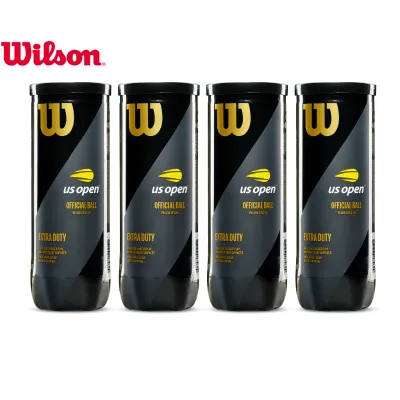
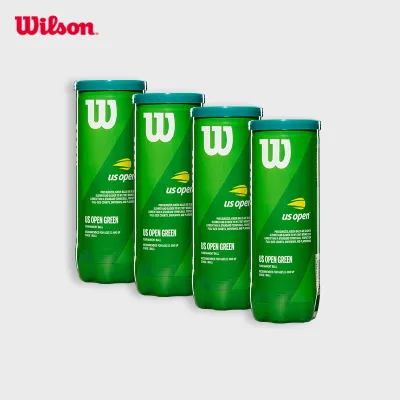
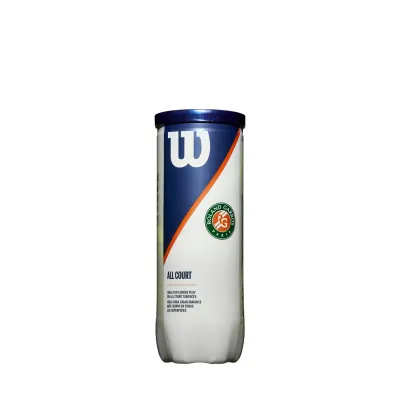
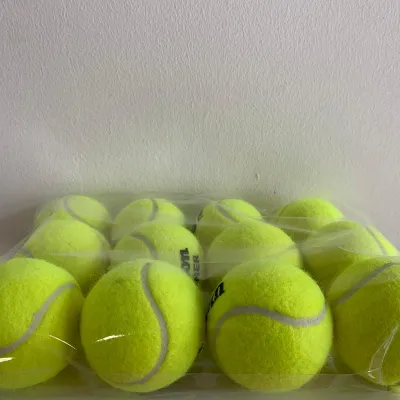
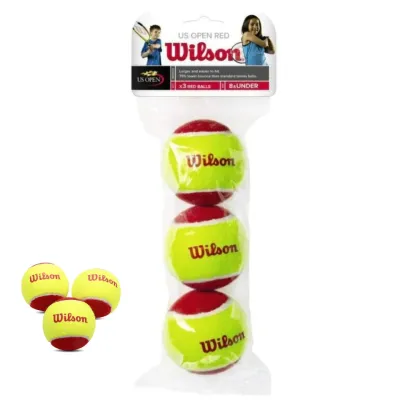
Prices are valid at publication and may change. Please refer to the product page for the latest price.
On the other hand, Extra Duty and Regular Duty are not specific ball models. Instead, they refer to the classification of the felt wrapped around the rubber core. These terms describe the thickness, density, and weave of the wool and synthetic fiber blend. You can find both Extra Duty and Regular Duty felt options across different Wilson product lines, including the Championship series and premium tournament series.
This means that when you walk into a sports retailer or browse an online marketplace, you will see cans labeled Wilson Championship Extra Duty and others labeled Wilson Championship Regular Duty. Understanding this distinction prevents you from accidentally buying a ball that is poorly suited to your local court surface, ensuring you get the expected lifespan and playability from your purchase.
Extra Duty vs. Regular Duty: Matching Felt to Court Surface
The primary factor determining how a tennis ball behaves and how long it lasts is the interaction between its felt cover and the court surface. Hard courts, clay courts, and grass courts all exert different forces on the ball, requiring distinct felt characteristics to maintain optimal playability.

Extra Duty tennis balls are engineered specifically for abrasive outdoor hard courts, such as concrete, asphalt, and acrylic surfaces. These courts act like sandpaper, rapidly wearing down any material that rubs against them. To combat this friction, Extra Duty felt is woven with a thicker, loftier blend of fibers, often incorporating a higher percentage of synthetic materials. This heavy-duty construction allows the felt to wear down gradually without immediately exposing the underlying rubber core, extending the ball’s usable life during intense rallies on hard courts.
Regular Duty tennis balls are designed for softer, less abrasive surfaces, including clay, natural grass, and indoor carpet courts. Because these surfaces do not grind away at the felt, a thick, heavy cover is unnecessary. Instead, Regular Duty felt features a tighter, thinner weave, often with a higher wool content. This design prevents the ball from absorbing too much moisture or picking up loose clay particles, which would otherwise make the ball heavy and sluggish.
Using the wrong felt type on a court leads to immediate performance and durability issues. If you play with Regular Duty balls on an outdoor hard court, the abrasive surface will quickly shear off the thin felt. Within a few games, the balls will become bald, losing their aerodynamic drag, flying unpredictably, and bouncing excessively fast.
Conversely, if you use Extra Duty balls on a clay court, the loose felt fibers will trap the clay dust and moisture. The balls will quickly fluff up, becoming oversized, heavy, and slow. This not only ruins the pace of the game but also increases the physical strain on your elbow and shoulder as you try to push a heavy, moisture-laden ball across the net. In humid climates like Singapore, where outdoor clay or hard courts can retain moisture, matching the felt to the surface is even more critical to prevent premature waterlogging.
Evaluating the Wilson Championship: Performance and Value
The Wilson Championship tennis ball is a staple in the tennis community, recognized for offering a balanced combination of playability and affordability. To evaluate whether this model fits your needs, it is helpful to look at its core construction, durability, and target audience.
At its core, the Wilson Championship ball utilizes a pressurized rubber shell designed to deliver a familiar, lively bounce. This bounce is highly consistent out of a freshly opened can, making it an excellent fit for recreational players, intermediate club members, and high-school team practices. The internal pressure provides sufficient speed and depth on groundstrokes, allowing players to practice their technique without feeling like they are hitting a dead ball.
However, when compared to premium tournament-level balls like the Wilson US Open, there are noticeable trade-offs in felt quality and pressure retention. Premium balls typically feature higher-grade wool and tighter quality control, resulting in a cleaner aerodynamic flight and a more gradual loss of pressure over multiple sessions. The felt on a Wilson Championship ball may fluff up slightly faster or show signs of wear earlier under heavy, spin-heavy hitting, reflecting its position as a mid-tier product.
Despite these trade-offs, the Wilson Championship shines as a highly cost-effective option. For high-volume scenarios—such as feeding drills, ball machine practice, or casual weekend sets—the price-to-performance ratio is difficult to beat. Purchasing these balls in bulk cases allows players and coaches to maintain a fresh supply of lively balls without the high expense associated with premium tournament lines.
Decision Framework: Which Wilson Ball Should You Buy?
To choose the right Wilson tennis ball for your next session, you can apply a simple decision framework based on your playing environment, budget, and performance expectations.
First, assess your primary playing surface. If you play almost exclusively on outdoor hard courts, select an Extra Duty ball. Whether you choose the budget-friendly Wilson Championship Extra Duty or a premium alternative, the thicker felt is non-negotiable for hard-court durability. If your schedule takes you to clay courts, grass courts, or indoor facilities, opt for a Regular Duty ball to maintain a consistent weight and prevent excessive fluffing.
Second, consider your budget and usage scenario. If you are looking for balls to load into a ball machine, conduct coaching drills, or play casual recreational sets with friends, the Wilson Championship model is the most practical choice. It provides a reliable bounce at a price point that makes regular replacement affordable.
Third, evaluate your competitive level. If you are preparing for an official tournament, playing in a competitive league, or simply demand the highest level of consistency, it is worth upgrading to a premium line like the Wilson US Open. These tournament-grade balls offer tighter manufacturing tolerances, superior felt, and longer-lasting pressure retention, ensuring that the ball behaves exactly as expected during high-stakes points.
By aligning these three factors—surface, budget, and competition level—you can select a Wilson tennis ball that optimizes both your playing experience and your equipment budget.
Frequently Asked Questions (FAQ)
How long do Wilson Extra Duty balls last on hard courts?
The lifespan of Wilson Extra Duty balls on hard courts depends heavily on player skill level, swing speed, and spin generation. For casual recreational players, a can of Extra Duty balls can easily last for two to three sessions before the loss of pressure or felt wear becomes highly noticeable. However, advanced players who hit with heavy topspin and high velocity may find that the balls lose their optimal bounce and felt texture after a single intense match of two to three hours. To check if a ball needs replacing, squeeze it to test its firmness, and inspect the felt for bald patches or excessive fluffing.
Can I use Regular Duty balls on a hard court if they are cheaper?
While you can physically play with Regular Duty balls on a hard court, doing so is rarely cost-effective in the long run. The abrasive hard-court surface will wear down the thin Regular Duty felt at an accelerated rate, often causing the balls to go bald within a single set. Once the felt is gone, the ball’s flight becomes erratic, and the bounce becomes low and skiddy, which can disrupt your rhythm and technique. Investing in Extra Duty balls for hard courts ensures a longer, more predictable lifespan, saving you money on frequent replacements.

Community discussion
Share your experience or ask a question. Comments are reviewed before publication.