
Selecting the right badminton shuttlecock often comes down to a classic trade-off between the precise flight path of natural feathers and the rugged endurance of synthetic nylon. For players navigating the diverse court conditions in Singapore—ranging from breezy outdoor spaces to humid community center halls—making the wrong choice can lead to frustrating games, damaged rackets, or rapidly mounting expenses. To find the ideal balance for your games, you must weigh how your skill level, playing frequency, and budget align with the distinct engineering of Yonex’s two primary shuttlecock categories. While natural feather shuttlecocks remain the standard for competitive, high-precision play due to their authentic flight path and crisp racket feedback, synthetic nylon shuttlecocks offer a highly durable, cost-effective alternative that is well-suited for recreational matches, training drills, and casual players.
What Are the Structural Differences Between Feather and Nylon Yonex Shuttlecocks?
To understand why these two types of shuttlecocks behave so differently on the court, you must first examine their physical construction and material composition. Yonex designs its shuttlecocks with meticulous attention to aerodynamics, but the raw materials dictate the fundamental limits of their performance. Natural feather shuttlecocks are crafted using sixteen individual feathers, typically sourced from goose or duck wings, which are carefully anchored into a solid cork base and bound together with thin thread and adhesive. In contrast, nylon shuttlecocks feature a single-piece synthetic skirt molded from high-grade nylon, designed to mimic the lattice structure of natural feathers, which is then attached to either a natural cork, synthetic cork, or composite base.
Yonex categorizes these distinct structural designs into two primary product families: the Aerosensa series for natural feathers and the Mavis series for synthetic nylon. The Aerosensa lineup relies on premium natural feathers selected for uniform shape and thickness, ensuring a highly balanced rotation during flight. The Mavis lineup utilizes advanced synthetic polymers to create a skirt that recovers its shape rapidly after impact. When holding these shuttlecocks, you can easily observe the differences in weight distribution. Natural feather models concentrate the majority of their weight in the solid cork nose, with the lightweight feathers creating a high-drag, low-mass tail. Nylon shuttlecocks, while engineered to match the overall weight standards set by badminton governing bodies, tend to have a slightly more uniform weight distribution because the synthetic skirt is inherently denser than natural feathers. This subtle difference in balance affects how the shuttlecock stabilizes immediately after leaving the racket strings.
Products mentioned in this guide
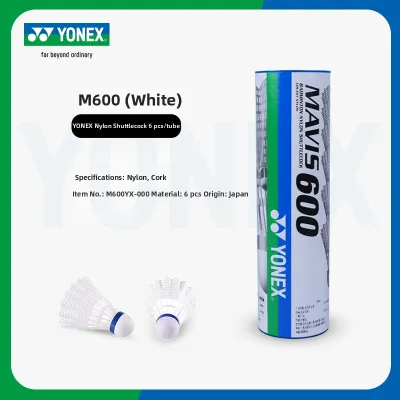
8 Lazada user ratings
The product is great, I'm very happy with it, definitely worth the praise!
The item is great, I'm really happy with it, definitely recommend it!
Yonex is a trustworthy big brand, highly recommended!
Good quality...exactly as expected..
Durable and authentic!
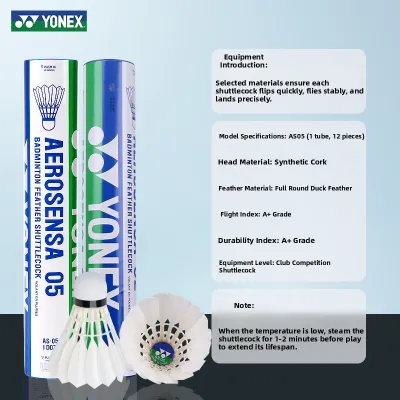
34 Lazada user ratings
Pretty good. Product functionality: okay. Appearance and material: okay. Product quality: okay.
Haven't opened it yet, but it looks like a high-quality, authentic product.
Unbeatable, it's so great, so cool, and looks amazing. Absolutely perfect.
It flies really steadily and swinging the racket feels smooth.
This is a great store to buy badminton gear.
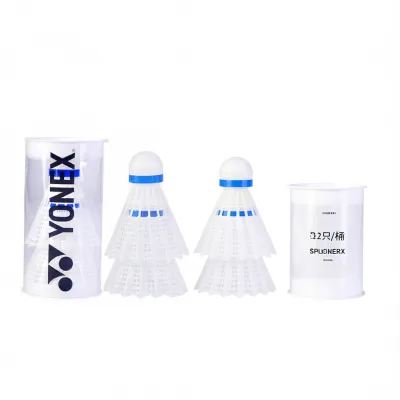
12 Lazada user ratings
I bought this for convenience, and while the box isn't exactly what I expected, I'm looking forward to trying out the ball soon. I usually l…Read full reviewShow less
I bought this for convenience, and while the box isn't exactly what I expected, I'm looking forward to trying out the ball soon. I usually leave good reviews.
The badminton flies really steadily, and the hitting feels awesome. I couldn't wait to try it out after getting it.
I got the item, and it's pretty good. I'm really happy with it.
Durable and overall pretty good.
Really good, I like it.
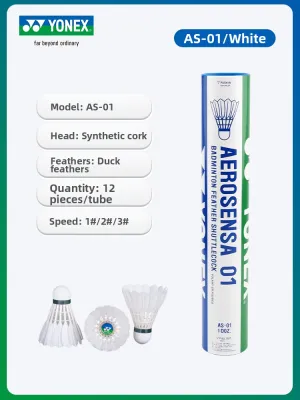
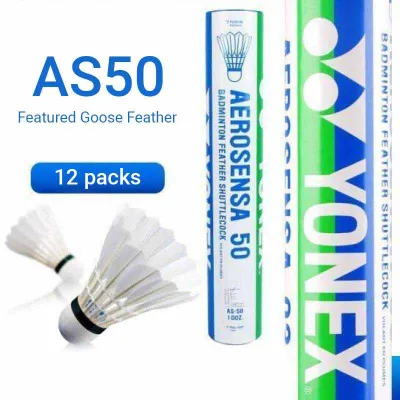
128 Lazada user ratings
look ok but the feather like not very good condition. my kid use 1 and for like 1 ot 2 games, it spoilt already so not too sure this is auth…Read full reviewShow less
look ok but the feather like not very good condition. my kid use 1 and for like 1 ot 2 games, it spoilt already so not too sure this is authentic or not.
hope its gooooood in Smooth and consistent flight seemmmm Great value for the price,
Good steady shuttlecocks making for good exercise fun with my kids.
Received in good condition. Have yet to use it on court.
Great shuttlecocks!, Highly recommended by players,
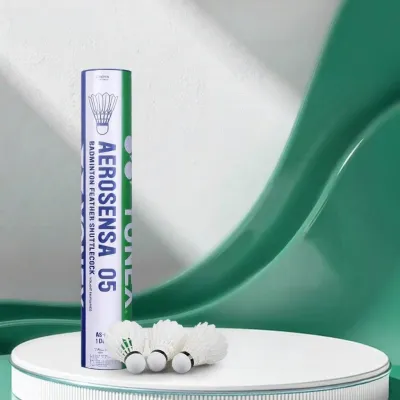
17 Lazada user ratings
Nylon cover protection, Durable duck feathers, Yonex brand trust, Perfect for competitions, nice to play and good quality.
The girl is super nice and she even offered some compensation when there was a slight issue.
Well packed. Will test the shuttlecock this weekend to see if it is in good quality
The quality is decent and has potential for improvement.
Prices are valid at publication and may change. Please refer to the product page for the latest price.
How Do Flight Characteristics and Court Feel Compare During Play?
The structural differences between natural and synthetic materials translate directly into how the shuttlecock behaves in the air and how it feels when making contact with your racket. For experienced players, the flight trajectory is the most critical differentiator. A natural feather shuttlecock is designed to spin rapidly upon impact, which stabilizes its flight path and causes it to decelerate quickly as it reaches the peak of its arc. This high deceleration rate means that a feather shuttlecock drops at a steep, near-vertical angle, allowing for precise drop shots and tight net play. Nylon shuttlecocks, however, do not spin as intensely and tend to follow a flatter, more parabolic trajectory. They glide further through the air and decelerate more gradually, which can make baseline-to-baseline clears feel easier but can also cause deep shots to sail out of bounds more frequently.

Court feel and acoustic feedback also differ significantly between the two materials. When you strike a Yonex Aerosensa feather shuttlecock with a properly tensioned racket, it produces a distinct, high-pitched “crack” sound that provides instant feedback on the quality of your contact. The impact feels crisp and solid, with minimal residual vibration traveling up the racket shaft. Striking a Yonex Mavis nylon shuttlecock yields a duller, heavier thud, and the impact can transmit more noticeable vibration to your hand and wrist. This difference in feedback is particularly noticeable during delicate net play, where the natural flex and texture of feathers allow players to execute tight tumbling net shots with high control, whereas nylon skirts can feel slightly springy or unpredictable off the string bed.
Environmental factors such as temperature, humidity, and altitude also play a major role in how both materials perform, and Yonex accounts for this by offering specific speed ratings. Feather shuttlecocks are highly sensitive to air density; in hot and humid climates like Singapore, the air is less dense, causing shuttlecocks to fly faster. To compensate, players must select the correct Yonex speed number—typically speed 2 (slow) or speed 3 (medium) for tropical environments. Nylon shuttlecocks are also categorized by speed, usually indicated by the color of the cap on the tube or the colored band on the shuttlecock nose (such as green for slow, blue for middle, and red for fast). While nylon is less prone to structural changes caused by humidity, the synthetic material can become stiffer in cold, air-conditioned halls, slightly altering its flight speed and elasticity compared to its performance in warm, non-air-conditioned spaces.
Which Material Provides Better Durability and Cost-Per-Game Value?
While performance characteristics favor natural feathers, durability and overall cost-per-game value are where synthetic nylon shuttlecocks hold a massive advantage. The wear patterns of the two materials are fundamentally different. Natural feathers are fragile; a single off-center hit that strikes the feather shafts instead of the cork base can instantly bend, crack, or snap a feather. Once a single feather is damaged, the shuttlecock loses its aerodynamic balance, causing it to wobble, slow down, or veer off course, rendering it unusable for competitive play. In a typical fast-paced intermediate match, a single feather shuttlecock may only last one or two games before needing replacement, meaning a group of players can easily go through an entire tube of twelve shuttlecocks in a single multi-hour session.
Nylon shuttlecocks are engineered to withstand immense wear and tear. When a player mishits a Yonex Mavis shuttlecock, the flexible nylon skirt simply deforms temporarily and quickly pops back into its original shape. Over hours of continuous play, the nylon skirt may eventually develop small tears or begin to stretch, which gradually degrades its flight stability, but it rarely suffers the sudden failures typical of natural feathers. A single nylon shuttlecock can often survive multiple intense sessions, making its operational lifespan dozens of times longer than that of a feather counterpart.
This disparity in lifespan creates a stark contrast in cost-per-game value, which you can evaluate using typical retail price ranges in Singapore. A premium tube of Yonex Aerosensa feather shuttlecocks generally retails between S$35 and S$50, depending on the specific grade (such as Aerosensa 10, 20, or 30). If your group uses six feather shuttlecocks per session, the cost of consumables alone can quickly add up to S$15 to S$25 per game. Conversely, a tube of six Yonex Mavis nylon shuttlecocks typically costs between S$15 and S$25. Because a single nylon shuttlecock can last for several sessions, the cost-per-game drops to a fraction of a dollar, making nylon an incredibly economical choice for budget-conscious players and school training programs.
To maximize the lifespan of natural feather shuttlecocks and protect your investment, proper storage and care are essential. Natural feathers dry out easily, especially when stored in dry or air-conditioned environments, making them highly brittle and prone to snapping. To prevent this, players often use humidification techniques, such as storing the shuttlecocks in a dedicated humidifying tube or carefully exposing the interior of the tube to water vapor (steaming) a few hours before play. This restores moisture to the feathers, making them more flexible and significantly increasing their durability on the court. Nylon shuttlecocks require no such maintenance and can be stored indefinitely in your sports bag without any degradation in performance.
How Should You Choose Based on Your Skill Level and Playing Environment?
Choosing between feather and nylon Yonex shuttlecocks ultimately depends on matching their unique properties to your personal skill level, playing frequency, and the specific environment where you spend your court time. Beginners and casual recreational players should almost always start with nylon shuttlecocks, such as the Yonex Mavis 350 or Mavis 2000. At this stage of development, players frequently mishit the shuttlecock, which would result in a prohibitively expensive rate of destroyed feather shuttlecocks. Nylon’s high durability allows beginners to focus entirely on developing their hand-eye coordination, footwork, and basic stroke mechanics without worrying about the financial cost of every missed shot.
For intermediate and advanced players, transitioning to natural feather shuttlecocks, such as the Yonex Aerosensa 10 or 20, is highly recommended. As your strokes become more precise and your power increases, the limitations of nylon’s flight path and lack of spin control can hinder your progress. Playing with feathers allows you to practice advanced techniques like slice drops, deceptive net play, and powerful smashes with the exact deceleration and control required in competitive tournaments. If you plan to play in local leagues or tournaments in Singapore, training with feather shuttlecocks is essential, as almost all official competitions are played exclusively with natural feathers.
Your playing environment in Singapore should also guide your purchase. If you primarily play in non-air-conditioned community center courts or outdoor spaces where wind and high humidity are constant factors, nylon shuttlecocks offer a more practical and resilient option that won’t dry out or suffer from rapid atmospheric wear. However, if you play in well-ventilated, air-conditioned indoor sports halls, natural feather shuttlecocks will deliver their signature stable flight and crisp feel without the risk of the feathers drying out too rapidly during a match.
To help you make a quick and confident decision, consider this simple profile-matching checklist before purchasing your next tube of Yonex shuttlecocks:
- The Casual Recreational Player: Plays 1-2 times a month, primarily for fitness and fun. Recommended option: Yonex Mavis 350 (Blue Cap) for reliable, long-lasting performance and excellent budget value.
- The Developing Student or Club Player: Plays weekly, focusing on drills and improving stroke consistency. Recommended option: Yonex Mavis 2000 or lower-grade Yonex Aerosensa 10 (pre-steamed) to balance skill development with cost control.
- The Competitive or Advanced Player: Plays multiple times a week, participates in leagues, and requires precise control. Recommended option: Yonex Aerosensa 20 or 30 for tournament-grade flight accuracy, crisp feedback, and authentic deceleration.
Community discussion
Share your experience or ask a question. Comments are reviewed before publication.