
There is no single “longest-lasting” sports water bottle brand, as real-world temperature retention depends heavily on bottle capacity, lid design, initial liquid temperature, and environmental conditions. Instead of relying on generalized brand rankings, use a conditional decision framework: choose bottles with narrow mouths and screw caps for maximum heat retention during long outdoor hikes; opt for wide-mouth bottles with straw lids for convenient cold hydration during high-intensity gym sessions; and verify that the manufacturer’s insulation claims match the exact size and lid configuration you intend to purchase. This guide helps you evaluate specifications, match features to your activities, and maintain your bottle’s performance over time.
When shopping for a hot and cold water bottle, it is easy to get swept up in marketing claims promising days of ice-cold water. In reality, the performance of any insulated container is governed by thermodynamics rather than brand logos. A premium bottle that performs exceptionally well on an office desk might struggle to keep water cold during an intense outdoor workout in high-humidity tropical heat. Understanding how these vessels work allows you to look past the branding and select a bottle engineered for your specific environment.
What Actually Keeps Drinks Hot and Cold in Sports Bottles
To understand why one hot and cold water bottle might outperform another, it is essential to look at the construction of double-wall vacuum insulation. This design features an inner and outer stainless steel vessel welded together, with the air evacuated from the space between them. Because a vacuum contains virtually no atoms, it eliminates conduction and convection—the two primary methods of heat transfer. The only remaining path for heat to travel is radiation, which manufacturers minimize by applying reflective copper coatings to the inner wall.
Products mentioned in this guide
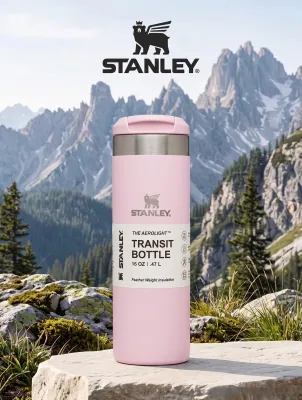
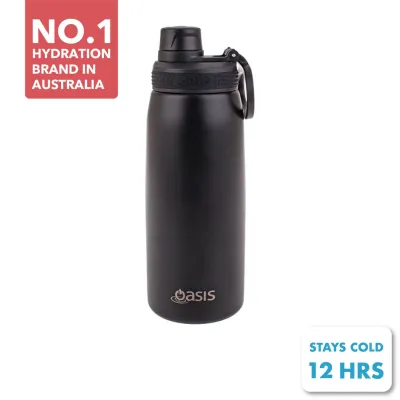
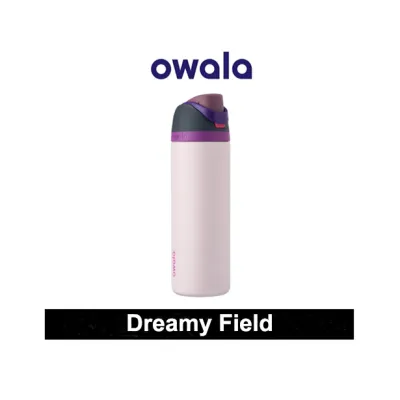
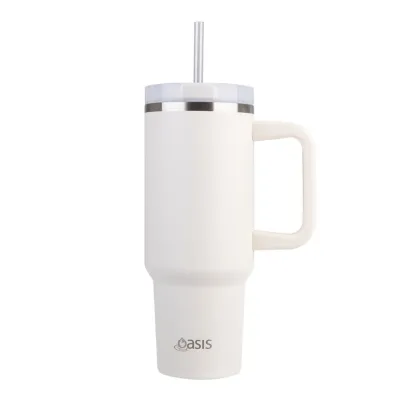
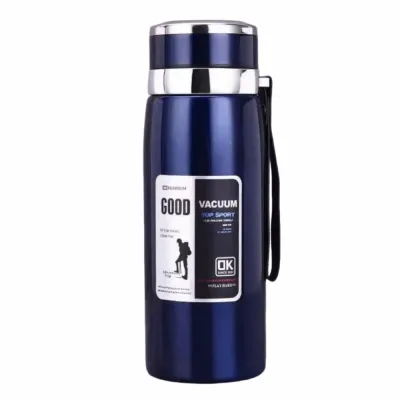
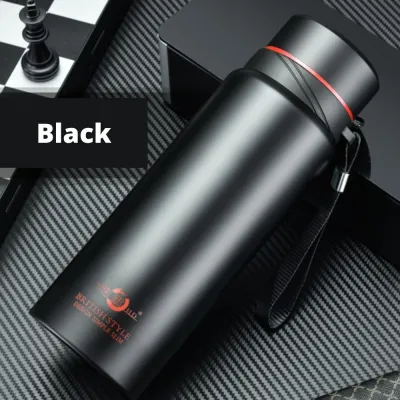
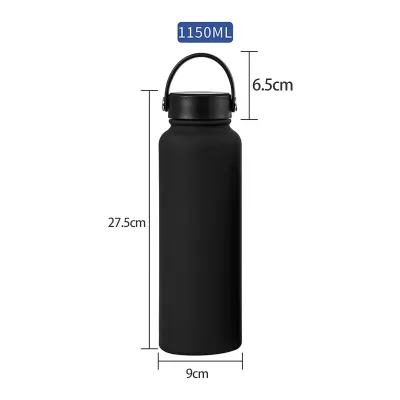
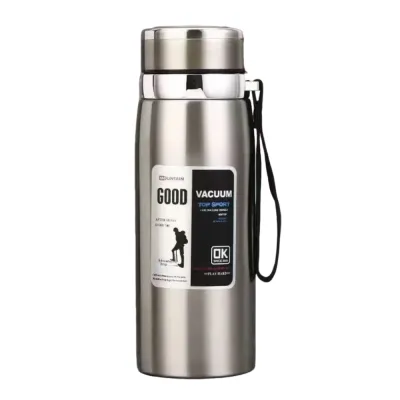
Prices are valid at publication and may change. Please refer to the product page for the latest price.
While the vacuum body is highly efficient, the lid represents the primary thermal weak point. Plastic, silicone, and rubber components do not insulate as effectively as a double-walled steel vacuum. Every time you open a flip-top, unscrew a cap, or sip through a straw, you introduce ambient air into the bottle, causing rapid temperature exchange. Straw lids and bite valves, while convenient for quick sips during a workout, allow more heat to escape than solid, insulated screw caps because of their internal air pathways and thinner materials.
The physical dimensions of the bottle also play a critical role in temperature retention. This is due to the volume-to-surface-area ratio: larger bottles holding one liter or more contain a greater thermal mass of liquid relative to the surface area of the bottle walls. Consequently, a larger bottle will naturally maintain its temperature longer than a smaller 500ml counterpart of identical construction. If long-lasting insulation is your primary goal, opting for a higher-capacity model is often more effective than switching brands.
Finally, pre-conditioning your hot and cold water bottle is a highly effective way to maximize thermal retention. By filling the bottle with boiling water or ice water for a few minutes before adding your actual drink, you bring the inner steel wall to the target temperature. This prevents the metal from immediately absorbing heat from your hot tea or transferring warmth to your iced water.
How to Compare Insulation Claims Across Different Brands
When comparing different brands on an ecommerce platform or at a local sporting goods store, you will notice widely varying temperature claims. To make an objective comparison, you must understand that these ratings are typically generated under controlled laboratory conditions. Manufacturers usually test their bottles in a temperature-controlled room of around 20°C to 22°C, starting with water that is either near freezing or just below boiling. If you are using your bottle outdoors in a humid, 32°C tropical climate, the actual insulation time will be shorter than the advertised rating.

It is also important to distinguish between hot and cold retention ratings. Cold retention is almost always rated for a significantly longer duration than hot retention. This discrepancy exists because the temperature differential between ice water (around 0°C) and a warm room (22°C) is much smaller than the differential between boiling water (100°C) and that same room. When evaluating a hot and cold water bottle, look closely at both numbers rather than relying on a single headline figure, especially if you plan to use the bottle for hot beverages during early morning commutes.
Furthermore, you must verify that the published insulation claims apply to the exact configuration you plan to buy. Brands often advertise the performance of their most insulated, narrow-mouth, screw-cap model as the standard for the entire product line. If you purchase the same brand’s wide-mouth bottle equipped with a straw lid, the actual temperature retention will be lower. Always check the fine print on the packaging or the manufacturer’s official specifications to see if the rating changes based on the lid style and bottle capacity.
Instead of searching for an absolute “best” brand, use these specifications to build a conditional shortlist based on your daily routine. If you need a bottle that keeps water cold for a standard eight-hour workday or a two-hour gym session, almost any reputable double-walled stainless steel bottle will suffice. You do not need to pay a premium for extreme 24-hour ratings unless you are planning multi-day camping trips or long outdoor excursions without access to fresh water.
Choosing the Right Lid and Size for Your Workout
Selecting the ideal hot and cold water bottle requires balancing thermal performance with practical usability. For high-intensity sports, running, or cycling, convenience and safety are paramount. In these scenarios, a bottle with a one-handed straw lid or a quick-access bite valve is highly beneficial, as it allows you to hydrate without blocking your vision or requiring two hands to unscrew a cap. While these lids compromise some insulation capability, the ability to drink safely on the move outweighs the minor loss in temperature control during a typical one-to-two-hour workout.
For daily commuting, office use, or riding public transport, your priorities will likely shift toward portability, weight, and ease of maintenance. A mid-sized bottle ranging from 600ml to 800ml strikes an excellent balance, providing enough hydration without becoming excessively heavy when full. You should also verify that the bottle’s base diameter is compatible with standard car cup holders or the side pockets of your backpack. In these controlled indoor environments, a standard leak-proof lid is ideal, ensuring that your bottle will not spill over expensive electronics or documents.
If your activities take you into rugged outdoor environments, such as hiking through nature reserves or spending long days in the sun, durability and maximum insulation become the top priorities. For these adventures, a wide-mouth bottle with a heavy-duty, insulated screw cap is the most reliable choice. The solid cap provides the tightest seal against heat transfer, while the wide mouth allows you to easily add large ice cubes. To protect your investment, look for bottles with powder-coated exteriors that offer a secure grip when wet, or consider adding a silicone boot or neoprene sleeve to protect the base from drops on rocky terrain.
How to Maintain Your Bottle's Insulation Over Time
Investing S$40 to S$80 in a high-quality hot and cold water bottle is only worthwhile if you maintain its structural integrity over time. The most critical rule of maintenance is to hand-wash your insulated bottle unless the manufacturer explicitly states it is dishwasher safe. The intense heat, prolonged exposure to hot water, and harsh detergents used in household dishwashers can degrade the outer powder coating and, more importantly, damage the delicate seal that holds the vacuum between the steel walls. Once this seal is compromised, the bottle permanently loses its insulation properties.
Physical impacts are another common cause of insulation failure. While stainless steel is highly durable, dropping your bottle onto hard concrete can cause deep dents. If a dent is severe enough to force the inner steel wall to touch the outer steel wall, it creates a thermal bridge. This bridge allows heat to conduct directly across the gap, bypassing the vacuum layer entirely. Regularly inspect your bottle’s exterior; if you notice a specific spot feels unusually hot or cold to the touch when filled, the vacuum has likely collapsed.
Proper hygiene is also essential for preserving the seals and gaskets that prevent leaks and heat transfer. Over time, moisture can accumulate in the crevices of silicone gaskets, straw mechanisms, and flip-top lids, leading to mold growth and unpleasant odors. Disassemble the lid components completely at least once a week, washing them with warm, soapy water and a small brush. Ensure all parts are completely dry before reassembling them, as trapping moisture inside the seals can cause the silicone to degrade prematurely, compromising both the leak-proof seal and the bottle’s thermal efficiency.
Frequently Asked Questions (FAQ)
Does a dented sports water bottle lose its insulation?
Yes, a severe dent can cause a sports water bottle to lose its insulation. If the impact is strong enough to deform the metal so that the inner and outer stainless steel walls make contact, it creates a physical bridge for heat transfer. This bridge destroys the vacuum barrier, allowing heat to move freely between the inside of the bottle and the outside environment. If you notice that the exterior of your bottle becomes hot when filled with hot water, or cold and sweaty when filled with ice water, the vacuum seal has been broken, and the bottle will need to be replaced to restore insulation performance.
Can I put boiling water in any insulated sports bottle?
You should not put boiling water into an insulated sports bottle without first checking the manufacturer’s guidelines. While the stainless steel body can easily withstand high temperatures, the lid materials, silicone gaskets, and straw mechanisms often have lower temperature limits and can deform under extreme heat. Furthermore, sealing boiling liquid inside an airtight bottle creates significant steam pressure, which can cause hot liquid to spray violently when you open the lid. Never drink hot liquids directly through a straw or bite valve, as this bypasses your lips’ natural temperature-sensing ability and can cause severe scalding.
Why does my bottle sweat on the outside when holding cold drinks?
A properly functioning insulated sports bottle should never sweat on the outside, regardless of how cold the liquid is inside. Condensation forms when warm, humid air comes into contact with a cold surface. Because the vacuum layer in a healthy bottle prevents the cold from reaching the outer wall, the exterior should remain at ambient room temperature. If you notice sweat or condensation forming on the body of your bottle, it indicates that the vacuum seal has failed, allowing the outer steel wall to cool down. You can verify this by touching the exterior; if it feels cold to the touch, the insulation is no longer working.

Community discussion
Share your experience or ask a question. Comments are reviewed before publication.