
Selecting the right goalkeeper gloves in Singapore involves balancing impact protection, grip, and durability under demanding local conditions. While many brands market advanced safety technologies, the actual level of hand and finger protection depends on verifiable structural features, material quality, and a precise physical fit. For players navigating high-velocity shots on hard artificial turf or wet grass, understanding how these components function is essential to preventing hyperextension and joint strain. Ultimately, protective gear serves as a supplement to, rather than a replacement for, proper catching technique and physical conditioning.
Essential Protection Features in Goalkeeper Gloves
Finger protection systems, commonly referred to as finger spines or finger saves, are the primary defense against hyperextension injuries. These plastic or composite inserts run along the back of each finger, designed to bend forward freely to allow natural fist-making while locking or resisting backward bending past a straight angle. When evaluating gloves, look for the choice between fixed spines, which are permanently sewn into the glove, and removable spines, which are accessed via a zippered or hook-and-loop pocket on the backhand. Removable systems offer greater customization, allowing you to remove spines from fingers that require more flexibility or to replace damaged inserts without discarding the entire glove.
The backhand padding is another critical element, as it absorbs impact when punching the ball and protects the knuckles from collision. Materials range from basic embossed EVA (ethylene-vinyl acetate) to premium latex, neoprene, or knitted fabrics with injected silicone elements. Heavy latex backhands provide substantial cushioning but add weight and reduce breathability, which can be uncomfortable in warm climates. Modern lightweight materials like neoprene offer a second-skin fit but rely on strategically placed silicone or rubber ridges to absorb punch impacts, requiring you to weigh the desire for agility against blunt-force protection.
Products mentioned in this guide
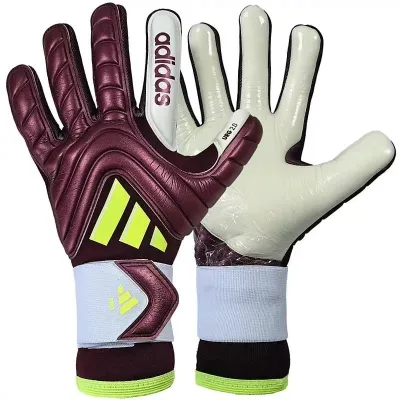
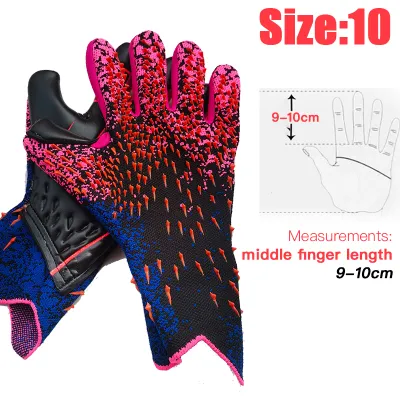

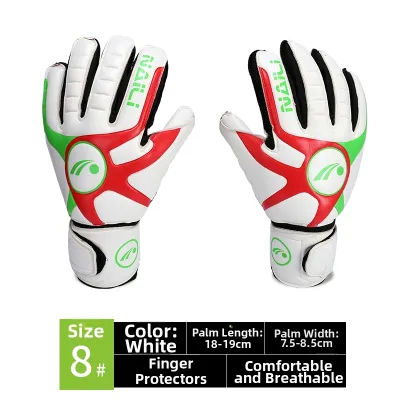
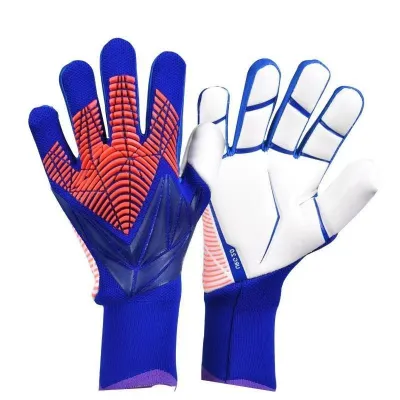
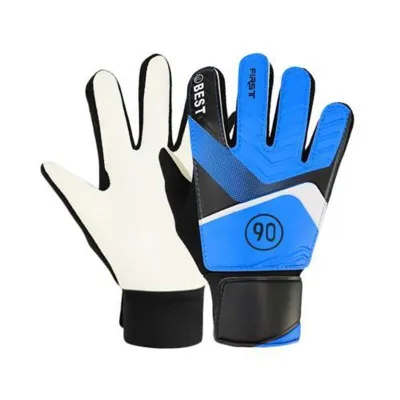
Prices are valid at publication and may change. Please refer to the product page for the latest price.
Wrist closure mechanisms are vital for stabilizing the wrist joint and preventing sprains during diving saves or heavy impacts. Traditional bandage straps wrap fully around the wrist, utilizing hook-and-loop fasteners to allow customizable tension and support. Double-wrap straps offer enhanced stability by securing the joint from two different angles, reducing lateral movement. Strapless designs rely on highly elastic, engineered knit fabrics that extend up the forearm; while they offer a seamless fit, they require a highly precise initial fit to ensure the glove does not slip under load.
The palm latex presents an inherent trade-off between impact protection and ball grip. Thicker latex, typically 4mm or more, contains more cushioning foam, which absorbs a significant portion of the impact energy from hard shots to protect the bones of the hand. However, this thickness reduces tactile feedback and can make catching more reliant on grip strength. Thinner latex, ranging from 2mm to 3mm, provides excellent ball feel and flexibility but offers minimal shock absorption, making it more suitable for experienced keepers with advanced catching techniques.
How to Evaluate Goalkeeper Glove Brands for Reliability
Rather than relying on subjective marketing terms like “ultimate grip” or “maximum safety,” buyers should scrutinize the technical specifications provided by manufacturers. Look for detailed descriptions of the latex compound, such as contact latex, gigagrip, or turf-specific compounds, and the specific mechanical design of the finger spines. Reliable brands publish clear technical glossaries explaining the composition of their materials and the testing standards their protective elements undergo, allowing you to make an informed decision based on verifiable data.

Purchasing from authorized sports retailers or specialized football stores in Singapore is the most reliable way to ensure product authenticity. Counterfeit gloves are common on generic online marketplaces and often use cheap, non-protective plastics in their finger spines that can shatter under impact, posing a safety risk. Physical specialty stores allow you to inspect the stitching, feel the density of the latex, and verify that the protective elements are genuine before committing to a purchase.
Different brands utilize distinct glove cuts, such as negative cut (internal stitching for a snug fit), roll finger (latex wrapped around the fingers for maximum contact area), flat palm (traditional loose fit), or hybrid cuts. A brand’s reliability is reflected in the consistency of these cuts across their product lines. Reviewing brand-specific sizing guides is critical, as a size 9 in one brand may fit like a size 8 or 10 in another due to variations in hand-shape templates and manufacturing tolerances.
High-quality protective gloves are a significant investment, often costing upwards of S$100 to S$200. It is important to check the manufacturer’s or local retailer’s policy regarding manufacturing defects, such as premature seam splitting or broken finger spines. Brands that offer individual replacement finger spines or clear guidelines on defect claims demonstrate a higher level of long-term product support and reliability.
Matching Protection Levels to Local Playing Conditions
Singapore’s tropical climate presents unique challenges, characterized by high humidity, high temperatures, and sudden heavy downpours. Standard latex can become slippery when saturated with water, compromising grip and forcing the goalkeeper to parry rather than catch, which increases impact frequency. Keepers should look for gloves featuring highly breathable mesh gussets between the fingers to facilitate airflow and reduce sweat buildup inside the glove. For rainy days, specialized wet-weather latex compounds help maintain grip without requiring constant drying.
A significant portion of football in Singapore is played on artificial turf pitches, which are highly abrasive compared to natural grass. Sliding or breaking a fall with the palms on synthetic turf rapidly degrades soft, professional-grade latex. To protect both your hands and your glove investment, verify if a glove uses a durable “turf” or “hard ground” latex compound, which incorporates synthetic additives to resist tearing. Some gloves also feature reinforced wear patches on the lower palm area, which is highly prone to scraping during ground saves.
Repetitive drilling during training sessions subjects gloves to rapid wear and tear. Using premium, soft-latex match gloves for daily training is economically impractical and quickly compromises their protective qualities. A practical strategy is to use heavily padded, durable training gloves with stiffer finger protection for practice sessions, saving high-performance, high-grip match gloves for competitive games. This separation ensures that your match gloves retain their optimal grip and structural integrity when maximum protection is required.
The combination of sweat, dirt, and high humidity in Singapore creates an ideal environment for bacterial growth, which degrades latex and causes unpleasant odors. Rotating between at least two pairs of gloves allows each pair to dry completely between uses. Proper post-play maintenance, such as gently washing the palms with lukewarm water to remove dirt and sweat salts, followed by air-drying away from direct sunlight, is essential to preserve the elasticity of the latex and prevent the backhand materials from rotting.
Sizing, Fit, and Pre-Purchase Verification
A protective glove can only function correctly if it fits your hand precisely. To determine the correct size, measure the circumference of your palm at the widest point (excluding the thumb) and the length from the tip of your middle finger to the base of your palm. These measurements must be compared against the specific size chart of the target brand, as sizing standards are not universal.
When trying on a glove, there should be a small gap of about 0.5 to 1 centimeter between the tips of your fingers and the end of the glove. If your fingers press tightly against the seams, the impact of a ball can force your fingers against the rigid spines, causing bruising or nail damage. Conversely, excessive space at the fingertips reduces ball control and can cause the finger spines to shift out of alignment, rendering them ineffective during a save.
Once the glove is secured, perform dynamic hand movements to test the fit. Flex your wrist forward and backward to ensure the closure strap provides firm support without cutting off circulation or pinching the skin. The glove must remain securely anchored to your hand; if the wrist section slides down or twists during movement, the protective elements will not align with your joints during an impact.
Because physical fit is highly subjective and varies by glove cut, purchasing gloves online carries a risk of incorrect sizing. Before buying from local online sports platforms or international retailers shipping to Singapore, carefully review their return and exchange policies. Ensure that the seller permits returns on gear that has been tried on indoors, and verify who covers the return shipping costs, as returning bulky items can be costly.
Frequently Asked Questions (FAQ)
Do finger protection spines weaken hand muscles over time?
Finger protection spines act as a mechanical brace, absorbing external forces to prevent hyperextension. While they are highly effective for injury prevention and recovery, relying on them exclusively during all training sessions can reduce the natural engagement of the finger flexor muscles. Over time, this can lead to a relative lack of grip strength development, especially in youth players. Coaches often recommend using finger spines during high-intensity matches or recovery phases, while incorporating spine-free training sessions to build intrinsic hand strength and proper catching technique.
How often should protective goalkeeper gloves be replaced?
The lifespan of goalkeeper gloves depends on usage frequency, playing surface, and maintenance, but several physical indicators signal that a pair has lost its protective capabilities. Inspect the backhand padding for compression or cracking, which reduces shock absorption. Check the finger spines to ensure they have not become permanently bent, cracked, or loose within their pockets. Additionally, if the wrist closure’s hook-and-loop material no longer holds securely under tension, or if the palm latex has worn down to the inner fabric layer, the gloves should be replaced to avoid joint injuries.

Community discussion
Share your experience or ask a question. Comments are reviewed before publication.